
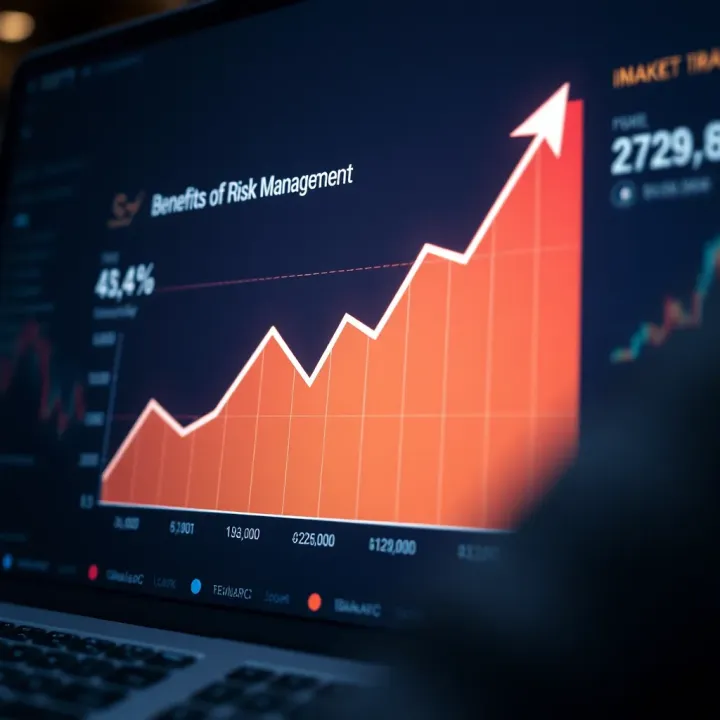
Understanding the Benefits of Risk Management
Explore how risk management boosts decision-making, financial stability, compliance, and innovation, helping Pakistani businesses protect reputation and grow sustainably 📊✅
Edited By
Henry Lawson
Actuarial science and risk management play a vital role in shaping how businesses and financial institutions make decisions under uncertainty. In Pakistan, where economic fluctuations and market unpredictability are common, understanding these disciplines means having a clearer edge when handling investments, insurance, pensions, and other financial products.
These fields combine statistics, finance, and practical risk assessment tools to tackle problems like predicting future losses, setting premium prices, or managing portfolios safely. Whether you're a stockbroker figuring out risk exposure or a crypto enthusiast evaluating the next big coin, the concepts behind actuarial science and risk management help you decode the risks and rewards involved.
In this article, we’ll break down the basics—as well as some advanced ideas—to give you actionable insights relevant to Pakistan’s unique market conditions. We'll cover key techniques, industry examples, and how these tools can be applied to reduce surprises and make smarter financial decisions.
Understanding risk isn’t about avoiding it entirely, but learning how to measure and manage it effectively—this is what sets successful traders and investors apart.
Here’s a quick overview of what’s coming:
Core ideas behind actuarial calculations and statistical modeling
Methods to identify, analyze, and control risk
Real-world applications within Pakistan’s insurance, banking, and investment sectors
Tips for integrating these principles into your trading or investment strategy
Let’s dive in and unravel how these disciplines help professionals navigate the complex web of financial uncertainty.
Actuarial science forms the backbone of managing financial risks, especially in insurance, pension planning, and investment sectors. It's not just about crunching numbers; it's about translating complex statistical data into practical insights that help businesses, governments, and individuals make well-informed financial decisions. For traders, investors, and financial analysts in Pakistan, understanding these fundamentals means gaining an edge in assessing uncertainties and predicting future payouts or losses.
At its core, actuarial science involves applying mathematics, particularly probability and statistics, to assess risks and uncertainties related to financial activities and insurance. For instance, when an insurer decides on premium rates for life insurance policies, actuaries use statistical models to estimate life expectancy and possible claims. It goes beyond simple calculations—it’s about building sound financial strategies based on predicted outcomes.
Consider the example of a Pakistani insurance company entering a new market segment. Actuaries would analyze historical claim data, demographic factors, and economic conditions to forecast risk exposure accurately. This helps the company price products competitively while ensuring profitability and solvency.
Actuarial science has deep roots going back to the 17th century when life tables were first developed to calculate life expectancy. The profession gained prominence in the 19th century alongside the growth of insurance companies in Britain and Europe. Since then, it has expanded globally and evolved with advancements in mathematics, computing, and data analytics.
In Pakistan, the actuarial profession has been gaining traction as the financial and insurance sectors grow rapidly. The establishment of actuarial education frameworks and professional bodies like the Institute of Actuaries of Pakistan reflects this development. This growth aligns with the increasing need for specialized risk assessment in a fast-changing economic environment.
Actuaries need a mix of technical expertise and business understanding. Among the critical skills are:
Mathematics and Statistics: Mastering probability, stochastic processes, and statistical inference is fundamental.
Financial Theory: Understanding interest rates, investment returns, and financial instruments.
Data Analysis: Proficiency in handling large datasets and extracting actionable insights.
Regulatory and Legal Knowledge: Awareness of local laws impacting insurance and finance.
Communication: Explaining complex risk assessments clearly to non-experts is vital.
For example, when analyzing pension fund risks in Pakistan, an actuary would combine demographic data, economic forecasts, and regulatory changes to advise fund managers accurately. Tools like Excel, R, and specialized software such as Prophet are often part of their toolkit.
"Actuarial science is where raw numbers meet real-world decisions—turning uncertainty into something a bit more certain."
In summary, the fundamentals of actuarial science offer a solid foundation for managing financial uncertainties, making it an essential area of knowledge for anyone involved in Pakistan's financial markets and risk management.
Risk management plays a vital role in safeguarding financial interests by identifying, assessing, and controlling potential threats. In the financial world, such as in Pakistan’s stock markets or investment portfolios, ignoring these risks can lead to significant losses. For traders and investors, understanding how to spot and manage risk is like having a map through a tricky maze — it helps avoid blind spots and costly mistakes.
Effective risk management isn’t just about avoiding danger but about making calculated decisions that balance potential rewards with possible downsides. For example, a crypto enthusiast might diversify their holdings across different coins, reducing the chance that one sudden market dip wipes out their entire investment.
At its core, financial risk refers to the chance that an investment’s actual return will differ from the expected result. This includes losses as well as gains smaller than hoped for. It’s like setting out to catch fish, but ending the day with fewer than you planned for.
Different types of financial risk affect portfolios in various ways, be it market downturns, unexpected economic changes, or specific company problems. For instance, during economic instability, currency fluctuations in Pakistan can impact foreign investment returns drastically, making currency risk an important factor to consider.
Risk isn’t a one-size-fits-all; it comes in many flavors, each with its own quirks:
Market Risk: This is the risk of losses due to price changes in stocks, bonds, commodities, or currencies. For example, a sudden slump in the Karachi Stock Exchange can reduce portfolio value overnight.
Credit Risk: This happens when a borrower fails to repay a loan or meets it late, affecting banks and investors holding debt.
Operational Risk: Arises from internal failures like technical glitches or fraud within companies or financial institutions.
Liquidity Risk: Occurs when assets can’t be quickly sold without a big price drop, something traders in less liquid markets often face.
Legal and Regulatory Risk: Changes in laws or regulations, like new tax rules or exchange controls, can disrupt investment plans in Pakistan’s financial scene.
Knowing these types helps traders and risk managers prepare better, tailoring strategies to the specific threats they face.
Within insurance and finance, risks fall broadly into two categories:
Pure Risk: These involve situations with only the possibility of loss or no change, like insurance against accidents or natural disasters. For example, in Pakistan, flood insurance covers homeowners from heavy monsoon damage.
Speculative Risk: Here, the outcomes might be a gain or a loss, typical in investments. Buying shares of a growing tech company in Pakistan entails speculative risk.
Understanding these categories clarifies where risk is manageable (like through insurance) and where it’s part of everyday investing.
Once risks are identified, managing them is the next step. There are several practical ways to control and reduce impact:
Avoidance: Steering clear of risky ventures completely, such as avoiding highly volatile currency pairs in forex trading.
Reduction: Taking steps to lower the chance of risk or its effects, like using stop-loss orders to limit losses in stock trading.
Sharing: Distributing risk by insurance or pooling funds, for instance, a cooperative investment scheme spreading risk among members.
Retention: Accepting some risks while being prepared for potential losses, often by setting aside reserves.
Effective risk management is not about eliminating risk but knowing which risks are worth taking and which could sink your financial goals.
By applying these strategies, traders, investors, and financial analysts can safeguard their positions and make smarter decisions. Managing risk effectively in Pakistan’s dynamic markets means staying informed, agile, and disciplined.

Actuarial science is deeply rooted in mathematical and statistical methods, which form the backbone of how actuaries analyze uncertain financial risks. Understanding these key techniques is essential for traders, investors, financial analysts, stockbrokers, and crypto enthusiasts who want to grasp how insurance companies, pension funds, and other financial institutions estimate future liabilities and make sound decisions.
The techniques we’ll explore—statistical and probability methods, financial modelling, and the use of life tables—are not just theoretical tools. They provide practical benefits like estimating risk accurately, setting fair premiums, and forecasting financial trends. These methods help reduce guesswork when facing uncertainty, which is exactly what happens in the markets and insurance sectors where risks can be complex and intertwined.
Statistics and probability form the heart of actuarial problem-solving. Actuaries rely on these methods to analyze historical data and predict future outcomes. For example, they use probability distributions to estimate the likelihood of an event, such as the chance of an insured person filing a claim or surviving a certain number of years.
In practice, an actuary might apply a binomial distribution to calculate the probability of a certain number of claims occurring within a portfolio in a given period. They also employ regression analysis to identify patterns and relationships between variables, like how age or health affects life expectancy or claim frequencies.
These techniques help financial analysts assess the expected returns with given risks, guiding investment choices and risk pricing. In crypto trading, where volatility is high, applying probability models can help estimate potential losses and gains, although the unpredictability there often challenges traditional actuarial assumptions.
Financial modelling allows actuaries to simulate various economic scenarios and measure their impact on liabilities and assets. They build models that forecast cash flows, investment returns, and future obligations under different assumptions.
Consider a pension fund manager who needs to ensure enough assets to pay retirees over several decades. Using financial models, the manager can test how changes in interest rates or inflation affect the fund’s sustainability. This helps avoid nasty surprises and ensures the commitments are met.
A concrete example is the use of stochastic models, which generate thousands of possible future scenarios for market returns to capture uncertainty. These models inform decisions on asset allocation and risk mitigation strategies. For stockbrokers and traders, similar models can support risk-adjusted portfolio optimization.
Life tables are essential actuarial tools that summarize the probability of survival or death for individuals at different ages. These tables underpin insurance product pricing and pension planning, as they estimate how long benefits are likely to be paid.
For instance, an insurance company uses life tables to calculate premiums for life insurance policies. If the mortality rate at age 60 is high, premiums will reflect that increased risk. On the other hand, in pension calculations, life tables help estimate the length of time retirees will draw benefits, affecting funding needs.
In Pakistan, actuaries might adjust life tables based on local population health trends or government data to reflect real-world mortality more accurately, which is crucial for the correctness of financial projections.
Understanding these key techniques gives professionals a better grasp of how risk gets quantified and managed, making decisions more informed and strategic.
Together, these methods lay the foundation for effective risk analysis and management. Whether you’re dealing with insurance contracts, retirement plans, or investment risks, applying these actuarial tools helps navigate uncertainty with greater confidence.
Actuarial science plays a vital role in managing risks across various sectors, marrying mathematical insights with real-world financial challenges. Its applications help firms and governments make informed decisions that balance potential losses with growth opportunities. In Pakistan, where financial markets and insurance sectors are expanding, the value of actuarial analysis can’t be overstated. It provides professionals with the tools to predict uncertain events, assign monetary values to risks, and devise strategies that protect assets and ensure sustainability.
Actuaries specialize in turning complex data sets into actionable strategies, supporting everything from policy pricing to retirement schemes. This section digs into how these skillsets come to life in insurance, pensions, and investment risk assessment, giving practical examples and highlighting their importance for traders, investors, and analysts.
Setting the right price for insurance policies is no walk in the park. It demands deep statistical analysis to forecast future claims costs accurately. Actuaries work by examining historical claim data, life expectancy tables, and economic conditions to estimate premiums that are fair yet profitable. The goal is to avoid scenarios where insurers either undercharge (leading to losses) or overcharge (losing customers).
Another aspect, reserving, involves setting aside funds to cover claims that surface later. These “reserves” act as a safety net, making sure insurers can pay large claims without shaking their financial stability. For example, in health insurance, claims can occur months or even years after the service; actuaries calculate the reserves needed to meet these delayed payments.
An actionable takeaway: Insurers rely on these calculations to maintain solvency and meet regulatory requirements, making pricing and reserving a backbone of financial soundness in risk management.
Claims analysis is the act of digging into the details of insurance claims to detect trends, assess fraud, and improve future pricing models. It’s about identifying patterns that might not be obvious at first glance - like an increase in claims due to a new risk factor or fraudulent claims that inflate costs.
Actuaries use claims analysis to refine their risk assessments, which directly impacts policyholder premiums and company profitability. For instance, if analysis shows a surge in vehicle thefts in Lahore, actuaries might recommend increasing premium rates or adjusting coverage terms for that region.
For practitioners, mastering claims analysis can mean better risk portfolios and more tailored insurance products. It’s a constant feedback loop where data guides improved decision-making.
Planning for retirement requires predicting future life spans, healthcare costs, and economic conditions. Actuaries use demographic data and financial modeling to ensure pension funds remain sustainable over decades. They estimate how long retirees might live, their expected benefits, and how much needs to be saved today.
In Pakistan, with a growing aging population and emerging pension schemes, actuarial input helps avoid underfunding and ensures retirees receive promised benefits. For instance, actuaries might help a corporation decide on contribution rates to its employee pension plan, considering current employment trends and life expectancy improvements.
Such detailed planning gives workers peace of mind and sponsors a clear financial roadmap, critical for stable social security systems.
Actuaries step into investment risk to evaluate potential losses in portfolios due to market fluctuations, credit defaults, or economic shifts. They employ probability models to foresee how different factors might affect asset values.
For example, if an investment firm holds major shares in the textile sector, an actuary could assess risks associated with currency swings or regulatory changes affecting exports. Likewise, crypto enthusiasts might benefit from actuarial risk assessments considering the high volatility and regulatory uncertainty in cryptocurrencies.
By quantifying these risks, actuaries assist portfolio managers and traders in balancing returns with acceptable risk levels, tailoring strategies to withstand shocks without losing track of targets.
Key Insight: Actuarial applications bridge data with decision-making, helping Pakistani financial stakeholders from insurers to investors cake a well-rounded approach to risk.
Understanding this real-world use of actuarial science enhances your grasp of how risk management stands on three strong pillars: accurate pricing/reserving, insightful claims review, and rigorous forecasting for pensions and investments. This knowledge arms traders, analysts, and financial professionals with sharper tools to navigate uncertain markets.
In today’s world, technology is a backbone for actuaries, shaping how they manage risk and analyze data. For traders, investors, and financial analysts in Pakistan, understanding the tools actuaries rely on is essential. These tools streamline complex calculations, improve predictive accuracy, and save precious time when assessing financial risks.
Actuaries work with vast amounts of data daily. Without the right software and technology, accuracy suffers and decision-making slows down—two things professionals can't afford in fast-moving markets. Whether pricing insurance products or evaluating pension liabilities, these digital aids make sure calculations are precise, consistent, and easily revisited.
Statistical software packages like R, SAS, and SPSS are staples in every actuary’s toolkit. These platforms handle advanced statistical analyses and provide robust options for modelling probabilities and distributions crucial to actuarial work. For example, R is widely used because it is free and boasts an extensive library of packages dedicated to actuarial functions.
Why does this matter? If you’re working on investment risk assessment or analyzing market trends, these tools offer the flexibility to customize models, test assumptions, and run simulations on scenarios that are difficult to replicate manually. Their capability to manage large data sets also means actuaries can spot patterns or outliers that influence financial decision-making.
While specialized software is popular, spreadsheet tools like Microsoft Excel remain irreplaceable in actuaries’ day-to-day tasks. Spreadsheets offer transparency and are widely understood across finance sectors, making communication and collaboration smoother. Excel, often combined with VBA (Visual Basic for Applications), allows actuaries to build detailed financial models, project cash flows, or simulate pension fund scenarios with straightforward cell references.
Many firms develop proprietary models within Excel because it powers rapid prototyping and scenario analysis without hefty learning curves. In practical terms, a financial analyst might quickly adjust interest rates or mortality assumptions in a spreadsheet model to see the impact on insurance reserves, making decisions faster and with greater confidence.
Actuarial science is no stranger to innovation, and the rise of AI and data analytics is changing the game further. Machine learning algorithms are being trained to spot complex risk patterns in ways traditional methods might miss. For example, utilizing AI for fraud detection in claims processing has significantly reduced false payouts in some Pakistani insurance companies.
Big data analytics also allows actuaries to pull insights from unstructured data, like social media sentiment or online activity, complementing traditional financial metrics. This helps traders and investors cut through the noise with more nuanced risk profiles.
Emerging technologies are proving to be more than just fancy additions—they’re becoming essential in managing modern-day uncertainties where traditional actuarial models fall short.
In sum, the marriage of traditional actuarial software with cutting-edge AI and analytics tools creates a formidable arsenal for managing financial risks. For anyone involved in Pakistan’s financial markets, keeping abreast of these technologies isn’t just helpful—it’s necessary to stay competitive in a rapidly evolving environment.
Actuaries and risk managers operate in a constantly evolving environment, where economic shifts and new risks demand swift adaptation. Understanding these challenges is essential—not just for keeping the business afloat but for making smarter, data-driven decisions in Pakistan’s dynamic markets. From regulatory hurdles to unprecedented events like pandemics, this section breaks down the key issues professionals face and how they’re tackling them.
Economic fluctuations often throw curveballs at the risk calculations actuaries rely on. Pakistan's economy, influenced by factors like inflation, currency instability, and shifts in government policy, creates a moving target. Actuaries have to constantly recalibrate models to reflect these changes, or else risk underestimating future liabilities or losses.
Regulatory environments compound this challenge. For example, insurance laws or pension regulations might be updated suddenly, forcing firms to adjust their risk strategies overnight. In such cases, actuaries not only interpret numbers but must also understand legal frameworks deeply to ensure compliance. The introduction of the Insurance Ordinance Amendments acts as a case in point where actuaries had to swiftly re-evaluate reserve requirements.
Concrete steps to adapt include using scenario analysis where multiple economic outcomes are simulated, helping firms prepare for worst-case scenarios. For instance, in times of high inflation, actuaries might increase premium rates more cautiously to avoid client pushback but still cover rising claim costs.
The COVID-19 pandemic threw the world a serious curveball, proving how unpredictable disasters can rattle financial systems and risk models. For actuaries, this wasn’t just about updating mortality tables; it was about rethinking the very fabric of risk assumptions. Pandemics don’t follow typical patterns—they are black swan events that need new approaches.
In Pakistan, the pandemic impacted health insurance claims drastically and forced pension funds to reassess longevity assumptions as mortality rates saw unexpected changes. Beyond health, lockdowns disrupted supply chains and increased credit risk for financial institutions, showing how interconnected risks can be.
To manage such unpredictable risks, actuaries are incorporating more flexible models and real-time data feeds from sources like hospitals and government databases. They’re also working more closely with epidemiologists and economists to build multi-disciplinary risk frameworks, avoiding reliance on outdated static models.
Proactive risk assessment means preparing for what seems unlikely but possible—and building buffers in reserves and capital to weather those unexpected storms.
By facing these challenges head-on, actuarial science and risk management remain vital tools for Pakistani markets, helping institutions remain resilient when the unexpected happens.
Choosing a career in actuarial science and risk management means stepping into a field that's both intellectually rewarding and practically vital. For traders, investors, and financial analysts, understanding these career paths can open doors to roles where they can apply their analytical skills to assess and manage risks. Growth in this field is closely tied to developing specialized knowledge and earning professional credentials, making it a clear path for those ready to invest time and effort.
Many who pursue this route find themselves working in insurance firms, pension funds, banks, and even government bodies. The demand for skilled actuaries and risk managers continues to rise, especially in regions like Pakistan, where financial markets are evolving rapidly. This growth is fueled by the need to analyze financial uncertainties, manage risks like market volatility, and tailor investment strategies that withstand economic fluctuations.
Becoming an actuary in Pakistan involves clearing a series of professional exams that prove your expertise in mathematics, statistics, finance, and risk theory. The Institute of Actuaries of Pakistan (IAP) conducts these exams, closely following international standards like those from the Society of Actuaries (SOA) or the Casualty Actuarial Society (CAS).
Starting with foundational subjects such as probability, financial mathematics, and actuarial models, candidates progress through more advanced topics including life contingencies and risk management. Clearing these exams not only confirms your skillset but also boosts your credibility in the job market. Employers often look for candidates who have passed several stages of these qualifications, even before full certification.
One practical tip: many candidates find it useful to supplement exam preparation with local workshops or professional seminars offered by IAP or financial institutions in Pakistan. These help bridge theoretical knowledge with real-world application, which is crucial when moving into roles dealing with Pakistan’s unique economic landscape.
Before tackling these professional exams, a solid academic background is essential. Most aspirants hold a bachelor's degree in mathematics, statistics, actuarial science, economics, or finance. Universities in Pakistan, such as the University of Karachi or Lahore University of Management Sciences (LUMS), offer programs that set up a strong foundation for actuarial careers.
Employers value degrees that include courses in calculus, probability, and financial theory, as these build the necessary analytical framework. However, education alone isn’t enough; practical experience through internships or entry-level jobs can significantly improve your understanding of applied risk management and actuarial tasks.
If you’re planning to switch fields or don’t have a related degree, there are bridge programs and online courses that can prepare you for actuarial studies. Remember, early exposure to real data problems, like working with insurance claims or investment portfolios, helps immensely.
Actuarial and risk management professionals wear many hats depending on their industry. In insurance, an actuary might work on pricing policies, calculating reserves for future claims, or analyzing loss trends to keep the business solvent. In contrast, risk managers in banks could focus on credit risk, market risk, or operational risk—each requiring different methodological approaches and tools.
Common roles include:
Pricing Analyst: Designing premium structures based on predicted risks and expected claims.
Reserve Analyst: Estimating the funds needed to cover future claims or liabilities.
Risk Consultant: Advising organizations on strategies to minimize financial loss.
Investment Risk Analyst: Evaluating the risk profiles of different assets or portfolios.
Pension Actuary: Assessing retirement plan liabilities and funding requirements.
In Pakistan, the rise of microinsurance and takaful products (Islamic insurance) has created new actuarial niches. Professionals here might develop models that comply with Shariah principles while managing financial risk.
Careers in actuarial science and risk management offer a blend of math, finance, and real-world problem-solving, making them highly attractive for those who enjoy working with numbers and strategy.
By understanding the qualifications needed and the variety of roles available, aspirants and finance professionals can better plan their career path in this evolving field.
Explore how risk management boosts decision-making, financial stability, compliance, and innovation, helping Pakistani businesses protect reputation and grow sustainably 📊✅
🔍 Learn how binary logs in database management support data recovery, replication, and auditing in Pakistan. Discover practical tips for secure, efficient handling.

🔍 Explore 35 key candlestick patterns in trading that help you analyze price moves 📈 and forecast market trends for smarter decision-making in Pakistan's markets.

Learn how to convert decimal 65 to binary with clear steps 🧮. Discover why binary codes are key in tech and everyday digital devices 📱💻.
Based on 14 reviews