

Understanding Bearish Candlestick Patterns
📉 Learn how bearish candlestick patterns can signal market drops and help refine your trading plan with practical tips for better prediction and strategy.
Edited By
Amelia Green
Candlestick patterns play a major role in analysing price movements across financial markets, whether in stocks, forex, or cryptocurrencies. Traders use these visual formations to gauge market sentiment and predict possible price directions with more confidence.
Each candlestick represents price action within a specific timeframe, revealing the open, close, high, and low prices. When several candles form a pattern, they tell a story about traders’ collective psychology — whether fear, greed, indecision, or momentum.
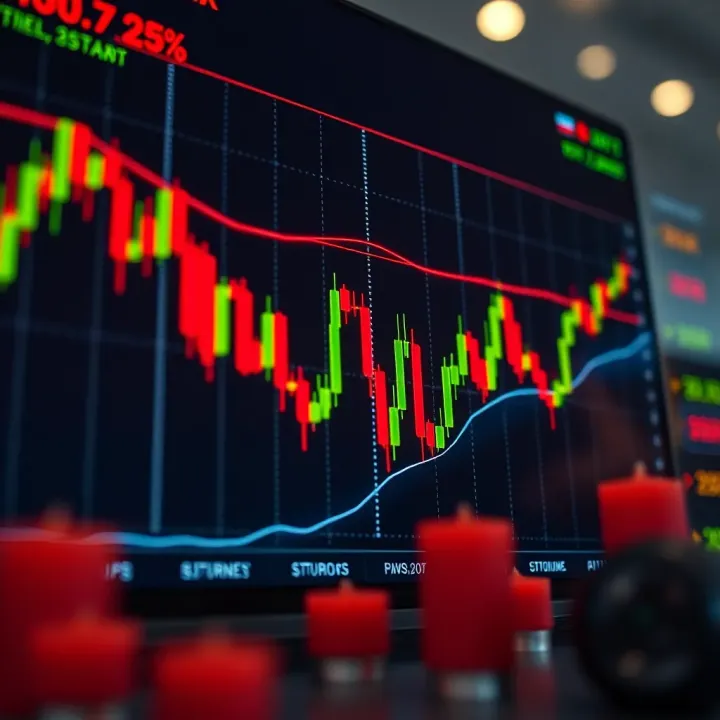
Understanding how candlestick patterns form and what they signify helps you make more informed decisions instead of relying solely on guesswork or technical indicators. You can spot early signs of trend reversals or continuations and adjust your trades accordingly.
Remember: No single candlestick pattern guarantees success. It’s essential to combine pattern recognition with other tools like volume analysis, support and resistance levels, and broader market context.
They give immediate visual clues about market sentiment.
Patterns often repeat because human emotions in trading don’t change.
Unlike complex indicators, candlestick formations are straightforward and cover price behaviour from multiple angles.
Body: Difference between open and close prices. A long body suggests strong buying or selling.
Wicks (Shadows): High and low prices during the interval, showing price rejection or volatility.
Colour: Traditionally, green or white means price closed higher; red or black means it closed lower.
By getting familiar with these elements, you can quickly read candlestick charts and understand underlying market psychology. This guide covers the most reliable patterns that traders in Pakistan and worldwide rely on, including some with distinct local market examples.
Keep in mind, practicing chart reading over time will sharpen your ability to spot these patterns and use them to your advantage.
Understanding candlestick patterns is fundamental for anyone involved in trading, whether stocks, forex, or cryptocurrencies. These patterns provide a snapshot of market psychology and price action, helping traders make timely decisions. By learning the basics, you can read price charts more effectively and catch potential turning points that other chart types might miss.
Candlestick patterns originated in Japan centuries ago, initially used by rice traders to monitor price movements. They consist of a rectangular 'body' and thin lines called 'wicks' or 'shadows' above and below. The body represents the opening and closing prices within a given time frame, while the wicks show the highest and lowest traded prices. This structure visually summarises a lot of market data in one symbol.
Unlike line charts that simply connect closing prices or bar charts with just a few data points, candlesticks give a fuller picture of the trading session. For example, they reveal not just where the price ended but also how volatile or decisive the price was. This detail helps traders spot patterns indicating strength or weakness before the market moves significantly.
Reading open, high, low, and close prices from candlesticks is straightforward but crucial. The body's top and bottom edges mark the open and close; whether the price rose or fell during the session is usually indicated by colour (often green for bullish, red for bearish). The wicks extend from these points and show the full price range. For instance, a long upper wick with a short body can signal selling pressure despite a price increase.
Candlestick patterns act as signals of market sentiment. For example, a hammer pattern often suggests buyers are gaining control after a decline, while a shooting star may warn of sellers stepping in during an uptrend. Identifying these hints early allows traders to align their positions with the prevailing market mood.
They also help in predicting price direction by showing potential reversals or continuations. For example, an engulfing pattern occurring at a key support area might indicate a strong upward move is looming. These clues are especially useful in busy markets where quick decisions matter.
However, candlestick patterns are not foolproof. They work best when combined with other tools like volume, support and resistance levels, or trend indicators. Misreading patterns or relying on them in isolation can lead to false signals and losses. Also, patterns may look similar but mean different things depending on the market context. So, discipline and practice are key.
Candlestick patterns are powerful but should be part of a broader trading strategy, not used alone.
In summary, the basics of candlestick patterns offer a window into market dynamics that price data alone can't provide. Learning their origins, structure, and how to interpret key price points builds a solid foundation. Then, recognising their role in signalling sentiment and helping foresee price moves equips traders to approach markets with more confidence and insight.
Single-candlestick patterns offer traders quick signals about market sentiment without waiting for multiple periods. Recognising these patterns can help you make timely decisions, especially when acting on short-term price moves. Despite their simplicity, they hold significant practical value, but interpreting them requires attention to context and trend.
Visual features and formation: Both Hammer and Hanging Man look quite similar—a small real body near the top of the candlestick with a long lower shadow at least twice the length of the body, and little to no upper shadow. The formation indicates that sellers pushed prices down during the session but buyers managed to bring them back up by close.
How context affects their meaning: The same shape signals different things depending on prior price action. A Hammer appearing after a downtrend typically signals a potential bullish reversal, reflecting buyers stepping in. Conversely, a Hanging Man after an uptrend warns of a possible bearish reversal, suggesting sellers tested the waters. Without the proper trend context, these patterns can be misleading.
Examples of bullish and bearish implications: For instance, if trading Pakistani stocks like Engro Corporation and you spot a Hammer after a steady dip, it might hint at price support and an upcoming upswing. On the other hand, a Hanging Man on Habib Bank Limited's chart after a prolonged rise could suggest sellers are gaining strength and a drop may follow.
Types of Doji and their distinctions: Doji candlesticks form when opening and closing prices are nearly equal, creating a cross or plus shape. Common types include the standard Doji, Dragonfly Doji (long lower shadow), and Gravestone Doji (long upper shadow). Each offers subtle differences in market psychology that traders should note.
Indecision in the market: A Doji reflects indecision as neither bulls nor bears have dominated. This often occurs at key levels where the market pauses to decide the next direction. In Pakistan's markets, spotting a Doji during a busy trading session could mean investors are uncertain due to upcoming economic announcements or geopolitical developments.

Interpreting a Doji in trend analysis: In an uptrend, a Doji might warn that bullish momentum is weakening. In a downtrend, the same Doji could indicate sellers’ control is fading. However, confirming signals from other patterns or volumes is essential before acting on a Doji alone.
Definition and shape: Spinning Tops are candlesticks characterised by small real bodies surrounded by longer upper and lower shadows, showing that prices moved significantly during the session but closed near the open.
Market uncertainty signals: These patterns signal market uncertainty or a potential pause. When you see Spinning Tops in the middle of a trend in Pakistan's stock exchange, it often means traders are uncertain about pushing prices further, perhaps waiting on corporate announcements or economic data releases.
Trading strategies involving spinning tops: Traders usually wait for the next candlestick to confirm direction after a Spinning Top appears. For example, if you're trading forex pairs popular in Pakistan, like USD/PKR, a Spinning Top followed by a strong bullish candle could be a green flag to buy. Ignoring the pattern’s context, however, may lead to false signals.
Recognising these single-candlestick patterns and their context in local market scenarios equips you with timely clues to better trading decisions. Still, always combine them with other forms of analysis for reliable results.
Multiple-candlestick patterns offer deeper insights than single-candle formations because they reflect a series of market decisions over time. These patterns help traders spot potential trend reversals or confirm ongoing momentum. In Pakistan’s often volatile markets, recognising these patterns can be a game-changer, especially when combined with volume and support/resistance levels.
A bullish engulfing pattern happens when a small bearish candle is immediately followed by a larger bullish candle that completely covers or "engulfs" it. This shows a shift in control from sellers to buyers, signaling possible upward momentum. For example, in KSE-100 index charts, a strong bullish engulfing near a support zone often suggests a rebound.
Conversely, a bearish engulfing pattern appears when a small bullish candle is followed by a larger bearish candle that swallows it. This hints sellers gaining strength, warning of a potential downward reversal. Traders watch for this pattern near resistance areas, like when a stock like PSO faces selling pressure after a rally.
Volume is key to confirming engulfing patterns. Higher-than-average volume during the engulfing candle indicates genuine buying or selling interest. Without volume support, these patterns are less trustworthy. In Pakistani stocks, patterns seen on thin volume—common in smaller cap shares—may easily fail, so cautious interpretation matters.
Morning and evening stars are three-candle setups signalling strong trend reversals. The morning star starts with a bearish candle, followed by a small neutral candle (showing indecision), and then a bullish candle closing well into the first candle’s body. The evening star is the opposite: bullish, neutral, then bearish candle.
These patterns spot trend exhaustion and turning points. A morning star often signals the end of a downtrend and the start of buying interest, while an evening star warns a bullish run may be ending. Such signals are valuable in markets like Lahore Stock Exchange, where trend shifts can happen fast.
In practical terms, traders may notice a morning star in textiles or bank stocks after a significant decline, hinting at recovery. The evening star has appeared in energy sector shares during correction phases. Watching these with broader market sentiment improves decision quality.
The three white soldiers pattern consists of three successive bullish candles with each closing near its high and opening within the previous candle's body. This shows strong, steady buying. The three black crows pattern is the bearish equivalent, with three red candles closing near their lows.
These patterns point to sustained directional strength. Three white soldiers often confirm a bullish breakout, while three black crows warn of prolonged selling pressure. They help traders avoid chasing quick spikes or dips.
Traders use these patterns to confirm signals from other indicators like RSI or moving averages. For example, spotting three white soldiers near an oversold RSI level in a cement stock can offer a confident entry point. Combining these patterns with volume and market news sharpens accuracy.
Multiple-candlestick patterns don’t guarantee trends but provide powerful clues when combined with volume and broader market analysis. Understanding their nuances puts you a step ahead in Pakistan’s dynamic trading scene.
Using candlestick patterns wisely can make your trading far more reliable. These patterns work best when matched with the overall market situation rather than taken on their own. Understanding their strengths and limits helps you reduce mistakes and trade with better confidence.
Combining patterns with support and resistance can improve your accuracy significantly. For instance, spotting a bullish engulfing pattern near a strong support level often signals a genuine bounce, not just random price movement. Say a stock like OGDC reaches its historical support around Rs 85 and you see a hammer candle there — that’s a stronger buy signal than a hammer appearing mid-trend without any nearby support.
Equally, resistance zones can be good places to watch for bearish patterns. If a hanging man forms near a resistance line at Rs 120, it might hint at a pullback. Combining candlestick signals with these price levels helps you avoid jumping in too early or late.
Importance of trend direction cannot be overstated. Candlestick patterns carry different meanings depending on whether they appear in an uptrend, downtrend, or sideways market. A doji in a strong uptrend may suggest hesitation, possibly a reversal or consolidation. But the same doji in a choppy or sideways move might just mean indecision among traders, signalling no clear direction.
For practical trading, confirm the prevailing trend first with tools like moving averages or trendlines before acting on a candle signal. In Pakistan’s stock market, this can save you from false optimism during volatile phases influenced by political news or foreign inflows.
Avoiding false signals is key, especially in fast-moving markets like crypto or forex. No single candlestick pattern guarantees a price move. That's why relying solely on them can lead to losses. For example, a morning star pattern might fail if the volume is very low or if global market news dominates trading behaviour.
Look for confirmation such as increased volume, alignment with broader market moves, or other supporting indicators. An ill-timed pattern without confirmation could easily trick traders into bad entries.
Setting stop-loss orders is essential to manage risk. Once a pattern triggers your entry, place stop-loss a little beyond the recent candle extremes. For example, if you buy after a bullish engulfing, put the stop a few paisa below its low. This limits your loss if the market turns against you, protecting your capital against sudden spikes or news shocks especially common in local markets.
Position sizing based on pattern strength helps you control exposure effectively. Strong, well-confirmed patterns near key levels allow a bigger position size. Weak or isolated signals deserve smaller trades because their reliability is lower. This approach means you don’t blow your account on a single pattern failing unexpectedly.
For instance, when trading PSX stocks, you might allocate more capital when a three white soldiers pattern appears on heavy volume compared to a small spinning top in a no-trend situation.
Using patterns with other indicators increases success chances. For example, combine candlestick patterns with Relative Strength Index (RSI) to detect overbought or oversold conditions. A bearish engulfing at an RSI above 70 is a stronger sign to sell. Similarly, MACD crossovers can support the reversal signalled by a morning star pattern.
This blend of chart types reduces guesswork and makes your strategy sounder. It also helps adapt to various markets — whether the volatile Pakistani rupee forex rates or steadier large-cap stocks.
Relying on candlestick patterns within the proper market context and risk framework turns guessing into informed trading decisions. Always think beyond the pattern itself.
A practical cheat sheet for candlestick patterns helps traders quickly recall and apply key formations without wading through lengthy explanations. In trading, timing and clarity are everything. Having a concise visual and textual guide boosts confidence and speeds up decision-making, especially during active market hours.
Such a cheat sheet acts like a quick-reference toolkit, summarising patterns, their meanings, and typical outcomes. For instance, a bull trader watching the Pakistan Stock Exchange (PSX) could swiftly recognize a bullish engulfing pattern and decide to enter a position rather than second-guessing.
Clear illustrations of each pattern aid recognition and learning. Seeing the exact shape and proportions of patterns helps traders spot these formations on live charts. For example, the distinct hammer candle with its small body and long lower wick is easier to find if you can picture it well.
These illustrations also clarify subtle differences between similar patterns, such as the harami versus engulfing patterns. This reduces misinterpretation and avoids unnecessary trades based on mistaken signals.
Recognition tips for quick identification focus on the key elements that differentiate one pattern from another. For instance, noting the candle’s real body size relative to its shadows in spinning tops, or the gap between candlesticks in morning star patterns.
Such pointers enable traders to scan charts rapidly while filtering noise. This is especially helpful during volatile periods when multiple candles form quickly.
Summary table of pattern meanings consolidates essential information in one place. It usually includes the pattern name, visual cues, typical sentiment (bullish or bearish), and suggested actions.
This tabular presentation ensures traders don’t have to memorise every detail but still access important facts at a glance, improving consistency in pattern-based trading strategies.
How to keep a trading journal with pattern notes is key for continuous improvement. Recording trades alongside identified patterns, market context, and outcomes helps traders analyse what worked and what didn’t.
Such journaling highlights personal biases or recurring mistakes, like misreading doji candles in trending markets. Over time, this practice sharpens pattern recognition and risk management.
Real examples from Pakistani markets make pattern study relatable and trustworthy. Seeing how candlestick patterns behaved in PSX or Karachi's oil futures adds practical insight beyond textbook definitions.
For example, analysing the bearish engulfing pattern that preceded a sharp decline in OGDC shares during a specific week clarifies its significance for local traders.
Combining patterns with daily analysis means using candlestick signals alongside volume data, support and resistance levels, or macroeconomic news. Patterns rarely tell the full story by themselves.
For instance, spotting a morning star pattern near a recognised support zone on the PSX adds weight to a potential upward move. Without such context, relying on patterns alone may lead to false signals and unnecessary losses.
A well-organised cheat sheet and disciplined routine turn candlestick patterns from theory into effective trading tools, particularly in Pakistan's dynamic market environment.
📉 Learn how bearish candlestick patterns can signal market drops and help refine your trading plan with practical tips for better prediction and strategy.

📈 Master key candlestick patterns for trading success! Learn how single, double & multiple setups reveal market moves and boost your buying & selling skills.

📈 Dive into advanced candlestick patterns! Master key formations and sharpen your trading strategies in Pakistan to better predict market trends. 💹

Master 35 key candlestick patterns 📉📈 for smarter trading! Learn to spot trends, make better decisions, and grab a handy PDF guide for quick reference.
Based on 10 reviews