

Binary Conversions Made Simple
Learn how to convert binary to decimal and vice versa with clear steps, common mistakes to avoid, and useful tips for easier binary conversions 💻🔢.
Edited By
William Hughes
Octal numbers and binary are both fundamental in computing and digital electronics. Octal, or base-8, is often used because it compresses binary data, making it easier to read and manage without losing information. Each octal digit corresponds neatly to three binary digits, thanks to 8 being a power of 2 (2³ = 8). This makes conversion between the two systems straightforward rather than relying on complex calculations.
Understanding how to convert octal to binary is quite useful, especially for traders and investors dealing with algorithmic trading systems or blockchain technology, where binary data processing is crucial. It also helps financial analysts working on fintech solutions that require handling low-level data efficiently.
The key to converting an octal number to binary lies in replacing every single octal digit with its 3-bit binary equivalent. For example, the octal digit 5 translates to 101 in binary, and 7 becomes 111. This direct substitution avoids errors common in other number system conversions.
Here’s why this method stands out:
Simplicity: Each octal number breaks down into a fixed group of binary digits.
Accuracy: Reduces chances of mistake compared to converting octal first to decimal, then binary.
Speed: Enables quick calculations useful in programming, digital circuit design, and cryptography.
For instance, octal number 254 can be broken into digits 2, 5, and 4:
2 in binary: 010
5 in binary: 101
4 in binary: 100
Putting these together, 254 (octal) becomes 010101100 (binary).
Remember, always pad the binary groups to three digits. This consistent padding ensures the converted binary is reliable for programming or hardware logic.
By mastering this method, you sharpen your data interpretation skills, a must-have for professionals interacting with digital systems or advanced financial modelling tools. The next sections will guide you through step-by-step examples, common pitfalls, and practical uses of this conversion technique.
Understanding octal and binary number systems is essential for anyone working with digital electronics or computing, particularly in tasks like number conversion and programming. These two systems provide different ways of representing the same numerical values, but each has its own advantages and practical uses. Traders and financial analysts involved in technology sectors, or those interested in hardware design and software development, often encounter these systems in data processing and analysis.
The octal number system uses base-8 notation, which means it consists of eight unique digits ranging from 0 to 7. Each position in an octal number represents a power of 8, similar to how decimal places in our everyday numbers represent powers of 10. This system is particularly practical because it condenses binary numbers into a shorter, more manageable form. For example, the octal number 17 corresponds to 1×8¹ + 7×8⁰ = 15 in decimal.
Octal is convenient for humans who read or write binary data since each octal digit can represent exactly three binary digits (bits). For instance, the octal digit 5 corresponds to the binary sequence 101. This relationship makes octal a handy shorthand, simplifying the interpretation and transcription of lengthy binary strings commonly seen in computing and digital circuits.
It's important to note that octal digits are strictly limited to the digits 0 through 7. Any digit outside this range is invalid in octal representation. This restriction ensures a direct correlation between octal digits and three-bit binary groups. If a digit like 8 or 9 appears mistakenly in an octal number, the conversion to binary will be incorrect.
In practical terms, this means when handling octal data, especially in programming or when reading outputs of digital systems, you must verify that all the digits are within 0–7. This check helps avoid errors that can cause misinterpretations or bugs in software and hardware designs.
Binary is the foundation of digital computing, expressing numbers in base-2. It uses only two digits: 0 and 1. Each binary digit, or bit, represents a power of 2, making binary numbers the most natural way for computers to process and store data. For example, the binary number 1101 equals 1×2³ + 1×2² + 0×2¹ + 1×2⁰ = 13 in decimal.
Because computers operate using two states (on/off, true/false), binary code is the language that underlies all computing processes. From microprocessors to memory storage, everything inside digital devices depends on binary representations.
Binary numbers play a central role in technology fields including finance and trading platforms, where calculations, data transmission, and encryption rely on binary-based operations. For instance, when trading algorithms run on Pakistani stock exchanges like PSX, the underlying computations are powered by binary code.
Digital circuit design also depends on binary numbers, where logic gates and flip-flops interpret binary signals to perform specific operations. This explains why converting octal numbers to binary is useful; it bridges a human-friendly format with machine-level information processing.
Mastering these basics helps you understand how data moves and transforms within modern digital systems – knowledge crucial for those involved with tech-driven financial markets and product development.
Converting octal numbers to binary is straightforward once you grasp the step-by-step method. This approach breaks down the process into manageable parts, making it especially practical for traders, investors, and financial analysts who deal with digital systems or computational tools that process data in various numeral systems. Mastering this technique reduces errors in interpreting data represented in octal or binary, which can be crucial in financial modelling and cryptocurrency algorithms.
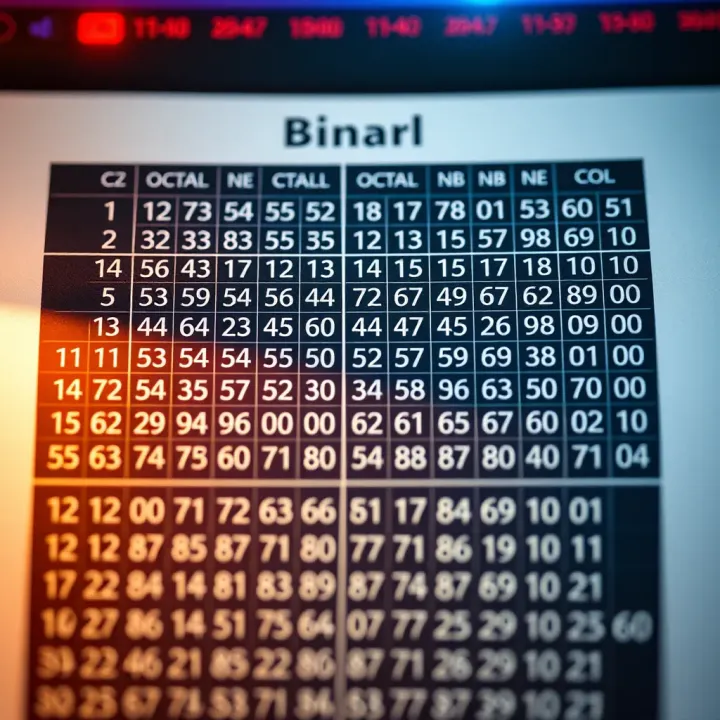
Each digit in an octal number corresponds exactly to a group of three binary digits (bits). This is because octal is base-8 and binary is base-2, and 8 equals 2 to the power of 3, meaning every octal digit maps naturally to a 3-bit binary sequence. For example, the octal digit 5 converts to 101 in binary, and 7 becomes 111.
This mapping helps simplify conversion since you don’t have to convert the entire number at once. Instead, you convert each digit individually, which allows quicker calculation and verification, especially when dealing with long numbers typical in digital finance or stock market data feeds.
Using a conversion table speeds things up. Such a table lists all octal digits from 0 to 7 alongside their 3-bit binary equivalents:
0 → 000
1 → 001
2 → 010
3 → 011
4 → 100
5 → 101
6 → 110
7 → 111
Having this at hand means you don’t rely solely on memory, reducing calculation errors. Traders working with embedded systems or financial devices benefit from these ready references to convert raw data quickly.
Once you convert each octal digit separately, the next step is to put all the 3-bit groups together in order. Joining these binary groups forms the full binary equivalent of the original octal number. For example, octal 157 converts as:
1 → 001
5 → 101
7 → 111
Joined together, this becomes 001101111 in binary.
However, it's important to handle leading zeros correctly. Often, those zeros before the first '1' don't add value and just make the number look longer. Removing unnecessary leading zeros — in this case, ignoring the starting 00 — you get 1101111. This step avoids confusion and makes the binary number easier to read and use.
Always trim leading zeros after combining groups unless you are required to keep fixed bit lengths for certain digital protocols or algorithms.
Together, these steps provide a clear path for anyone working with octal and binary numbers, ensuring accuracy and ease whether analysing stock trading data or developing digital solutions.
Examples play a vital role in making the process of converting octal numbers to binary clear and tangible. For financial analysts and traders, understanding this method with practical examples ensures accurate data handling, especially when dealing with systems that rely on binary codes at the hardware level. Beyond theory, seeing explicit examples helps avoid errors and solidifies comprehension.
Start with single-digit octal numbers to build a strong foundation. For instance, the octal digit 5 translates to binary as 101. Since each octal digit corresponds exactly to a 3-bit binary group, this one-to-one mapping simplifies early learning and quick calculations. Traders working with embedded devices, such as data loggers or automated terminals, often encounter binary codes derived from octal values. Being able to convert single digits swiftly prevents misinterpretations.
Moving to multiple digits, consider the octal number 127. Each digit converts individually: 1 → 001, 2 → 010, and 7 → 111, making the full binary number 001010111 when joined. Traders analysing device signals or running software might need to break down such multi-digit values for troubleshooting or verification. This stepwise method avoids confusion while preserving accuracy in financial systems tied to technical infrastructure.
Octal to binary conversion is common in computing where low-level data management is necessary. Programmers working on assembly language or debugging embedded systems in Pakistan’s fintech sector benefit from understanding this. For example, when a device returns octal status codes, interpreting these in binary facilitates error detection and system optimisation. Such skills support smoother operation of software platforms dealing with real-time transactions or automated trading signals.
In hardware design, digital circuits use binary extensively, yet designers often start with octal inputs to organise binary signals efficiently. Engineers designing circuits for Pakistan’s expanding electronics manufacturing hubs convert octal values into binary to simplify logic gate configurations. This practice reduces complexity and speeds up prototyping of devices integral to digital payments or stock exchange systems. Grasping this conversion method directly impacts project efficiency and accuracy.
Clear examples bridge the gap between theory and real-world applications—helping traders, analysts, and engineers interpret and use data correctly.
When converting octal numbers to binary, small errors can cause the entire result to be incorrect. Understanding common pitfalls helps you avoid mistakes that could waste time or lead to flawed calculations. These issues usually arise from misinterpreting octal digits or mishandling binary groups, both critical for accurate conversion.
The octal number system uses digits only from 0 to 7. Sometimes, especially when octal numbers are written or read quickly, digits beyond this range slip in. For example, including an 8 or 9 in an octal number like 178 is incorrect. This can happen if you confuse decimal and octal inputs, a common issue for beginners or during quick mental conversions.
Misreading or inputting invalid octal digits directly affects the conversion process. Since the octal system represents values in base-8, encountering a digit outside 0-7 means the number ceases to be octal. This invalid input will produce wrong binary outputs or cause errors during computational conversion tools.
If you convert an octal number containing digits above 7, the binary equivalent will not represent a valid or meaningful value. For example, if you convert 178 as octal, the digit 8 does not correspond to any 3-bit binary sequence. As a result, the binary string will be incorrect or nonsensical, leading to faulty interpretations.
In software or embedded systems where strict data formats apply—like microcontroller registers handling octal-coded inputs—such errors can cause system faults or unexpected behaviour. Thus, always check for digits beyond 7 before starting conversion.
When converting each octal digit to its binary form, each must become a 3-bit binary segment (since octal is base-8 and binary base-2, 3 bits represent all octal digits). Missing even one bit in any group disrupts the integrity of the final binary number.
For instance, converting octal 25 requires 2 -> 010 and 5 -> 101. If you skip a bit accidentally and write 01 101 instead of 010 101, the binary number changes meaning entirely. This error is common when manually writing conversions or performing calculations without a reliable reference table.
On the other hand, incorrectly removing or adding leading zeros in each binary group confuses the overall result. While leading zeros in the final binary number can usually be discarded, each 3-bit group for an octal digit must preserve its full length to accurately represent that digit.
An example: Octal digit 3 is 011 in binary. Writing it as 11 loses the significance of the leading zero. Combining such truncated groups results in wrong binary representation, especially when converting back or performing bitwise operations in programming or hardware design.
Accuracy in grouping bits and recognising valid octal digits is key. Maintaining a clear conversion table and double-checking input digits can prevent these common but avoidable problems, saving time and ensuring data correctness in technical work.
Remember, practising careful digit recognition and binary grouping pays off well in precision, especially in fields involving embedded systems, coding, or financial computations relying on base conversions.
In Pakistan’s growing technology sector, understanding how to convert octal numbers to binary is more than just academic—it’s a practical skill widely applied in digital electronics and computing. This conversion simplifies working with machine-level data and aids software development in embedded systems, which are increasingly important in local industries.
Embedded systems programming plays a crucial role in Pakistan’s tech landscape, especially in consumer electronics, automotive systems, and telecommunications devices. Programmers dealing with microcontrollers and embedded chips often work with binary data, and octal notation helps condense this information efficiently. For example, when developing firmware for a microcontroller in a smart meter or security system, converting octal addresses or control bits into binary simplifies coding and debugging, making the system more reliable.
When engineers write code or interface with hardware at the bit level, octal to binary conversion enables clear and precise manipulation of data resources. This method also enhances communication between software and hardware layers, which is critical when designing embedded systems for automated production lines or IoT devices emerging in Pakistan’s manufacturing hubs.
Hardware design processes in Pakistan’s electronic manufacturing use octal to binary conversion frequently to streamline circuit design. In digital circuit layout and testing, hardware engineers convert octal values into binary to visualise logical states of gates and registers. For instance, when designing a memory module or an Arithmetic Logic Unit (ALU), binary forms derived from octal inputs guide the configuration of logic blocks and timing circuits.
This conversion also helps in writing simulation scripts and verifying hardware functionality before physical implementation, saving both time and cost. As Pakistan pushes to increase local production of electronic components, such skills become vital for companies involved in PCB design and embedded hardware solutions.
In Pakistani schools and universities, octal to binary conversion forms part of computer science and electronics curricula. Students learn this early in intermediate-level computer science courses and continue practising it in university degrees focusing on electrical engineering and software development. For example, syllabi from boards like the Federal Board and Punjab Board include sections where students convert between different number systems to grasp digital logic fundamentals.
Understanding this conversion equips students with the basic skills necessary for programming low-level hardware and working with microprocessors, paving the way for careers in Pakistan’s expanding tech sector.
Technical exams such as the National Talent Hunt Scholarship, NTS tests for engineering colleges, and entry tests like ECAT also feature questions on number system conversions. Mastering octal to binary conversion helps candidates tackle these sections confidently, improving their overall exam performance.
Practising this conversion is not only important for exam success but also builds problem-solving skills that are crucial in technical job roles.
In sum, the ability to convert octal to binary is a foundation stone for Pakistan’s technology professionals and students alike. It supports embedded system development, hardware design, and academic success essential for the country’s digital advancement.
Learn how to convert binary to decimal and vice versa with clear steps, common mistakes to avoid, and useful tips for easier binary conversions 💻🔢.
Learn to convert binary numbers to decimal with easy steps and practical examples 🧮. Understand the process and its role in computing and daily life.

Learn binary multiplication step-by-step 🔢, from basic rules to practical tips, with clear examples to master this key digital skill in everyday tech.

🔢 Learn how to easily convert numbers between binary and hexadecimal systems with clear steps and practical tips for computing and electronics.
Based on 12 reviews