

Best Trading Apps in Pakistan: How to Choose Right
Looking for the best trading app in Pakistan? Discover key features, security tips 🔒, cost factors 💰, and local market insights 📈 to trade smartly.
Edited By
Sophie Hudson
The economic calendar outlines upcoming financial events and data releases that shape market trends daily. For investors in Pakistan, understanding this calendar helps navigate the complexities of the stock market, foreign exchange, and even crypto investments.
Economic events like inflation reports, interest rate decisions by the State Bank of Pakistan (SBP), and trade balance figures often cause noticeable market moves. For example, an unexpected rise in inflation can lead to SBP raising the policy rate, pushing bond yields higher and affecting stock valuations. Similarly, changes in Pakistan's export data might influence the rupee's value against the US dollar.
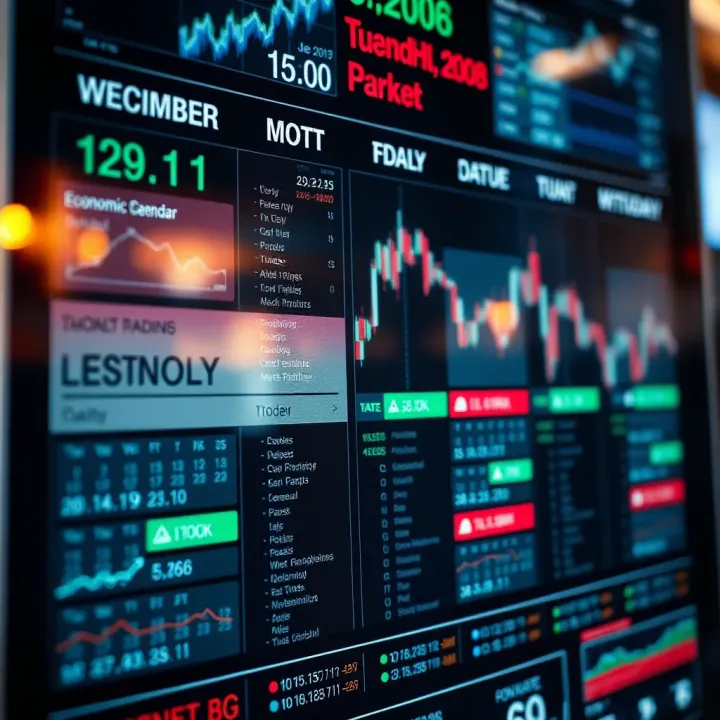
Keeping an eye on scheduled releases allows investors to anticipate volatility and adjust portfolios proactively rather than reacting blindly.
Interpreting the economic calendar involves more than just knowing dates; it means understanding the impact of indicators such as GDP growth, Consumer Price Index (CPI), and employment statistics. For instance, a slipping GDP growth rate signals slower economic activity, which can discourage equity investments in sectors like manufacturing or textiles.
Using the economic calendar effectively requires a few practical steps:
Identify key events relevant to your investment focus, such as SBP’s Monetary Policy Statement for fixed income investors or Pakistan’s trade data for forex traders.
Monitor forecasts from credible Pakistani financial platforms and analysts before the release.
Compare actual data against expectations swiftly to spot market reaction opportunities.
In markets like Pakistan’s, where external factors and domestic policy shifts frequently collide, the economic calendar becomes an even more critical tool. Whether you trade shares on the Pakistan Stock Exchange (PSX), invest in commodities affected by international demand, or manage a crypto portfolio sensitive to global economic news, this calendar offers a roadmap.
In sum, a solid grasp of the economic calendar helps you make informed decisions, manage risks, and even spot opportunities before they become obvious to the crowd. This article will explore the major events to watch and practical tips tailored for the Pakistani investor’s context.
An economic calendar is essentially a schedule that lists key financial events, economic reports, and data releases for specific dates and times. It helps investors, traders, and financial analysts spot the moments when markets are likely to react. For example, Pakistan’s State Bank interest rate announcements or the quarterly GDP data often shake the stock market or affect the rupee’s value. Knowing when these events happen enables investors to plan their trades and investment decisions better.
An economic calendar organises important events like inflation reports, employment figures, and central bank meetings by date and time. This scheduling helps investors track crucial updates without missing vital information. For instance, when the Consumer Price Index (CPI) is released, investors expect signals on inflation, which influence market sentiment. Traders closely watch the calendar to prepare for increased market volatility around such events.
Besides timing, the calendar plays a valuable role in monitoring the health of an economy. It puts data releases into perspective for investors, showing trends in unemployment, trade balances, and industrial production. This insight helps investors understand whether the economy is expanding or slowing down. For example, a rising unemployment rate over several months might hint at a weakening economy, urging investors to reconsider their stock exposure.
Economic events directly affect stock prices and currency markets. A positive GDP growth figure can boost investor confidence, pushing stock indices upwards, while weak data might trigger sell-offs. In Pakistan, for instance, a favourable export number often strengthens the rupee (PKR) against the dollar because it suggests more foreign currency inflow. Conversely, if inflation shoots up unexpectedly, the currency may weaken as investors fear tighter monetary policy.
Commodity prices and bond yields also respond to economic events in predictable ways. When inflation heats up, gold prices generally rise as investors seek protection against currency depreciation. On the other hand, bond prices tend to fall, and yields rise when central banks signal higher interest rates. In Pakistan’s market, if the State Bank hints at increasing rates to fight inflation, government bond prices may drop, impacting fixed-income portfolios.
Keeping an eye on the economic calendar lets you anticipate these market reactions, making it a practical tool for timing your investments and managing risks more effectively.
Economic calendars list indicators that signal the health and direction of an economy, which investors rely on to make informed decisions. These indicators quantify aspects such as growth, inflation, employment, monetary policy, and trade, all of which influence asset prices and market sentiment. In Pakistan’s context, tracking these releases helps investors anticipate market movements on the Pakistan Stock Exchange (PSX), currency fluctuations, and sector-specific impacts.
Gross Domestic Product (GDP) figures play a central role in showing the overall economic growth of a country. GDP measures the total value of goods and services produced over a period, reflecting economic momentum. For investors, a rising GDP signals expanding business activity, often boosting stock markets and Pakistani rupee strength. Conversely, a slowing GDP growth can trigger caution, especially for equities linked to consumer demand or exports.
Inflation rates and Consumer Price Index (CPI) track the changes in prices for a typical basket of goods and services. This indicator gauges consumer purchasing power and cost of living. When inflation rises sharply in Pakistan, it usually prompts the State Bank of Pakistan (SBP) to reconsider interest rates, influencing borrowing costs. For investors, high inflation can squeeze profit margins and hurt fixed-income returns. Conversely, moderate inflation can be a sign of healthy demand.
Unemployment statistics indicate the labour market’s condition, revealing how many people are actively seeking work. A high unemployment rate often signals economic distress, which can weigh down consumer spending and corporate earnings. Investors look at these numbers to assess risks to domestic demand and anticipate shifts in sectors sensitive to consumer confidence, such as retail and banking.
Central bank interest rate decisions are among the most closely watched economic events. The SBP’s policy rate directly affects financing costs for businesses and consumers. When the SBP raises rates to combat inflation, it usually cools down economic activity but strengthens the rupee. Lower rates tend to encourage borrowing and investment but may weaken the currency. Investors actively adjust portfolios ahead of these announcements to manage risks and find opportunities.
Trade balance and export-import data reveal how much a country earns from exports relative to what it spends on imports. Pakistan often runs a trade deficit, and widening gaps can hurt the rupee and increase inflationary pressures. Improvements in trade figures may strengthen investor confidence in export-oriented sectors like textiles and enhance views on currency stability. Keeping an eye on this data helps investors factor external sector health into their decisions.
Each of these economic indicators shapes market expectations and risk assessments. For example, when GDP growth exceeds forecasts, it often leads to local equity gains; but unexpected inflation spikes can trigger volatility. In Pakistan, where economic shifts can be swift due to factors like currency pressures and geopolitical events, combining these data points provides better clarity.
Investors benefit by aligning their strategies with changing economic signals—whether adjusting asset allocation, hedging currency risk, or timing entry and exit points. This approach helps manage uncertainties around loadshedding impacts, SBP policy moves, and global commodity price changes affecting Pakistan’s economy.
Using the economic calendar effectively helps investors time their market moves and make smarter portfolio decisions. It highlights upcoming economic events that can shake markets, allowing participants to plan ahead. This approach reduces surprises and helps investors react to developments instead of guessing or overreacting.
Anticipating volatility around key announcements is essential. Economic data like inflation numbers or State Bank of Pakistan (SBP) policy decisions often spark big swings in the Pakistan Stock Exchange (PSX) and currency markets. Traders can expect sharper movements minutes before and after such reports. For example, ahead of SBP interest rate announcements, the rupee often shows increased volatility. Being aware of these timings helps investors avoid getting caught on the wrong side of sudden price shifts.
Adjusting portfolios ahead of economic reports means positioning investments based on anticipated outcomes. If inflation data is expected to rise, investors might reduce holdings in sectors sensitive to higher costs, such as textiles or consumer goods, and pivot to defensive areas like utilities. Similarly, exporters may adjust exposure depending on trade balance figures. This strategic rebalancing based on calendar events helps manage risk and capture opportunities.
Combining fundamental and technical analysis improves decision-making. While the economic calendar signals when important data will surface, fundamental analysis assesses how that data reflects economic health. Technical analysis then examines price trends and patterns to time entry or exit. For example, if a positive GDP report aligns with a breakout on a stock chart, it strengthens the case for buying. This layered approach helps avoid relying solely on one method and creates a fuller picture.
Using local and global economic data for better insight is necessary, especially in Pakistan’s interconnected market. Local indicators like inflation or SBP policy influence the rupee and PSX, but global factors matter too. US Federal Reserve rate changes or China’s trade data can affect capital flows and commodity prices relevant to Pakistan. Investors who track both domestic and international calendars are better prepared to navigate complex market dynamics. This multitiered data monitoring boosts forecasting quality and portfolio resilience.
Successful investing depends on anticipating turning points. The economic calendar, combined with solid analysis, helps reveal these moments before markets fully react.
In sum, leveraging the economic calendar is more than noting dates—it’s about embedding this knowledge into investment strategy to manage risk proactively and seize timely opportunities in both local and broader markets.
Knowing how to apply the economic calendar specifically in Pakistan’s market adds real value for investors. Pakistan’s financial landscape has unique features: the Pakistan Stock Exchange (PSX), the State Bank of Pakistan’s (SBP) monetary decisions, inflation patterns, and trade figures all move the markets in noticeable ways. Practical examples make abstract data points concrete and show how investors can adjust tactics accordingly.
SBP’s monetary policy decisions, including changes in interest rates, significantly impact both the PSX and the Pakistani rupee's value. For example, when SBP raises the policy rate, it usually leads to higher borrowing costs for businesses. This can slow economic activity, prompting stock prices to drop, especially in sectors reliant on loans like banking and real estate. On the currency side, a higher interest rate tends to attract foreign capital, bolstering the rupee’s value against the dollar.
Investors tracking SBP’s announcements closely can spot these market reactions early. Before a scheduled meeting, many adjust portfolios—selling shares in interest-sensitive industries or buying government bonds that become more attractive after a rate hike. This proactive approach helps avoid sharp losses or capitalise on short-term market swings.
Consumer Price Index (CPI) figures reveal inflation trends affecting purchasing power and business costs. Rising inflation pressures SBP to raise interest rates, which directly hits sectors like banking, cement, and fertilizers. For example, a surge in CPI might make banks cautious about lending growth, leading to falling bank stocks on PSX. Investors aware of these shifts rely on CPI data from the economic calendar to anticipate sector performance.
Pakistan’s export figures, also listed on the economic calendar, signal foreign exchange inflows. Increasing exports usually strengthen the rupee as dollars enter the market, while falling exports can weaken it. For instance, strong textile export numbers often support the rupee due to higher foreign currency demand. Conversely, a decline in exports during a season affected by monsoon floods or global demand drops might signal rupee depreciation.
Investors and currency traders watch export data closely to time currency trades or hedge portfolios. This data helps forecast forex trends and manage risks in cross-border investments or import-dependent sectors.
Staying tuned to economic calendar events like SBP policy and trade data provides Pakistani investors with a tactical edge, allowing smarter portfolio moves aligned with real economic shifts.
Monitor SBP’s announced policy dates to anticipate interest rate changes.
Check CPI updates to gauge inflation pressures on specific sectors.
Use export statistics to predict rupee volatility and adjust currency exposure.
Such practical examples transform economic calendar data from abstract numbers into actionable tools tailored for Pakistan’s market nuances.
Investors and traders often rely heavily on the economic calendar to time the markets, but common pitfalls can reduce its effectiveness. Being aware of these mistakes helps you avoid rushed decisions and costly errors.
Jumping to conclusions after one economic release can lead to poor decisions. For example, if Pakistan’s inflation rate suddenly spikes for one month due to a temporary factor like seasonal crop failure, it doesn’t necessarily signal persistent inflation. Reacting by immediately selling rupee-denominated assets or PSX stocks sensitive to interest rates may backfire if the inflation settles down in the following months. Instead, an investor should look for consistent trends across several months or corroborate signals with other indicators like central bank policy.
Economic data rarely tells the full story alone. For instance, a rise in unemployment in one quarter might appear negative, but if it comes after a period of rapid job creation or during fiscal tightening, it might be a normal adjustment. Investors ignoring the broader context and long-term trends risk missing the bigger picture, leading to wrong inferences. It’s crucial to combine the economic calendar with knowledge of ongoing conditions such as government policy shifts, global commodity prices, and seasonal factors affecting Pakistan’s economy.
Markets often price in anticipated economic outcomes before the actual data arrives. Say the State Bank of Pakistan signals a possible interest rate increase due to inflation fears — investors may already adjust portfolios in advance. When the official announcement comes, if it meets expectations, market reaction might be muted or even the opposite if investors were positioned for a bigger hike. Neglecting these expectations leads to misreading market responses. Therefore, it’s important to gauge analysts’ forecasts, consensus estimates, and market sentiment alongside the calendar events.
Reacting wisely to economic data means looking beyond numbers alone. Consider patterns, expectations, and background information to make informed investment choices.
By avoiding these mistakes, you can use the economic calendar as a valuable tool rather than a source of impulsive trading. Keep a clear head and wider perspective; this will serve you better in Pakistan’s dynamic markets.
Staying current with economic events is essential for investors to make timely, informed decisions. The economic calendar lists many key data releases and announcements that affect market movements continuously. Missing these updates can result in missed opportunities or unexpected market reactions. Therefore, tapping reliable sources and using practical tools is critical for active traders, financial analysts, and investors to stay ahead.
Using official government and central bank websites: The most trustworthy information often comes straight from the source. Websites of the State Bank of Pakistan (SBP) and the Pakistan Bureau of Statistics provide authentic data regarding monetary policy, inflation, trade balance, and employment figures. Checking these platforms helps avoid misinformation that circulates on social media or unofficial channels. For example, an investor waiting on the SBP's interest rate decision can get the update immediately from their official website, enabling prompt portfolio adjustments.
Following local financial news platforms: Dedicated financial news sources like Business Recorder, Dawn Business, ProPakistani, and Profit by Pakistan Today translate complex economic data into easy-to-understand insights for Pakistani investors. These platforms contextualise announcements within the local market environment and often highlight what sectors might be affected, such as banking or textiles. Besides providing timely news, they offer expert analysis and interviews that deepen understanding beyond just raw numbers.
Apps tailored for Pakistani investors: Several mobile apps now cater specifically to Pakistan's financial market, including those for stock prices, currency exchange, and economic calendar tracking. Apps like PSX Mobile and SBP’s official mobile app notify users about market movements and crucial announcements on the go. These tools help investors stay informed even when away from their desks, crucial in today’s fast-moving markets.
Customising notifications for market-relevant events: Setting alerts for only the economic events relevant to your portfolio allows efficient time management and avoids information overload. For instance, a trader focusing on the Pakistani rupee versus the US dollar might prioritise alerts on trade balance reports or foreign exchange reserves instead of global economic news, which may be less immediately impactful. Custom notifications help investors prepare for volatility around specific releases, protecting investments from sudden shifts.
The key is not just access to data but timely, focused information that matches your investment interests. Properly chosen sources and alert settings turn economic calendar data from raw figures into strategic tools.
By combining official data sources, reliable local news, and smart mobile tools, investors in Pakistan can keep pace with economic events. This not only sharpens decision-making but also helps manage risks associated with abrupt market changes.
Looking for the best trading app in Pakistan? Discover key features, security tips 🔒, cost factors 💰, and local market insights 📈 to trade smartly.

Looking for top Forex brokers in Pakistan? Discover tips on regulation, fees, platforms, and support to trade safely and smartly.💰📉📈

📈 Explore a detailed guide on binary options trading in Pakistan, learn about legal rules, top platforms, risk management, and stay safe from scams.

Explore how binary digits (bits) power computing 💻, data use in tech devices 🔧, and their role in electronics & communication 📡. Learn conversion & challenges.
Based on 15 reviews