
Best Forex Trading Indicator: What Works for You
Explore top forex indicators 📊 to boost your trading skills. Learn how to pick the best ones that fit your style and market conditions for smarter moves.
Edited By
Henry Walters
Forex trading simulators provide a practical and risk-free space for traders to sharpen their currency trading skills before committing real money. These digital platforms mimic live market conditions, offering a hands-on experience to understand price movements, test strategies, and learn trading mechanics without financial exposure.
For traders in Pakistan, where fluctuating rupee values and global market influences play a big role, using forex simulators can be a smart move. They help build confidence and understanding, especially for beginners navigating currency pairs like USD/PKR or EUR/PKR.
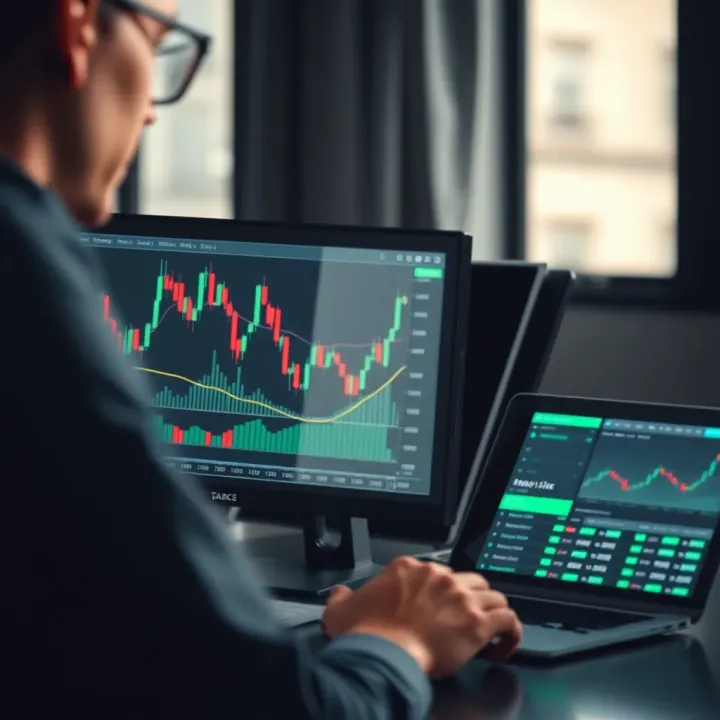
Key features of forex simulators typically include:
Real-time market data or delayed feeds to reflect currency price changes
Virtual capital to place trades without risk
Tools for technical analysis, such as charts and indicators
History tracking to review past trades and decision-making
By practising here, traders can experiment with strategies like scalping or swing trading, evaluate how leverage affects risk, or see how economic news impacts their portfolio without losing a paisa.
For Pakistani investors aiming to enter forex markets confidently, simulators offer a low-cost, efficient way to gain market insight and polish trading techniques. Seasonal Pak rupee volatility and global economic shifts make such preparation useful to improve decision-making accuracy and risk management in actual trades.
A forex trading simulator is a software tool designed to replicate the experience of trading in currency markets without using real money. This makes it an essential starting point for anyone looking to understand forex trading, whether a beginner or a seasoned trader trying new strategies. It creates a controlled environment where users can experiment and learn the ropes before committing actual funds.
Forex simulators mirror real-world market scenarios by replaying live or historical currency price movements. This feature is crucial because it gives traders a feel for how prices fluctuate due to economic events or market sentiment. For example, a trader practising on a simulator will see how sudden news about the US Federal Reserve rate decision impacts USD currency pairs, enabling them to understand volatility and timing without facing actual losses.
The biggest advantage of these simulators is the ability to practice trading without risking your capital. New traders in Pakistan can build confidence as they familiarise themselves with order placement, stop-loss settings, and take-profit levels—all key to managing risks effectively. This safe space allows trial and error in strategies without the fear of losing money. Even experienced traders use simulators to test new approaches under different market conditions before applying them in live trading.
Simulators provide users with virtual accounts loaded with demo balances—often ranging from a few thousand to hundreds of thousands in virtual Pakistani rupees or USD. This setup helps traders manage their positions just like in a real trading account, learning to size trades appropriately based on available capital. For instance, a new trader practising with Rs 1 million virtual balance can see how leverage affects both profits and losses.
A reliable forex simulator updates currency prices using real-time or slightly delayed market data feeds. It processes orders instantly or with slight delays to mimic real execution conditions. This is important because it helps traders understand how orders like market or limit orders behave under different liquidity scenarios. Price slippage—where the order executes at a slightly different price—is sometimes simulated to prepare traders for real-world quirks.
Forex trading simulators come equipped with charting tools that let traders visually analyse price movements. Technical indicators like Moving Averages, Relative Strength Index (RSI), and Bollinger Bands are available to assist in making informed decisions. For example, practising on these charts allows Pakistani traders to identify entry and exit points by observing support and resistance zones alongside indicator signals.
Using a forex trading simulator provides a hands-on learning experience, reducing costly mistakes when moving to live trading.
In summary, forex trading simulators blend realistic market data with virtual portfolios and analytical tools. This combination makes them an invaluable resource for practising currency trading strategies safely and confidently before investing real money.
Forex trading simulators come loaded with features that can significantly sharpen your trading skills before putting real money on the line. Understanding these key characteristics helps you pick the right tool and get the most out of your practice sessions. Whether it’s handling real-time data or mastering order types, these features combine to build confidence and competence in currency trading.
Using live feeds means simulators update prices exactly as the forex market moves, offering an experience close to real trading. This feature is handy if you want to train your instincts and make decisions under current conditions. For example, a Pakistani trader practising during volatile times, like around SBP policy announcements, benefits from seeing how news affects exchange rates immediately.
On the other hand, backtesting uses historical price data to evaluate how your strategy would have performed in the past. This is particularly useful when you want to refine your approach without the pressure of live market swings. You might test how a strategy reacted during past Pakistani Rupee fluctuations against the US Dollar, analysing which trades worked well. Backtesting helps uncover strengths and flaws in your tactics, improving them before live implementation.
Market orders are straightforward and execute at the current best price, allowing you to enter or exit trades quickly. Limit orders let you set a specific price at which you want to buy or sell, providing more control to capture better prices. A trader testing different strategies in a forex simulator might place a limit order to buy USD/PKR only if it falls to a favourable level, simulating disciplined entry.
Stop-loss and take-profit settings guard your trades by automatically closing positions at predefined levels. Stop-loss stops further losses if the market turns against you, while take-profit locks in gains when a target price is reached. Practising these in a simulator teaches you risk control — for instance, limiting losses when PKR fluctuates sharply due to political developments.
Position sizing lets you decide how much currency to trade based on your account balance and risk tolerance. Leverage options multiply your market exposure but can increase risk. Using these tools within a simulator helps you learn how to balance potential profits with acceptable risk, essential for Pakistani traders operating with limited capital.
Trade history and analytics provide detailed feedback on past transactions, showing win rates, profit/loss, and drawdowns. This insight supports continuous improvement by highlighting patterns like frequent early exits or overleveraged trades. For example, reviewing your simulator’s trade reports might reveal the need to adjust stop-loss levels during volatile market hours, improving real-world performance.
Mastering these key features in forex trading simulators builds the groundwork for successful live trading. Practising order types, risk management, and assessing performance enables traders to face the real market with better preparedness and confidence.
Forex trading simulators offer Pakistani traders a practical way to build their skills without risking real money. These tools allow newcomers and experienced traders alike to practise in a safe environment, test strategies, and improve decision-making. Especially in a market like Pakistan, where access to real-time trading can be limited by factors like internet stability or brokerage costs, simulators provide a useful stepping stone.
Avoiding losses while building skills is a major benefit of using a trading simulator. For example, a beginner trader in Lahore trying forex for the first time can enter trades without worrying about dipping into their savings. This keeps losses to zero while the trader learns order placement and market behaviour. This safe practice space helps traders avoid the costly mistakes that often come with live trading.
Testing various strategies before going live is another practical advantage. A trader might want to try different approaches, such as scalping during volatile hours or swing trading over days, to see which suits their style. Simulators allow testing these without actual financial risk. For instance, a Karachi-based trader can simulate the impact of geopolitical events on PKR exchange rates before applying the strategy in the live market.
Practising emotional control is often overlooked but essential. Real money at stake can stir emotions like fear or greed, leading to impulsive decisions. Simulators provide a way to experience market fluctuations and practice calm decision-making. This builds the trader's confidence and patience over time, which is vital for sustaining success.
Enhancing timing and entry/exit decisions is another practical use. By replaying different market scenarios, traders learn when to enter or exit a trade based on price movements, technical signals, or news. This kind of timing is especially important in forex, where rates can shift quickly. For instance, a trader can practise closing positions just before known economic announcements that affect the US Dollar or Euro.
Getting accustomed to broker interfaces is crucial, especially for Pakistani traders who often use popular platforms like MetaTrader through local brokers. Simulators mimic these interfaces, letting traders navigate order books, pending orders, and account management without pressure. This reduces confusion when moving to live trading.
Learning chart analysis and indicators is another key benefit. Simulators usually include tools like moving averages, RSI, and Fibonacci retracements. For traders in Pakistan, understanding these indicators is the backbone of technical analysis. Practising on a simulator helps cement how these tools react in different market conditions, improving overall trading skills.
Skilled trading begins with learning and practice. Forex trading simulators give you the chance to sharpen your skills without risking your capital, making them invaluable for Pakistani traders aiming to succeed in the currency markets.
Understanding the different types of forex trading simulators helps traders choose the right tool for their practice and skill level. Each type offers distinct features and suits varying needs, especially for Pakistani traders aiming to improve their currency trading without risking real capital.
Many popular brokers in Pakistan, such as Forex.com, IG Markets, and local names like Alpari Pakistan, offer demo accounts where traders can practise with virtual money. These platforms simulate live market conditions using real-time prices and order execution, which provides a near-authentic trading experience.
The main advantage is that these demo platforms replicate the exact broker environment, making the transition to live accounts smoother. However, they may lack advanced features like detailed strategy backtesting or customised scenarios, limiting deeper analysis. Also, some brokers restrict demo account duration, requiring traders to eventually move to live accounts.
Standalone forex simulators go beyond the basic features of broker demos. They often provide comprehensive backtesting tools, allowing traders to test strategies over large historical datasets. Examples include software like Forex Tester and MetaTrader’s Strategy Tester, which enable adjusting variables and replaying market conditions.
These tools usually come with a cost, ranging from a few hundred to several thousand rupees, depending on capabilities and licences. While they offer advanced features valuable for serious learners, availability may be limited in Pakistan, and language support can be an issue. Nevertheless, they provide an edge for traders who want in-depth analysis beyond typical broker demos.
Web-based Forex simulators allow easy access without the hassle of downloading or installing software. Platforms like TradingView’s Paper Trading and mobile apps such as Investmate or Trading 212 offer free, instant setups, making them attractive especially for beginner traders.
Their straightforward interfaces and immediate availability make them a practical choice to start practising. Plus, mobile compatibility means you can trade and learn on the go, which suits Pakistan’s growing mobile internet users. While they may not offer all the analytical depth of standalone software, their simplicity is ideal for new traders focused on mastering basics without complications.
Selecting the right type of forex trading simulator depends on your goals, experience, and how much you want to invest in your learning. For Pakistani traders, starting with broker demos and web-based tools is a sensible approach before moving on to advanced standalone software.
Forex trading simulators provide a valuable training ground, but they come with some limitations that traders must understand before relying on them fully. These drawbacks mainly arise because simulators cannot exactly match all aspects of real trading environments. Recognising these gaps helps Pakistani traders make better use of simulators while preparing for live markets.
One common difference between simulators and live markets is in how slippage and liquidity are handled. In real forex trading, slippage occurs when an order executes at a different price than expected, often due to sudden market moves or low liquidity. Simulators usually operate with ideal price fills, overlooking slippage and the impact of market depth. For example, during volatile hours like release of SBP monetary policy, a market order placed on a live platform might execute at a price worse than expected. Simulators rarely reflect this, which may mislead traders about potential risks.
Liquidity also plays a big role in real markets but remains simplified in most simulators. Certain currency pairs with thin liquidity, such as PKR/USD during off-hours, can experience significant price gaps and unpredictable spreads. Simulators tend to assume stable spreads and continuous liquidity, which does not prepare traders for real-life price fluctuations.
Trading with virtual money cannot replicate the stress and emotional impact of risking real funds. The adrenaline of potential loss or gain shapes decision-making dramatically in live markets but is absent in simulated trading. For instance, a trader might calmly test aggressive strategies on a demo account but hesitate or panic under real pressure, leading to different results.
This emotional gap means simulators only partly prepare traders for the mental challenges of forex trading, including fear, greed, and impatience. Pakistani traders accustomed to volatile market conditions, especially around political events or forex regulations, often find this psychological hurdle significant when moving to live accounts.
Simulators can encourage overconfidence because traders face no financial loss. This lack of consequence may lead to taking bigger risks or ignoring proper money management. For example, a trader in Karachi might comfortably open multiple large positions on a demo platform but struggle to manage emotions and risk when real PKR funds are involved.
The difference in stakes can cause emotional swings that simulators fail to mimic, making it essential for traders to stay disciplined and treat demo wins with caution. Overconfidence builds unrealistic expectations and can cause costly mistakes once actual money is on the line.
Moving from a forex simulator to live trading is a critical step that demands mental and strategic adjustments. Many traders face a performance gap during this transition because market conditions, execution quality, and emotional pressure change drastically.
For instance, a trader practising on a demo platform provided by a local broker like HBL or MCB might find the live trading environment more complex due to spreads widening, order delays, or connectivity issues. It is advisable to start live trading with small amounts to acclimatize gradually rather than jumping in with large sums.
Traders should view simulators as practice tools rather than guaranteed predictors of live performance. Bridging the gap between simulation and reality needs experience, mental toughness, and cautious money management.
Understanding these limitations prevents dependency on simulators alone and encourages balanced preparation for actual forex trading.
Selecting an appropriate forex trading simulator can make all the difference between effective practice and mere time spent without real progress. Since these simulators vary widely in features, usability, and costs, understanding your trading goals and technical comfort is key to finding a suitable tool. For Pakistani traders, it's especially important to consider local trading habits, internet connectivity, and platform availability alongside the features offered.
Beginner versus advanced features: Beginners should look for simulators with simple interfaces that focus on fundamental trading concepts like basic chart reading, order types, and risk management. These tools help build confidence without overwhelming the user with complicated options. Advanced traders, meanwhile, require simulators that support complex technical indicators, multiple order types, and detailed analytics. For example, platforms that offer customisable technical studies or strategy backtesting suit those aiming to refine sophisticated trading tactics.
Short-term versus long-term trading practice: If your aim is to trade intraday or scalp currencies, select a simulator that provides real-time market data with minimal delay, ensuring you can practice quick decision-making and manage short-term trades effectively. Conversely, if you focus on swing or position trading, simulators with features for analysing historical data and spotting trends over days or weeks will be more beneficial. This helps in testing whether your longer-term strategies stand up to varying market conditions.
Mobile-friendly versus desktop platforms: In Pakistan, where mobile internet usage is high, choosing a mobile-friendly simulator ensures you can practise trading anywhere, even during a commute or breaks. Apps from brokers like MetaTrader 4 and 5 offer convenient on-the-go access. However, desktop platforms generally provide more detailed charting tools and faster order placement, which serious traders might prefer for focused sessions at home or office.
Language support and localised features: Simulators that offer Urdu or simplified English interfaces can lower the learning curve for many Pakistani traders. Additionally, some platforms include local trading hours or integrate with Pakistan-based brokers, making the practice environment more relevant. Localised features also mean better support for regulations and trading instruments popular in Pakistan.
Free versus paid simulators: Most broker demo accounts are free and sufficient for beginner practice. Yet, paid simulators often provide richer features such as advanced analytics, strategy testing, and longer historical data access. Deciding whether to invest depends on your seriousness and budget; beginners might wise to start free before committing any payment.
Availability of training resources: Some simulators come bundled with tutorials, webinars, or community forums that help users understand market dynamics and platform operation. Such resources are valuable, especially in Pakistan where access to hands-on trading education may be limited. Choosing a simulator with good support can speed up your learning curve considerably.
Picking the right forex trading simulator means matching tool capabilities with your trading style, experience, and local needs. This deliberate choice helps you practise more effectively and makes the eventual switch to live trading much smoother.
Explore top forex indicators 📊 to boost your trading skills. Learn how to pick the best ones that fit your style and market conditions for smarter moves.
Find the ideal forex trading platforms in Pakistan with our detailed guide on usability, fees, regulation, and features. Start trading smart with 📈💰 today!
🔎 Find the best forex broker in Pakistan with tips on regulation, fees, platforms, and service. Trade smart and avoid common local challenges!
Discover the top forex trading apps for Pakistani traders 🇵🇰! Compare ease of use, security features 🔒, tools, and broker options to find your perfect fit 💹.
Based on 10 reviews