
Understanding the Binary Number System in Computers
💻 Explore how the binary number system works in computers 🖥️, why it's essential, with examples of binary arithmetic and real-world computing uses.
Edited By
Ethan Clarke
Binary computers might seem like something out of a sci-fi flick, but they’re just part of everyday tech now—even in the financial world. When you’re looking at stock movements, crypto wallets, or even algorithmic trading, these machines are the unseen engines powering it all.
Understanding how binary computers work isn't just geek-speak; it's a key to grasping how the digital tools we rely on run under the hood. For traders and investors, knowing this can clarify why computers can process vast data so quickly and accurately, helping them make better decisions.
This article will break down the nuts and bolts of binary computing—the language of 1s and 0s that translates complex financial data into actionable insights. We’ll cover how binary logic forms the core of computing, what hardware makes it tick, and how data gets represented in this system. Expect clear explanations with examples that tie back to finance and digital transactions.
Getting a grip on binary computers means you’re not just using technology blindly—you’re understanding a fundamental part of how modern finance operates.
By the end, you’ll see how this seemingly simple concept of binary math stitches together our digital financial world, from stock market algorithms to crypto mining rigs, making the complex manageable and efficient.
Understanding how binary computers work is more than just a techie’s pastime—it's key for anyone involved in today's digital economy. Whether you’re analyzing market data, managing your portfolio, or diving into cryptocurrency trading, knowing the basics of binary computing can shed light on how the devices you use daily process and store information.
Binary computers operate using a system based on two states, typically represented by 0s and 1s. This might sound simple, but this binary logic underpins everything digital from the smartphone apps tracking stock prices to the massive servers crunching financial data worldwide. Essentially, grasping binary computing helps you appreciate the 'nuts and bolts' behind the screens you interact with.
A binary computer processes information using two states — usually "on" and "off," or in digital terms, 1 and 0. This on-off signal system makes it easier for circuits to interpret and process data reliably. Think of it as a light switch that is either flipped up or down, no in-betweens. This simplicity allows computers to handle complex calculations by breaking them down into a series of simple binary decisions.
These machines take input in binary form, manipulate it using logical operations, and output the results as more binary data. Because binary signals are straightforward to detect and less prone to error, binary computers are incredibly reliable and form the basis of nearly all modern digital devices.
Not all computers rely on binary logic. For example, analog computers use continuous signals, like the hands of a clock, to represent data. While analog systems excel in certain niche uses (like specific scientific instruments), their accuracy can be affected by noise and signal degradation.
Binary computers, by contrast, interpret data digitally, which reduces error rates and improves consistency. The clear distinction between two states makes it easier to design hardware that is both fast and dependable. In the financial world, where precision and speed are critical, binary processing outperforms analog systems, helping traders execute orders and algorithms without hiccups.
The roots of binary computing stretch back centuries, but practical machines began emerging in the early 20th century. In the 1930s, Claude Shannon demonstrated how Boolean algebra could simplify the design of electrical circuits using binary logic. This insight laid the groundwork for translating mathematical logic into machine-readable forms.
Following that, the 1940s saw the birth of early binary electronic computers like the ENIAC and EDVAC. These machines used vacuum tubes to perform calculations long before the advent of microprocessors. Although bulky and power-hungry, they proved the viability of binary digital computing.
Key figures such as Alan Turing, often dubbed the father of computer science, pushed forward binary computing with the conceptual blueprint for a universal machine capable of solving any computation task. Around the same period, John von Neumann introduced an architecture that remains the foundation of most computers today, organizing how binary data moves and processes within the system.
Another milestone was the invention of the transistor in 1947 at Bell Labs by John Bardeen, Walter Brattain, and William Shockley. This replaced fragile vacuum tubes with durable, tiny switches, paving the way for modern binary hardware and eventually personal computers.
"Binary computing isn't just an abstract concept—it's the unseen engine driving the financial and digital world around us. Knowing its origins helps us appreciate the technology powering our trades and investments today."
By understanding these basics and the historic journey, you get a clearer picture of why binary computers remain indispensable in the fast-paced arenas of trading and analysis.
Understanding the fundamentals of binary logic is essential for anyone wanting to grasp how modern computers operate. At its core, binary logic underpins how computers process information by using simple yes/no, on/off decisions—represented as 1s and 0s. For traders or investors interested in tech stocks or crypto mining machines, knowing how this binary system works can shed light on how devices handle data so efficiently.
The basic units of binary data are bits and bytes. A bit is the smallest piece of information, representing either a 0 or a 1. Eight bits make up a byte, which can represent values from 0 to 255 in decimal form. This setup allows computers to store and process everything from numbers to text. For example, when you check stock prices on your phone, each character displayed comes from bytes converted from binary bits behind the scenes.
Bits and bytes also control how fast your device processes tasks. The more bits a processor can handle at once, the faster it works. For instance, a 64-bit processor can manage larger chunks of data compared to a 32-bit system, impacting performance in trading platforms.
Binary represents all kinds of data by combining bits in different patterns. Numbers are straightforward—they can be directly transformed from binary to decimal. Characters, on the other hand, use coding systems like ASCII, where each letter or symbol has a unique 8-bit code. This system helps translate binary signals into readable text, crucial when traders receive alerts or messages on their computers.
Images and sound files also rely on binary data but use more complex encoding techniques. For example, a chart showing cryptocurrency trends is stored as pixels, each pixel represented by binary codes. This method of representing data ensures that everything digital is a series of 1s and 0s, no matter how complex.
Logic gates are the building blocks of a computer’s decision-making process. They control how binary inputs produce outputs, basically acting as tiny switches. The common gates include AND, OR, NOT, NAND, NOR, XOR, and XNOR, each with its own rule for how inputs translate into outputs.
For instance, an AND gate only outputs 1 if all its inputs are 1. These gates combine in circuits to perform calculations and manage data flow. In trading algorithms running on computers, these gates process various signals quickly to execute trades or analyze trends.
Understanding these gates is more than academic; it’s about recognizing the roots of all computer operations and why electronic devices behave predictably.
Boolean algebra is the math behind logic gates. It uses simple true/false values to solve expressions and design efficient circuits. This algebra helps engineers simplify complex logic to reduce the number of gates needed, optimizing hardware.
Digital circuits built on Boolean principles handle everything from basic calculations to complex instructions in CPUs. When a crypto trader uses software to analyze patterns, the underlying hardware circuits are carrying out countless Boolean operations every second.
Remember: At the heart of every high-speed computation and data transaction, there’s binary logic flowing through logical gates governed by Boolean algebra.
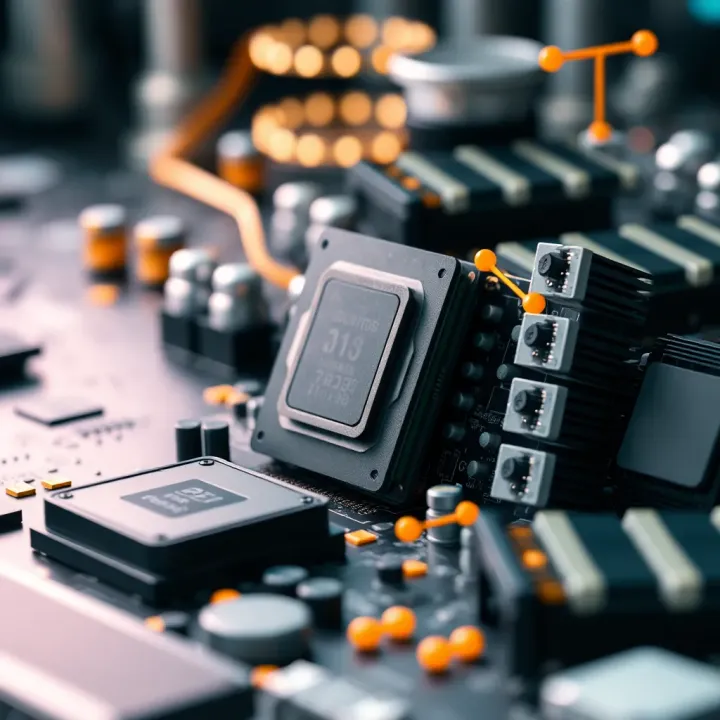
This blend of logic gates and Boolean algebra enables computers to interpret, process, and react to data almost instantly—a critical factor for financial markets where timing can mean the difference between profit and loss.
Understanding the hardware components is key to grasping how binary computers operate. These physical parts are where the binary data—the ones and zeros—are processed, stored, and transformed into meaningful output. Without these components working in sync, the computer simply can't function. From the heart of the system, the CPU, to memory modules and the devices that let us interact, each has a unique role.
The CPU is often called the "brain" of the computer because it's responsible for executing instructions and processing data, all in binary form. Imagine it as a fast-paced factory worker who reads a massive list of instructions one by one and acts on them immediately. It takes input, performs calculations like addition or comparisons, and sends back the results as binary signals.
For practical insight, consider how stock trading software runs complex algorithms rapidly to analyze market data; the CPU crunches these binary instructions continuously without a pause. It does the heavy lifting, ensuring your charts refresh and trades execute efficiently.
At its core, a CPU contains several parts:
Arithmetic Logic Unit (ALU): Performs all the calculations and logic operations.
Control Unit: Directs the flow of binary data between the CPU and other components.
Registers: Small storage spots for quick-access binary data.
This architecture allows the CPU to grab raw binary data from memory, process it quickly, and send back the outcome. Think of registers as the CPU’s notepad for jotting quick details before finalizing a decision.
Memory stores binary data ranging from tiny instructions to large data chunks. The two main types are:
RAM (Random Access Memory): Fast, temporary memory where data actively in use resides. When you analyze real-time crypto prices, RAM helps hold that immediate data.
ROM (Read-Only Memory): Permanent storage that holds critical instructions like the computer’s startup routine.
Then, there are other forms like cache memory inside the CPU that speeds up access to data and SSDs or hard drives for longer-term binary storage.
Memory acts like a workspace table. The CPU doesn’t keep everything inside; instead, it relies on memory to fetch data and instructions, work on them, and store results temporarily or permanently. Without memory, the CPU would have no place to hold the ones and zeros it’s currently processing.
This handoff is swift — for example, in high-frequency trading, every millingisecond counts, and memory speed directly impacts performance. A slow memory bottleneck can mean lost opportunities in volatile markets.
Input devices convert human or external data into binary code the machine can understand. Common gadgets like keyboards and mice translate your clicks and keystrokes into binary signals. For traders, data can also come from network cards fetching live financial data.
Output devices, on the other hand, transform binary information back into formats humans can use. Monitors render graphs and price lists, while printers spit out reports. Even sounds from alerts or notifications rely on this binary translation.
Behind the scenes, software takes raw binary streams and decodes them into visuals, sounds, or touches. For instance, a stock price graph you see is just binary data coded into pixels, colors, and shapes.
Understanding this translation clarifies why display quality or audio clarity depends on both hardware and how well it handles binary data conversion. In trading, getting clear, real-time visuals can literally make or break decisions.
In summary, hardware components are the physical backbone of binary computers. They handle, process, and transform binary data, enabling us to interact with devices and carry out complex tasks efficiently.
Understanding data representation and storage is key to grasping how binary computers handle information. These processes allow computers to convert real-world data—like numbers, letters, images, and sounds—into binary code that machines can process, store, and retrieve efficiently. Especially for traders, investors, and financial analysts dealing with large volumes of complex data, the precision and speed of binary representation directly impact analysis accuracy and system performance.
Binary coding for numbers is the backbone of computer arithmetic. Computers use binary to represent numbers because it simplifies design of hardware circuits, relying on two states: on (1) and off (0). For example, the decimal number 13 converts to 1101 in binary. This conversion lets computers perform math operations quickly using simple logic gates. Understanding binary number coding helps developers optimize financial algorithms where accuracy and speed matter, such as in high-frequency trading systems.
Character encoding standards like ASCII bridge the gap between binary and readable text. ASCII assigns a unique 7-bit binary code to characters—letters, digits, punctuation marks, and control characters. For instance, the letter 'A' corresponds to binary 1000001. This allows computers to store and manipulate text efficiently. In financial applications, ASCII enables software to handle textual input and output, from ticker symbols to transaction records, with reliability and universality.
When it comes to complex data like images, sound, and video, binary representation grows more sophisticated. Images consist of pixels, each encoded as binary values indicating color and intensity. For example, a simple grayscale image might store each pixel as an 8-bit number indicating brightness. Audio data is sampled as binary numbers representing sound wave amplitude at specific intervals, and videos combine sequences of images with audio streams, all encoded in binary.
These binary forms allow complex data to be processed, stored, and transmitted easily. Financial professionals may encounter such data in dashboards showing market heatmaps or video feeds from trading floors.
Compression and encoding techniques become essential when handling large binary files. Compression reduces file size without losing crucial information, effectively speeding up storage and transmission. For instance, JPEG compresses images by exploiting patterns and discarding less noticeable details. Likewise, MP3 compresses audio by removing inaudible frequencies.
Encoding refers to how binary data is formatted. For example, formats like PNG for images or H.264 for video dictate how data is organized. These techniques help financial systems manage bandwidth and storage, ensuring quick access to market data and multimedia content.
Efficient data representation and storage methods form the foundation for running reliable and fast binary computers, which in turn support critical decision-making in finance and investment.
In essence, knowing how binary coding and compression work helps financial tech users and developers make better choices about data handling, ultimately driving performance and reliability in trading platforms and analytics.
Binary computers form the backbone of many technologies we use daily, shaping everything from the smartphone in your pocket to intricate industrial machines. Understanding their practical applications helps clarify why they've remained dominant in computing for decades and where they continue to prove their worth.
Smartphones and personal computers rely heavily on binary computers to perform countless tasks every second. These devices use binary logic to run operating systems, manage apps, and process user input. For example, your smartphone’s touchscreen converts physical taps into binary signals that the CPU interprets, turning them into commands like opening apps or sending messages. This processing power is vital for everything from browsing social media to executing complex financial calculations on trading apps.
Modern PCs, meanwhile, handle binary data for software applications, from spreadsheets to real-time stock charting. The underlying binary system ensures data integrity and speed, which investors and analysts need to make timely decisions.
Embedded systems are small, dedicated computers built into devices such as smart TVs, microwave ovens, and even car engines. Despite their size, these systems run on binary computers, using binary logic to control functions precisely. For instance, in smart appliances like refrigerators, binary processors regulate temperature, track food inventory, and optimize energy use—all based on binary-coded instructions.
In the financial world, embedded systems appear in point-of-sale terminals and ATMs, where reliability and fast processing of binary data ensure smooth transactions. These devices underline how binary computing extends beyond traditional computers into everyday technology.
Factories and production lines use automation systems powered by binary computers to monitor and control machinery. Programmable logic controllers (PLCs) operate in binary, toggling on/off signals to manage robotic arms, conveyors, or safety mechanisms. This reliance on binary logic ensures precise timing and coordination, critical when manufacturing high-stakes products like pharmaceuticals or electronics.
In energy trading, automation controls help in managing grid operations where decisions based on binary data ensure the balance and stability of power supply—a crucial factor in maintaining market confidence.
Binary computers handle vast amounts of data for analysis in fields like finance and scientific research. Simulation models for risk assessment or market behavior use binary processing to run complex calculations rapidly. For example, hedge funds rely on high-performance binary-based computing clusters to model financial scenarios, assessing potential outcomes with real-time data.
Scientific simulations in meteorology, physics, or biology also depend on binary systems to crunch numbers that reveal patterns or predict events. These applications require handling precise binary data representation and fast processing, illustrating the vital role of binary computers beyond everyday gadgets.
Businesses and individuals alike depend on the seamless operation of binary computers, whether for simple tasks like making a call or more complex duties like running financial simulations. Their adaptability and efficiency make them indispensable in today’s tech-driven world.
By understanding these practical applications, traders, analysts, and crypto enthusiasts can better appreciate how binary computers empower the tools and systems they interact with daily.
Understanding the pros and cons of binary computers helps traders and investors appreciate how this technology shapes their tools and platforms. Binary computers' strengths enable reliable and efficient processing, which is essential for fast-paced market analysis. However, knowing their limitations also highlights why some computational tasks can be challenging or costly in terms of speed and energy.
Binary computers excel in reliability because they only work with two states: 0 and 1. This simplicity reduces hardware errors, making faults easier to detect and correct. For example, in stock trading algorithms, where milliseconds count, this accuracy ensures that data isn't corrupted, leading to trustworthy decisions. Using simple binary processes also allows systems to be less prone to glitches, which is vital in financial environments where a single mistake can mean significant losses.
Binary logic fits naturally with electronic circuits built from transistors, which also behave like switches — off or on. This makes it possible to create compact, efficient, and cheaper hardware components. Such design means computers can perform a huge number of calculations without becoming bulky or overheating quickly. Traders using high-frequency trading platforms benefit from this hardware efficiency, as it enables rapid data crunching without excessive power consumption or large system footprints.
While reliable and simple, binary systems do sometimes struggle with balancing speed and energy use. As processors attempt to push performance limits for bigger data sets, like real-time market feeds or cryptographic calculations, energy demands spike and heat generation increases. This puts a ceiling on just how fast CPUs can go before efficiency drops off sharply or additional cooling becomes necessary, which adds to costs.
Binary computers natively handle digital signals but can have trouble representing analog data directly, like continuous financial signals or sensor readings. Converting analog inputs into binary form — through analog-to-digital converters — can lead to loss of detail or require extra processing steps. For instance, in analyzing live price fluctuations with subtle trends, this conversion may miss finer nuances that traders rely on, necessitating more complex algorithms or external tools to compensate.
Overall, binary computers bring undeniable strengths to financial and trading applications due to their clear structure and hardware compatibility. Yet, investors and tech professionals should remain aware of the trade-offs, especially regarding speed limits and precision when working with analog-like data.
By understanding these pros and cons, users can better assess computing solutions and anticipate where future innovations might improve performance for data-heavy financial tasks.
As technology races forward, understanding where binary computing is headed helps traders and investors spot opportunities and risks in the tech sector. Future trends in binary computing spotlight advances that not only speed up calculations but also influence how information is processed, stored, and analyzed. The evolving field ensures that binary systems remain integral despite emerging alternatives.
Shrinking chip sizes while boosting processor speed remains a core focus. Smaller transistors packed densely can handle more operations per second, like the leap from Intel's early Pentium processors to today's Alder Lake series. This miniaturization translates into more powerful laptops and mobile devices capable of heavy tasks without draining battery life too fast—vital for bioinformatics or financial modeling software which requires quick crunching of huge datasets. As transistors dip below 5 nanometers, energy efficiency improves too, cutting operational costs for data centers.
New tech like AI, IoT, and 5G depends heavily on binary computing. AI accelerators embedded in devices use tailored binary circuits for fast neural network processing, while 5G modems rely on binary logic for signal decoding and error correction. Combining binary computers with these technologies boosts device responsiveness and communication speed, important for real-time financial trading platforms or remote data analysis in energy markets. A practical example is NVIDIA's Jetson modules, which pair binary CPUs with specialized processors for AI tasks.
Quantum computing uses qubits, which unlike binary bits, can be 0, 1, or both simultaneously due to superposition. While still experimental, quantum could revolutionize cryptography and complex algorithms used in stock market predictions. Ternary computing, less talked about, introduces three-state logic (instead of two) which can theoretically perform computations more efficiently in some scenarios. These alternative approaches challenge the binary monopoly, offering fresh pathways to higher performance and possibly lowering energy consumption.
The shift isn't just about faster bits; it's about changing how computers think and solve problems. Hybrid systems combining classical binary computers with quantum or neuromorphic chips might dominate future infrastructures. For investors and analysts, recognizing these paradigmic shifts is key—industries built on traditional binary hardware may either adapt or fall behind. For instance, companies investing early in quantum-safe encryption or neuromorphic processors could reshape cybersecurity and AI landscapes.
Staying informed on these trends allows market players to better gauge tech innovation cycles and investment timings, blending binary computing's proven reliability with cutting-edge advancements.
In sum, while binary computing remains the backbone of digital technology, its evolution through hardware improvements and complementary computing models shapes the future of information processing, bearing direct relevance to fields reliant on rapid, reliable computation like finance and trading.
💻 Explore how the binary number system works in computers 🖥️, why it's essential, with examples of binary arithmetic and real-world computing uses.
🔍 Discover when binary search isn't the right fit for your data structures, and learn which methods work better in those cases for efficient searching.
💻 Explore how computers use binary language to process, store info & communicate. Understand its role in architecture & data in simple terms.
Explore the ins and outs of binary calculators 🧮—how they work, key binary operations, and their role in computing and education across Pakistan.
Based on 10 reviews