
Best Forex Trading Indicator: What Works for You
Explore top forex indicators 📊 to boost your trading skills. Learn how to pick the best ones that fit your style and market conditions for smarter moves.
Edited By
Henry Walters
Gold trading in the forex market has grown popular among traders and investors who see gold as a store of value and a hedge against currency fluctuations. Unlike traditional forex pairs like USD/PKR or GBP/USD, gold is traded as a commodity but quoted in terms of currencies, typically the US dollar. This makes gold an interesting asset because it reacts differently from standard currencies, often moving based on global economic conditions rather than domestic factors alone.
Traders buy and sell gold contracts in the forex market through platforms offered by brokers. These trades mostly involve gold futures or spot gold priced per ounce. The value of gold is influenced by factors such as inflation, US dollar strength, geopolitical tensions, and global demand from industries and central banks. For example, when the dollar weakens, gold prices often rise as investors look for safer stores of wealth.
In Pakistan, gold trading holds particular appeal since the local currency is prone to fluctuations and inflation pressures. Investors often see gold as a way to protect their savings, especially in turbulent economic times. Platforms like MetaTrader provide access to gold trading alongside currencies, making it easier for Pakistani traders to diversify.
Gold doesn't just react to currency moves but also to broader macroeconomic shifts, lending it a unique role in a diverse portfolio.
Key drivers of gold price changes include:
Inflation rates: Higher inflation generally raises gold prices as currency value declines.
Interest rates: Lower interest rates make gold more attractive since it offers no yield but benefits from opportunity cost.
Global crises: Conflicts or economic uncertainty tend to push investors toward gold's safe-haven status.
Understanding these dynamics helps traders craft smarter strategies, whether by taking short-term positions during volatility or holding gold to hedge longer-term risks. Managing risk is critical since gold can be volatile; using stop losses and limiting exposure protects from large swings.
For Pakistani investors, keeping an eye on domestic factors like rupee depreciation, SBP monetary policy, and import duties on gold jewellery can add an extra layer to decision-making. Overall, gold trading in the forex market combines benefits of currency trading with commodity price moves, offering opportunities if approached with timing and good knowledge.
Gold is unique as a trading asset because it behaves somewhat like a currency, yet it’s a tangible commodity. Its value often reflects economic confidence, inflation expectations, and currency strength, especially that of the US dollar. When you trade gold in the forex market, you are essentially trading it as a currency pair, which makes it accessible through forex platforms rather than physical bullion transactions.
Gold acts as an alternative currency, especially during times when fiat currencies lose value or face volatility. Traders treat gold as a store of value and a hedge against currency depreciation, inflation, or geopolitical uncertainty. This practical use means gold prices often move inversely with the US dollar, making it a valuable asset in forex trading portfolios.
XAU/USD is the most popular gold trading pair, where XAU represents one troy ounce of gold and USD stands for the US dollar. This pair indicates how many US dollars are needed to buy one ounce of gold. Since the US dollar is the dominant global reserve currency, the XAU/USD pair provides a clear picture of gold’s value versus the world’s most widely traded currency. Other pairs like XAU/EUR or XAU/GBP exist but see less volume.
Unlike traditional forex currencies, gold is a physical commodity with supply constraints, storage costs, and production factors affecting its price. Currency trading largely hinges on interest rates, monetary policy, and economic indicators. Gold’s price is influenced by these but also by mining output, jewellery demand, and investor behaviour. As a result, gold trading can be more volatile and sensitive to geopolitical events than regular currency pairs.
Spot gold trading involves buying and selling gold for immediate delivery, usually settled within two business days. Forex platforms offer spot gold as XAU/USD, making it easy for traders to take positions without dealing with physical gold. This method suits short-term traders looking to capitalise on price movements without worrying about storage or logistics.
Gold futures contracts obligate traders to buy or sell a specified amount of gold at a predetermined price on a future date. These are commonly traded on exchanges like COMEX. Options give the right, but not the obligation, to buy or sell gold futures at specific prices. Both instruments help larger investors and sellers hedge price risk, but they require careful understanding of expiry dates, margin requirements, and leverage.
Gold ETFs are investment funds listed on stock exchanges that hold physical gold or gold futures. They allow investors to gain exposure to gold prices without owning the metal directly. For example, the SPDR Gold Shares ETF (GLD) is a popular choice globally. Such ETFs offer liquidity, convenience, and lower transaction costs, making them a practical option for Pakistani investors looking for gold exposure through regulated financial products.
Understanding the nuances of how gold trades alongside currencies helps you make smarter decisions whether you are trading spot gold, futures, options, or ETFs. Each instrument comes with distinct risks and benefits relevant to your investment goals and market conditions.
Understanding what drives gold prices helps traders make better decisions in the forex market. Gold does not move on its own but reacts strongly to economic shifts, political events, and market sentiment. Knowing these drivers can help you anticipate price changes and manage your trades more effectively.
Inflation has a direct impact on gold prices because gold is seen as a store of value when inflation rises. For example, if Pakistan’s inflation jumps to double digits, investors often shift to gold to protect their savings from eroding rupee value. Conversely, higher interest rates make holding gold less attractive since gold does not yield interest. So, if the State Bank of Pakistan increases the policy rate, you might see gold prices pressure downward as investors prefer interest-bearing assets.
Gold is priced globally in US dollars, so the strength or weakness of the dollar influences gold prices heavily. When the US dollar weakens against other currencies, gold usually gains value because it becomes cheaper for holders of other currencies, including the Pakistani rupee. This was evident when the rupee weakened against the dollar in 2023, pushing local gold prices higher. On the flip side, a strong dollar tends to weigh on gold prices as it raises the cost for buyers using different currencies.
Gold often acts as a safe haven during uncertain times. Events like trade tensions, global pandemics, or economic slowdowns increase demand for gold because it is perceived as a safer asset than stocks or currencies. In 2020, when global lockdowns hit, gold prices surged as investors sought refuge from volatile markets. For forex traders, spotting signs of economic uncertainty allows timely entry into gold trades to benefit from price jumps.
Political crises or conflicts spark demand for gold. For instance, tensions in the Middle East or South Asia often raise gold prices due to safe-haven buying. Traders keep an eye on Pakistan’s own political developments, since any unrest can ripple through regional markets and affect gold demand. The 2019 Pakistan-India border clashes briefly boosted gold prices as traders anticipated higher risk.
Central banks, including Pakistan’s SBP and the US Federal Reserve, affect gold through their monetary policies like interest rate decisions and gold reserves management. When central banks increase gold buying, this signals confidence in gold's value and tends to push prices up. Meanwhile, dovish policies – such as low interest rates or quantitative easing – tend to support higher gold prices by increasing inflation expectations.
Gold prices also depend on physical demand such as jewellery buying, investment inflows, and mining output. In Pakistan, demand spikes during Eid and wedding seasons affect local gold prices due to cultural jewellery buying. On the supply side, limited new gold mining or delays in mine production can tighten availability and push prices higher. Trading these supply-demand shifts requires monitoring local market reports and global mining news.
Tracking these economic and geopolitical factors gives gold traders an edge in predicting market moves and managing risk exposure effectively in forex trading.
This understanding is especially important for Pakistani traders who navigate volatile rupee movements and regional geopolitical complexities. Incorporate these drivers into your analysis for more informed gold trading decisions.
Traders approach gold in the forex market with a variety of strategies tailored to profit from its unique price movements. Understanding these strategies is essential, especially as gold reacts differently compared to traditional currencies due to its safe-haven status and sensitivity to economic and geopolitical events. By mastering both technical and fundamental analysis, traders can make more informed decisions to maximise returns and manage risks effectively.
Price charts remain the backbone of technical analysis for gold trading. They allow traders to observe historical price action and identify patterns that might repeat. Indicators like the Relative Strength Index (RSI), Moving Averages (MA), and Bollinger Bands are popular tools that help signal overbought or oversold conditions and potential reversals. For example, if the 50-day MA crosses above the 200-day MA (called a golden cross), it might signal a bullish trend in XAU/USD, prompting traders to consider buying.
Support and resistance are price levels where gold tends to stop and reverse temporarily. Support marks the lower boundary where buying interest strengthens, while resistance is an upper boundary where selling pressure increases. These levels act as psychological barriers—for instance, if gold repeatedly struggles around Rs 300,000 per tola, that price becomes a resistance. Traders use these levels to set entry or exit points; breaking through resistance might signal a strong buy, while bouncing off support could be a good moment to enter a buy position.
Gold prices often follow trends, especially during periods of geopolitical tension or economic shifts. Trend followers aim to capture profits by entering positions aligned with the prevailing direction, whether bullish or bearish. For instance, if gold prices steadily rise due to rising inflation fears, traders might buy on pullbacks within an upward trend. Using tools like the Average Directional Index (ADX) can help confirm trend strength, supporting disciplined trade decisions rather than reacting to random market noise.
Economic data such as inflation rates, employment figures, and GDP growth profoundly affect gold prices. For example, high inflation in Pakistan often leads to increased demand for gold as a hedge, pushing prices up. Traders keep an eye on US economic reports too, since gold is priced in US dollars internationally. A surprise drop in US employment numbers might weaken the dollar, making gold more attractive.
Events like conflicts, elections, or trade tensions influence gold demand as investors seek safe assets. For Pakistani traders, regional stability is particularly relevant; escalations between neighbouring countries can trigger spikes in gold prices locally and globally. Tracking news from credible sources enables traders to anticipate such movements. It's common to see a gold price jump amid geopolitical unrest as funds flow away from riskier assets.
Decisions by central banks, especially the US Federal Reserve, impact gold prices through interest rate policies. When the Fed raises rates, gold often faces downward pressure since higher yields make non-interest-bearing assets like gold less appealing. Conversely, dovish policies with rate cuts tend to support gold prices. Pakistani traders should also watch moves by the State Bank of Pakistan, since local monetary policy affects the rupee and consequently the local gold market.
Mastering both technical and fundamental tools provides a well-rounded approach to gold trading strategies, helping traders respond to various market conditions more confidently.
By combining these analysis techniques, gold traders can better navigate the often volatile forex market and position themselves to take advantage of price moves while minimizing risks.
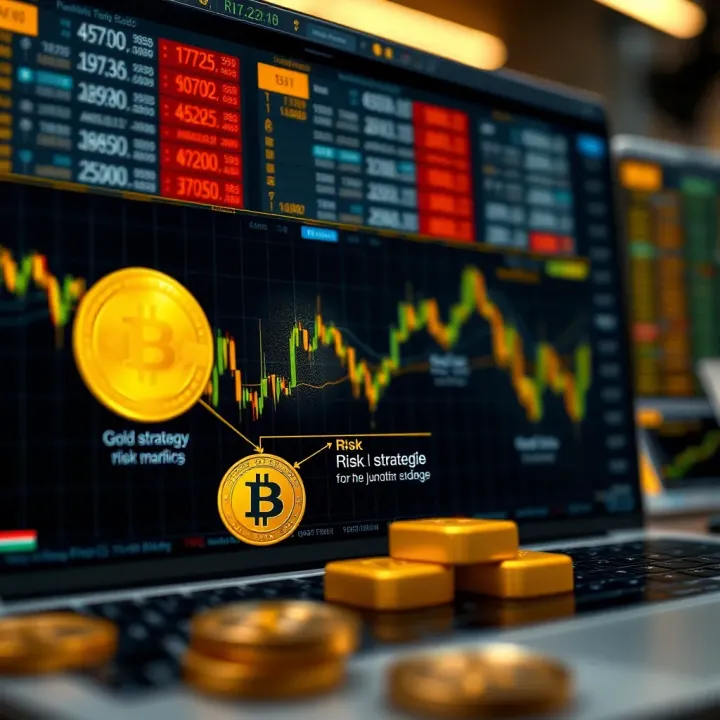
Trading gold in the forex market offers great opportunities, but it also carries significant risks. Managing these risks is essential to protect your capital and maintain steady gains. Gold prices can swing sharply due to global events, economic data, or sudden shifts in market sentiment. Without proper risk control, traders may face outsized losses that wipe out their gains quickly.
Gold’s value tends to be quite volatile because it reacts strongly to factors like inflation trends, US dollar movements, and geopolitical tensions. For example, when inflation data in the US surprises on the upside, gold prices may spike quickly as investors seek a safe haven. This volatility can create fast profits but also risks sharp reversals.
To manage this, traders use stop-loss orders to limit potential losses and take-profit levels to lock in gains. Stop-loss orders automatically close a position if the price drops to a set point, preventing further downside. Take-profit levels secure profits by closing the trade once the price hits a favourable target. For instance, if you buy gold at Rs 300,000 per 10 grams, setting a stop-loss at Rs 295,000 and take-profit at Rs 310,000 keeps your risk and reward balanced.
It's important to limit exposure based on your account size. For example, with a trading balance of Rs 100,000, you might risk only 1-2% per trade (Rs 1,000 to Rs 2,000). This helps avoid significant drawdowns that are hard to recover from and prevents emotional decision-making driven by fear or greed.
Diversifying your trading portfolio can also reduce risk. Instead of putting all money into gold alone, consider splitting capital across other forex pairs, commodities, or equities. This strategy helps absorb shocks when gold prices move unpredictably.
Finally, psychological discipline plays a big role. Sticking to your trading plan, respecting stop-losses, and avoiding revenge trading after losses maintain balance. Overtrading or ignoring risk controls often leads to portfolio damage. Keeping a trading journal to track decisions and emotions helps improve discipline over time.
Managing risks in gold trading not only protects your money but also keeps you in the game for long-term success. Practical steps like appropriate stop-loss settings, sensible position sizing, and disciplined trading behaviour are key for navigating gold’s volatile nature safely.
By applying these risk management tactics, investors and traders in Pakistan can better handle gold’s price swings, safeguard their capital, and improve chances of consistent profits in the forex market.
Gold trading holds a special place for Pakistani investors because it offers a method to protect wealth against the rupee’s volatility. Investors in Pakistan often look to gold not just as a luxury asset, but as a practical hedge that can absorb shocks from currency depreciation and inflation. Understanding how to trade gold effectively in the forex market opens new avenues beyond traditional physical gold buying.
Local brokers offering forex gold trading
Several Pakistani brokers now offer gold trading through the forex market, allowing investors to enter positions on XAU/USD pairs without needing physical delivery. This digital access eases the buying and selling process and usually involves lower transaction costs than sourcing physical gold locally. For instance, brokers like Interactive Brokers Pakistan and local forex houses provide platforms where traders can manage gold positions alongside currencies.
Regulatory considerations by the Securities and Exchange Commission of Pakistan (SECP)
The SECP closely monitors forex trading activities, including gold as a traded asset. Traders must ensure their brokers are SECP-registered to avoid unregulated operations. Moreover, SECP guidelines affect leverage limits and account setups, thus impacting how Pakistani investors engage with gold trading. Compliance with anti-money laundering (AML) and know your customer (KYC) requirements is also critical, ensuring market integrity and investor protection.
Using JazzCash or Easypaisa for fund transfers
Pakistan’s mobile wallets like JazzCash and Easypaisa simplify funding trading accounts with convenient, fast transfers. Many brokers accept payments through these wallets, making it possible for people from smaller cities to participate without bank complications. This facility encourages wider participation, especially for investors who prefer digital over cash transactions for forex gold trading.
Gold as a hedge against rupee depreciation
With the Pakistani rupee frequently under pressure, gold trading gives investors a way to safeguard their savings from losing value. When the rupee weakens, gold prices in rupees tend to rise, helping balance portfolio risks. This makes gold particularly attractive for those wanting currency diversification without moving funds abroad.
Impact of import duties and local gold price trends
Import duties currently affect physical gold pricing in Pakistan, causing premium over international rates. This difference often pushes investors to prefer forex gold trading for better pricing transparency. Still, local demand and jewellery market trends influence sentiment, which can affect trading behaviour on Pakistani platforms, creating a blend of global and domestic price drivers.
Managing forex market leverage and margin in Pakistan
Pakistani traders must handle leverage carefully, as forex gold trading platforms offer high leverage that can magnify profits but also losses. Local regulators set limits to prevent excessive risk-taking. Effective margin management and using stop-loss orders are critical for success, especially given gold's volatile price swings during economic or geopolitical turmoil.
Gold trading in Pakistan's forex market is gaining importance for investors seeking protection against rupee volatility, while local platforms and regulatory frameworks provide a relatively safe and accessible trading environment.
Explore top forex indicators 📊 to boost your trading skills. Learn how to pick the best ones that fit your style and market conditions for smarter moves.
Find the ideal forex trading platforms in Pakistan with our detailed guide on usability, fees, regulation, and features. Start trading smart with 📈💰 today!
Discover the top forex trading apps for Pakistani traders 🇵🇰! Compare ease of use, security features 🔒, tools, and broker options to find your perfect fit 💹.
🔎 Find the best forex broker in Pakistan with tips on regulation, fees, platforms, and service. Trade smart and avoid common local challenges!
Based on 12 reviews