
Understanding Binary Relations with Examples
Explore the basics of binary relations 🔗 with real-world examples. Learn key properties, types, and applications in math and computer science!
Edited By
Elizabeth Crowley
Forex trading can seem complex at first, but breaking it down through practical examples makes it easier to grasp. Essentially, forex or foreign exchange trading involves buying one currency while selling another. Currencies are always quoted in pairs, like USD/PKR or EUR/USD, reflecting how much of the second currency is needed to buy one unit of the first.
For instance, if the USD/PKR pair is trading at 285.50, it means one US dollar costs Rs 285.50 in Pakistani Rupees. If you expect the rupee to weaken against the dollar, you might buy USD/PKR, aiming to sell it later at a higher rate.
Unlike stocks, forex markets operate 24 hours a day, allowing traders in Pakistan to participate at almost any time, adjusting for PKT.
Trading forex involves placing orders through brokers or trading platforms like MetaTrader or local providers approved by the Securities and Exchange Commission of Pakistan (SECP). You can:
Buy a currency pair if you expect the base currency to strengthen
Sell a currency pair if you expect it to weaken
For example, if you bought EUR/USD at 1.0800 and later sold it at 1.1000, you'd profit from the difference if the position size suits your investment.
Suppose you invest Rs 50,000 expecting USD to rise against PKR. When USD/PKR moves from 280.00 to 285.00, that 5-rupee difference means a profit of Rs 5,000 on your investment if the lot size matches your Rs 50,000.
On the other hand, if USD/PKR falls to 275.00, you face a Rs 5,000 loss. This example shows how small price changes can impact your capital significantly.
The key is understanding leverage, often used in forex, which lets you control large positions with smaller capital. However, leverage also increases risk — a 1:100 leverage means your Rs 50,000 can control Rs 5 million in currency, magnifying both profits and losses.
Sticking to practical examples will make forex trading clearer, especially when paired with real-time charts, disciplined strategies, and good risk management. This article continues by explaining trade execution, strategies, and the factors influencing currency moves relevant to Pakistani traders.
Understanding the fundamentals of forex trading is key to becoming a confident trader. Without grasping the basics, navigating the complexities of currency markets and spotting opportunities becomes challenging. This section breaks down core concepts and terms that form the foundation of forex trading.
Forex trading always involves two currencies paired together, known as a currency pair. For example, USD/PKR represents the exchange rate between the US Dollar and Pakistani Rupee. The first currency (base currency) is what you buy or sell in relation to the second (quote currency). If the USD/PKR rate is 280, it means one US Dollar costs 280 Pakistani Rupees. This quotation helps traders decide when to buy or sell based on expected currency value changes.
The forex market is a decentralised network where banks, brokers, governments, and individual traders buy and sell currencies 24/5. Unlike stock markets, there’s no central exchange. Transactions happen electronically over-the-counter (OTC), which means prices can vary slightly between brokers. This constant flow of trading volume helps maintain liquidity, allowing you to enter or exit trades quickly at current market prices.
Forex operates round-the-clock during weekdays as global trading sessions overlap—Asian, European, and US. For Pakistan-based traders, the forex market is active from Sunday evening to Friday evening PKT. Major players include central banks stabilising national currencies, commercial banks executing large transfers, hedge funds speculating on trends, and retail traders like you taking smaller positions. Knowing these participants and sessions helps in timing trades effectively.
A 'pip' is the smallest price move in a currency pair—usually 0.0001 for most pairs. Say USD/PKR moves from 280.0000 to 280.0050, that’s 50 pips. 'Lots' represent trade size, with a standard lot being 100,000 units of the base currency, but Pakistani traders often start with mini or micro lots due to smaller capital. Leverage lets you control larger trades with less money; for example, 1:100 leverage means Rs 1,000 can control Rs 100,000 worth of currency. While leverage can boost gains, it equally increases risk, so it requires careful use.
The bid price is what buyers are willing to pay, and the ask (or offer) price is what sellers want. If USD/PKR bid is 279.95 and ask is 280.05, the difference is 0.10 Rs. Traders buy at the higher ask price and sell at the lower bid price. Understanding this spread is vital because it represents a hidden cost to trading; you need the price to move enough to cover this difference before starting to make a profit.
The spread is the gap between bid and ask prices and varies depending on currency pairs and market conditions. For popular pairs like USD/EUR, spreads are tight, but for exotic pairs involving PKR, spreads can be wider due to lower liquidity. Margin is the amount of money required to maintain an open trade, often a small percentage of the total trade size influenced by leverage. For example, with 1% margin on a Rs 1 crore trade, you need Rs 1 lakh in your account as collateral. Properly managing margin ensures you avoid margin calls which force closing losing positions.
Having a strong grip on these basics helps you navigate the forex market more confidently and avoid common pitfalls. These elements also set the stage for understanding more advanced concepts like trading strategies and risk management.
Understanding forex trading becomes far easier when we break the process into practical steps. This section walks you through how a typical trade is selected, placed, and closed, focusing on real-world aspects like choosing currency pairs and managing trade size. Such an approach demystifies forex by moving beyond theory to actionable knowledge relevant for traders, investors, and analysts in Pakistan’s market.
The Pakistani Rupee (PKR) is traded mostly against major currencies like the US Dollar (USD), Euro (EUR), and Saudi Riyal (SAR). These pairs - USD/PKR, EUR/PKR, and SAR/PKR - are commonly used because of Pakistan's strong trade and remittance links with the US, Europe, and Gulf countries. For instance, remittances from Saudi Arabia often influence SAR/PKR demand, creating trading opportunities. Knowing these pairs helps traders focus on currencies with better liquidity and clearer local economic impact.
Traders choose currency pairs based on factors such as volatility, spread cost, and economic news. If the SBP announces a rate cut, USD/PKR usually reacts sharply. Some traders prefer pairs with lower spreads to reduce cost, while others seek volatility to capitalise on price swings. Awareness of Pakistan’s trade balance, remittance cycles, and political stability helps pick pairs with predictable patterns versus those prone to sudden swings. Picking pairs you understand improves the chance of successful trading decisions.
In forex, 'buy' (go long) means you expect the base currency to strengthen, while 'sell' (go short) bets on its weakness. For example, if you expect the PKR to weaken against the USD due to inflation concerns, you would sell USD/PKR, buying USD and selling PKR. This decision should come after analysing economic data, news, or technical signals rather than guessing. A well-timed buy or sell reflects clear market understanding and risk tolerance.
Trade size defines how many units of the currency pair you deal with, often measured in lots (standard, mini, or micro). Suppose you have Rs 100,000 equity and want to limit risk to 2%, you should calculate trade size so losses do not exceed Rs 2,000. Oversized trades can wipe your account quickly, while too small trades limit profit potential. Using a position size calculator or spreadsheet helps keep trades within your risk appetite.
Leverage allows trading larger positions with a smaller capital outlay. Pakistani brokers typically offer leverage from 10:1 to 100:1. For example, with 50:1 leverage, Rs 10,000 can control Rs 500,000 in currency. While leverage can boost profits, it also magnifies losses. Using excessive leverage without experience leads to margin calls and rapid losses. Skilled traders use moderate leverage and strict risk controls to balance opportunity with safety.
Choosing when to close a trade—either to lock in profits or cut losses—is essential. Traders may set take-profit and stop-loss levels in advance based on technical support, resistance, or expected volatility. For example, if you buy EUR/PKR at 190.00, you might set take profit at 192.00 and stop loss at 188.00. Sticking to these limits prevents emotional decisions during market swings.
If you buy 1 mini lot (10,000 units) of USD/PKR at 280.00 and sell at 282.00, your profit is:
Price difference: 2 PKR
Total units: 10,000
Profit: 2 PKR × 10,000 = Rs 20,000
Similarly, if the price drops to 278.00 and you close, your Rs 20,000 is a loss. Accurate calculation ensures you monitor your trades’ impact on your capital and make informed, timely decisions.
Handling trade execution and exit points with care improves your chances of consistent earnings and safeguards you against heavy losses. Clear examples make forex trading approachable and practical for investors focused on Pakistan’s currency market.
Understanding common forex trading strategies helps traders manage their investments more smartly. These strategies offer practical ways to interpret market movements and decide when to enter or exit trades. For Pakistani traders, grasping these methods can make the difference between steady gains and unnecessary losses in a volatile forex market.
Identifying trends involves recognising when the price of a currency pair is moving consistently in one direction — up (bullish) or down (bearish). Traders in Pakistan often watch the USD/PKR or EUR/PKR pairs for such trends by checking daily or weekly price charts. A trend shows market sentiment and helps traders ride the wave instead of fighting price momentum.
Example trade setup: Suppose you spot a steady upward trend in USD/PKR over several days. You follow this by buying USD against PKR, expecting the trend to continue. Traders typically use tools like moving averages to confirm the trend. For instance, if the 50-day moving average stays above the 100-day moving average, this supports a bullish move. Keeping an eye on economic news like SBP monetary policy announcements can give extra confidence in this strategy.
Recognising support and resistance means spotting price levels where a currency pair repeatedly bounces back or struggles to cross. For example, if EUR/PKR keeps falling to around Rs 180 and then going back up, Rs 180 acts as ‘support’. If it runs into resistance at Rs 185 several times, traders see that as a ceiling price. Range trading uses these levels to buy low (near support) and sell high (near resistance).
Trade example in a range: Imagine PKR stabilises against JPY between Rs 2.5 and Rs 2.7. A trader can buy JPY/PKR at Rs 2.51, aiming to sell near Rs 2.68. The risk is that the pair breaks out of this range unexpectedly, so stop-loss orders just outside support/resistance points are common.
Spotting breakout points focuses on identifying when price breaks through a support or resistance level with strong volume or momentum. In Pakistan’s forex market, breakouts can follow big news events—like election results or inflation reports—causing sharp moves beyond recent ranges.
Sample trade walkthrough: Suppose USD/PKR has been stuck below Rs 290, but suddenly breaks above with high volume after a positive economic announcement. A trader enters a buy position on this breakout, expecting momentum to drive price higher. After entering, setting a stop loss just below the breakout point protects from false breakouts where price quickly reverses.
Employing the right strategy to match market conditions reduces guesswork and helps you trade forex with greater confidence and control.
All these strategies have their own strengths and risks. Combining technical analysis with awareness of Pakistani economic events can improve your chances of timely and profitable trades.
Managing risks is a fundamental part of forex trading, especially given the market’s volatility and leverage effects. Without proper risk management, traders can face heavy losses quickly. This section covers key methods to control losses, protect profits, and maintain discipline.
A stop loss is an order placed to close a trade automatically once the price reaches a certain level. This prevents losses from running out of control. For instance, if you buy USD/PKR at 280 and set a stop loss at 275, the trade will exit if the rate falls to 275, limiting your loss. Placing stop losses near recent support or resistance levels helps protect capital without triggering too soon.
Take profit is the opposite; it locks in gains by closing a position when the price hits your target. Say you buy EUR/PKR at 310 and set take profit at 320, your trade closes if the price reaches 320, securing the profit. Using take profit orders avoids the common mistake of holding on for too long and missing chances to realise gains.
Choosing the right lot size according to your account balance and risk tolerance is vital. For example, a Rs 100,000 forex account risking 2% per trade should limit potential loss to Rs 2,000 on that trade. Calculating lot size based on this risk helps avoid big blows that can gut your account. Calculators or trading platforms usually assist in figuring this out.
Avoiding overexposure means not risking too much on a single trade or correlated trades. Suppose you trade USD/PKR and also INR/PKR aggressively; both pairs can move in the same direction against you, doubling risk. Diversifying and keeping trade sizes small relative to your total equity prevent sudden big losses, especially during unexpected moves or news events.
Accepting losses calmly is crucial since losses are part of trading. Many traders panic-sell or deviate from their plan after a loss, opening themselves to further damage. Instead, understanding that every trade doesn’t payout helps maintain composure and prevent impulsive decisions.
Sticking to a well-researched plan, including entry, exit, and risk limits, is key. For example, if your strategy says close a trade at a 50-pip loss, avoid moving your stop loss further away hoping for a rebound. Emotional discipline also means avoiding revenge trading after losses and keeping to your predefined risk.
Effective risk management protects your capital and builds confidence. It’s what separates seasoned traders from beginners who often burn out early.
By combining solid stop-loss and take-profit placement, sensible position sizing, and strong emotional control, traders can manage the risks forex trading poses and improve their chance of lasting success.
Understanding what moves currencies is vital for traders who want to make informed decisions. Currency prices don’t change randomly; they reflect underlying economic, political, and market factors. Paying attention to these helps you anticipate shifts and manage risk better.
Interest rates and inflation shape the value of a currency significantly. When Pakistan’s central bank, the State Bank of Pakistan (SBP), adjusts interest rates, it influences forex demand. For example, if SBP raises rates to counter inflation, foreign investors might find Pakistani assets more attractive, pushing the Pakistani Rupee (PKR) up. Conversely, rising inflation usually weakens a currency because it reduces purchasing power and investor confidence.
GDP and employment data are key signals about economic health. A rising Gross Domestic Product (GDP) indicates economic growth, which tends to strengthen the currency as it shows the country’s productive capacity. Similarly, improving employment figures suggest stability and growth, encouraging foreign investment. For instance, if Pakistan’s export sector grows steadily with employment rising in manufacturing hubs like Faisalabad, PKR might gain strength due to better economic outlook.
Local developments affecting PKR often create sudden volatility. Political uncertainty, such as delays in budget approvals or changes in government policies related to trade or taxation, can erode investor confidence. Take the 2023 political turmoil; during that period, PKR faced pressure due to doubts about economic strategy. Traders should monitor local news closely as such events impact supply and demand for the currency quickly.
International affairs impacting currency include geopolitical tensions and global trade partnerships. For instance, improved relations between Pakistan and China, especially under the China-Pakistan Economic Corridor (CPEC) framework, tend to support PKR. On the other hand, global market shocks or changes in US dollar strength affect all emerging market currencies, including the PKR, since trade invoicing often happens in dollars.
How trader emotions affect prices is something many overlook. Forex moves aren’t always about fundamentals; emotions like fear or greed can amplify swings. If bad economic news coincides with widespread selling, prices drop faster. In Pakistan, rumours about IMF bailout delays have in past caused runs on PKR, driven by panic rather than immediate economic change.
Role of major market players also drives currency movements. Big banks, hedge funds, and multinational corporations trade in large volumes and can sway prices. When a bank takes a strong position on PKR expecting depreciation, it can lead others to follow, increasing volatility. Understanding this dynamic helps traders spot trends that are more than just surface-level fluctuations.
Watching economic data, political shifts, and market mood together gives you a clearer picture of currency movements than relying on one factor alone. Practical forex trading hinges on this broad awareness rather than just charts or tips alone.
Explore the basics of binary relations 🔗 with real-world examples. Learn key properties, types, and applications in math and computer science!
📊 Learn how binary quotes work in trading, their types, price insights, risks, and strategies tailored for traders in Pakistan and beyond. ⚖️

Explore how binary fission works in simple organisms 🧫, with examples and biological importance explained clearly for biology enthusiasts in Pakistan.
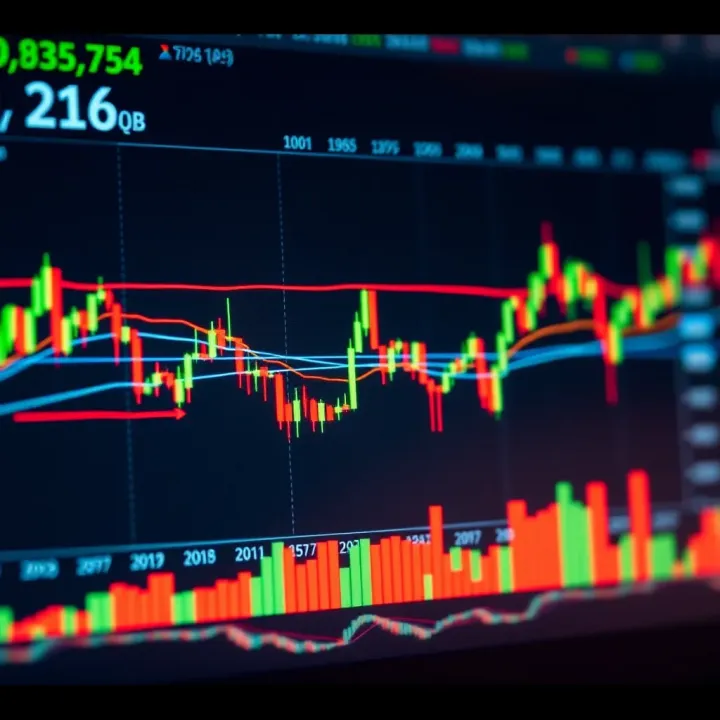
Explore top forex indicators 📊 to boost your trading skills. Learn how to pick the best ones that fit your style and market conditions for smarter moves.
Based on 12 reviews