
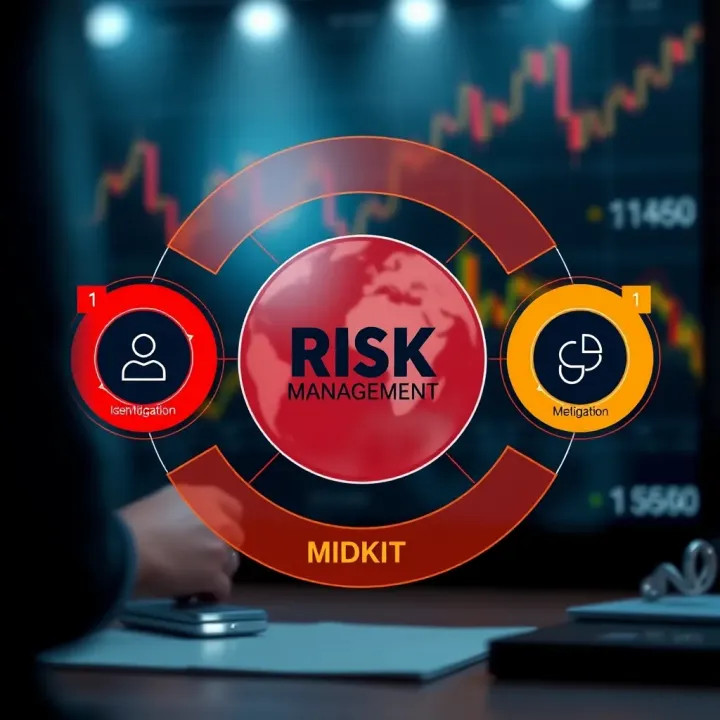
Understanding the Benefits of Risk Management
Explore how risk management boosts decision-making, financial stability, compliance, and innovation, helping Pakistani businesses protect reputation and grow sustainably 📊✅
Edited By
Amelia Hughes
Managing risks in information security is more than just a technical challenge; it's a strategic necessity for anyone dealing with sensitive data, especially traders, investors, and financial analysts. The digital world is full of unseen threats that can compromise data integrity, leak confidential information, or cause serious financial loss. Recognising these risks early helps organisations stay a step ahead.
Risk management in this context means identifying, assessing, and mitigating threats that could affect your digital assets. For example, a stockbroker’s trading platform facing a sudden Distributed Denial of Service (DDoS) attack could lose crucial market time worth lakhs of rupees. Preventing or reducing such risks requires a clear strategy supported by technical controls and policies.

Identification: Know what assets to protect—from client data and trading algorithms to internal communications.
Assessment: Determine the likelihood and impact of potential security threats. For instance, phishing scams targeting crypto investors are a common hazard.
Mitigation: Implement measures like multi-factor authentication, encryption, and strong access controls to reduce vulnerabilities.
Effective risk management also involves continuous monitoring. Cyber threats evolve fast; what worked last year might not hold today. Tools analysing network behaviour or flagging unusual transactions can spot risks before damage occurs.
Regular Risk Assessments: Evaluate your platforms and data flows quarterly to identify new risks following market shifts or regulatory changes.
Compliance Adherence: Follow standards like the Securities and Exchange Commission regulations or any relevant cyber laws to avoid penalties.
Employee Training: Educate staff on recognising common cyber threats like spear-phishing, especially during busy market sessions.
Ultimately, good risk management means safeguarding your assets and maintaining trust with clients. In Pakistan’s fast-growing digital economy, overlooking this can lead to significant financial harm and reputation damage. Staying alert and prepared is not just smart—it's essential.
Risk management in information security is about recognising potential threats to your organisation’s data and finding practical ways to protect it. For traders, investors, and financial analysts, safeguarding sensitive information like trading algorithms, financial data, or customer credentials is non-negotiable. Risks, if unchecked, can lead to data breaches, financial losses, or reputational damage that hits the bottom line hard.
Risk essentially refers to the chance of an event that could harm information assets. These assets include anything from databases and intellectual property to software applications and network infrastructure. Imagine a broker’s confidential client portfolio gets leaked — the risk here not only affects business trust but also invites regulatory trouble. The impact often extends beyond immediate loss, potentially leading to penalty fines or loss of competitive advantage.
The goal of risk management is clear: identify threats, assess their likelihood and impact, and then take steps to reduce or eliminate them. It is about ensuring that security measures align with business priorities without disrupting operations. Good risk management helps avoid nasty surprises such as cyberattacks or system failures while maintaining compliance with Pakistan’s regulations.
Cyberattacks remain the most visible threat. Hackers use malware, ransomware, or phishing scams to breach defences and steal data. For instance, a trader's terminal could be infected with ransomware, halting trades until ransom is paid. Understanding these risks means implementing strong firewalls, anti-virus software, and regular patching. In Pakistan, where digital financial transactions are growing rapidly, such threats are both common and costly.
Not all risks come from outside. Insider threats might be careless or malicious actions by employees or contractors. For example, an employee might accidentally email confidential reports to the wrong recipient, or worse, deliberately sell information to competitors. This highlights the need for strict access controls and continuous monitoring within organisations to reduce insider risks.
Data leaks occur when sensitive information escapes authorised boundaries. Loss refers to situations where data becomes unavailable due to corruption or deletion. Consider a financial analyst's lost spreadsheet containing sensitive client data — that alone could cause legal and financial headaches. Mitigating this means regular backups, encryption, and secure file-sharing practices.
Technical issues like server crashes or network outages disrupt business continuity. For trading platforms, even minutes of downtime can mean missed opportunities or financial losses running into lakhs. Ensuring reliable hardware, timely maintenance, and having recovery plans are essential to deal with such situations.
Effective risk management starts with understanding these threats and their business implications. Only then can you design safeguards that keep your financial operations smooth and secure.
Start with mapping out your key information assets—these could be client data, transaction logs, trading algorithms, or network infrastructure. Knowing exactly what needs protection helps focus efforts efficiently. Once assets are identified, vulnerabilities must be pinpointed. For example, outdated software on a trading server might be exploitable, or weak passwords could grant insider access. In Pakistan’s context, limited cybersecurity skills in some firms make reliance on third-party vendors a vulnerability if not properly assessed.
After recognising assets and vulnerabilities, estimate how likely different threats are to occur and their potential damage. For instance, the likelihood of a phishing attack targeting investment advisers might be high, but its impact varies depending on safeguards like multi-factor authentication. Another example is potential system downtime during loadshedding affecting trading operations, which may not be a security breach but a significant risk for business continuity. Analysts often use risk matrices to compare these factors and understand which risks deserve immediate action.
All risks cannot be addressed simultaneously, so prioritisation is key. Focus first on those with high impact and likelihood, such as cyberattacks that can leak sensitive client information or cause financial loss. Medium risks, like occasional insider errors, are next, and low risks might be monitored over time. This ranking helps allocate budget and manpower wisely, ensuring that controls target the most dangerous risks effectively. Prioritisation also aids compliance with regulations like the Prevention of Electronic Crimes Act (PECA), which demands protection of digital assets against definite threats.
Effective risk assessment guides decision-making and resource allocation, ensuring the most critical vulnerabilities are managed first. Without this process, organisations risk wasting time on minor issues while leaving serious threats unchecked.
By systematically assessing risks, financial professionals in Pakistan can shield their operations from avoidable hazards while strengthening overall security posture.
Managing risks in information security requires clear strategies that protect assets effectively without disrupting business operations. For traders, investors, and financial analysts, implementing practical risk management techniques is essential to safeguard sensitive information from cyber threats, insider risks, and system failures. These strategies not only reduce exposure but also ensure regulatory compliance and build trust with clients.
Risk avoidance means steering clear of activities that expose your organisation to unnecessary threats. For example, a brokerage firm might avoid using outdated software known for vulnerabilities. Risk reduction involves steps that minimise the chance or impact of a threat, like deploying software patches regularly or restricting access rights. On the other hand, risk transfer usually involves using third-party solutions such as cyber insurance or outsourcing specific functions to trusted vendors, shifting the financial or operational burden away from the organisation.
These approaches often work in combination. Say a crypto exchange may avoid certain risky tokens, reduce risk through multi-factor authentication, and transfer residual risks via insurance policies. The aim is balance—avoiding excessive costs or loss of operational flexibility while maintaining security.
Access control limits who can use or view information. It starts with verifying user identities through authentication methods like passwords, biometrics, or security tokens. For traders and investors, this ensures only authorised personnel can execute trades or access client data. A well-designed access control policy enforces these rules consistently, minimising the risk of insider threats or external breaches.
Strong authentication protocols, including two-factor authentication (2FA), have become a necessity in Pakistan’s fintech space. Many platforms, such as Easypaisa and JazzCash, employ 2FA to shield accounts from unauthorised access. Using role-based access control (RBAC) simplifies managing permissions by restricting users to only what they need for their job.
Encryption turns data into a code to prevent unauthorised reading. It is crucial when handling sensitive financial information or client personal data. For instance, emails containing trade confirmations or investment reports should be encrypted to protect privacy during transmission over the internet.
Besides encryption, organisations should classify data based on sensitivity and establish policies on how to handle each type. Physical data protection, like storing backup drives securely, complements digital measures. This layered defence reduces the chances of data leaks even in case of device theft or cyberattack.
Securing the network means stopping unauthorised access and attacks before they reach sensitive systems. Firewalls filter traffic and block suspicious connections, while intrusion detection systems spot malicious activity in real time.
For example, a financial firm’s network may be segmented to separate trading platforms from public-facing websites, limiting exposure if one segment is compromised. Regular network audits help identify vulnerabilities, especially when adding new software or hardware. Pakistan’s rising reliance on online trading platforms makes such measures vital to prevent disruptions caused by denial-of-service attacks or malware.
A system is only as strong as its users. Training staff and stakeholders on recognising phishing scams, safe password habits, and incident reporting enhances an organisation's security posture. Regular awareness sessions keep security fresh in mind and reduce human errors that often lead to breaches.
Introducing scenario-based exercises—similar to mock cyberattacks—helps employees practise responding correctly under pressure. Especially for stockbrokers and traders working under tight deadlines, understanding the impact of careless actions can motivate better compliance. Education encourages a security culture that supports technical controls rather than undermines them.
PECA 2016 is Pakistan's primary legal framework against cybercrime. It criminalises activities such as hacking, identity theft, unauthorized access, and spreading false information online. For traders and financial firms, abiding by PECA is vital since breaches involving customer data or insider trading information can lead to serious consequences.
Practically, PECA mandates organisations to implement safeguards that prevent unauthorised access to systems. For instance, if a stockbroker’s platform suffers a data breach due to weak authentication, the company could face fines or prosecution. PECA also encourages cooperation with law enforcement during cyber investigations, making internal incident reporting and documentation essential.
PTA regulates Pakistan’s telecom and internet sector and issues policies affecting data transmission and privacy. Their guidelines focus on ensuring service providers maintain user data confidentiality and assist in monitoring to curb cyber threats such as phishing or spam.
For digital platforms dealing with investors and crypto transactions, following PTA directives helps maintain uninterrupted service while protecting stakeholders. For example, PTA’s rules around SIM verification prevent anonymous accounts that can be exploited for fraudulent activities. Compliance reduces operational risks associated with penalties or service suspension.
ISO/IEC 27001 is a global standard for information security management systems (ISMS). Many Pakistani organisations, including banks and brokerage firms, adopt it to structure their security controls and risk management processes.
Implementation of ISO 27001 improves confidence among investors by demonstrating a commitment to safeguarding sensitive financial data. Although voluntary, this certification is increasingly requested during partnerships or audits. Other frameworks such as NIST or COBIT also provide added layers of governance and can complement local regulatory requirements.
Integrating compliance requirements into a company’s risk management process ensures that policies and controls meet legal standards consistently. Regular risk assessments should evaluate how well practices align with PECA, PTA guidelines, and applicable international norms.
Organisations must document controls like data encryption, access restricts, and system monitoring to prove compliance during audits. Training staff on regulatory obligations and incident reporting is equally important to avoid lapses.
Continuously reviewing compliance through risk management helps detect weaknesses early, reduces regulatory penalties, and maintains operational integrity.
In summary, Pakistani businesses in finance and trading benefit from embedding compliance into their security risk framework, securing not only legal protection but also the confidence of investors and customers alike.
Constant vigilance forms the backbone of effective information security. Ongoing monitoring ensures that risk controls remain functional and relevant in the face of evolving threats. For traders and financial analysts, where data integrity and system uptime influence major decisions, neglecting this can lead to costly breaches or losses.
Continuous monitoring systems track network traffic, user activity, and system performance in real-time. These systems, such as Security Information and Event Management (SIEM) tools, detect anomalies that might signal a cyberattack or insider threat before they escalate. Think of these as your organisation’s security guards; they’re alert around the clock, flagging suspicious activity.
For example, a brokerage firm using such systems might detect unusual login times or locations for trading platforms, allowing immediate investigation. Regular audits and up-to-date vulnerability scans also fit into this framework to catch weak points proactively.
No system is entirely foolproof, so planning for incidents is critical. A structured incident response plan sets clear roles, communication lines, and corrective actions immediately after a security event. This mitigates damage and shortens downtime.
Recovery plans ensure business continuity, especially vital for stockbrokers or crypto enthusiasts who deal with time-sensitive information. Backups, system restores, and failover mechanisms must be tested frequently. A financial services firm, for instance, should rehearse a scenario where trading data is corrupted or locked due to ransomware to fine-tune response speed and efficiency.
Threats evolve rapidly, and new technologies can both introduce risks and offer solutions. Staying current with cybercrime trends, like phishing targeting crypto wallets or advanced persistent threats (APTs) aiming at financial data, is non-negotiable.
Adapting means integrating AI-driven security tools for predictive analysis or blockchain for transaction transparency. Pakistani firms investing in fintech innovations must juggle such tools carefully while updating their risk controls.
Maintaining and improving risk controls continuously protects your assets and maintains trust — especially when financial markets demand swift, accurate, and secure operations.
In brief, ongoing monitoring combined with a strong incident response framework and adaptation to new threats help financial professionals safeguard sensitive data and uphold operational resilience.
Explore how risk management boosts decision-making, financial stability, compliance, and innovation, helping Pakistani businesses protect reputation and grow sustainably 📊✅

📊 Explore how actuarial science and risk management use stats, finance & tools to handle uncertainty in Pakistan's industries, offering key insights for pros & students.
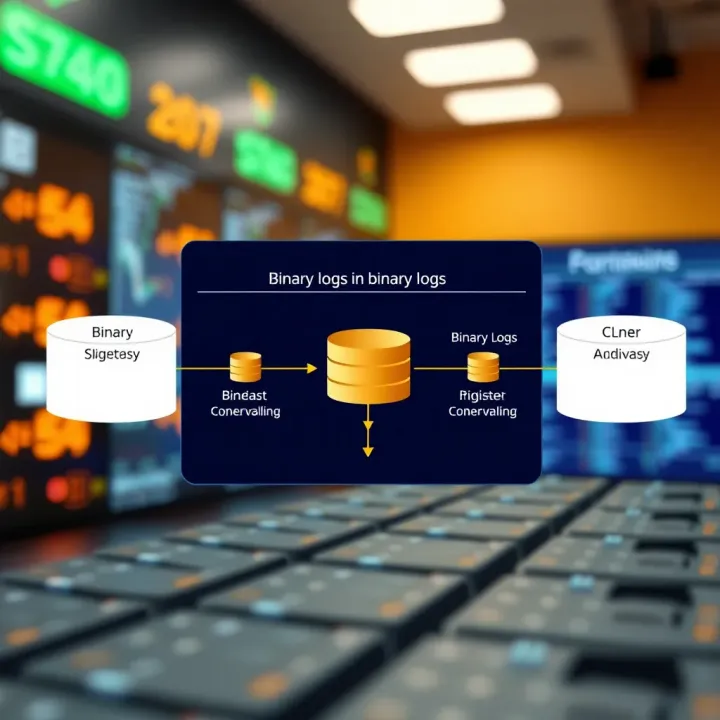
🔍 Learn how binary logs in database management support data recovery, replication, and auditing in Pakistan. Discover practical tips for secure, efficient handling.

🔍 Explore binary search in C++ with clear concepts, practical code, and optimization tips to write efficient search functions in your projects. 💻
Based on 7 reviews