
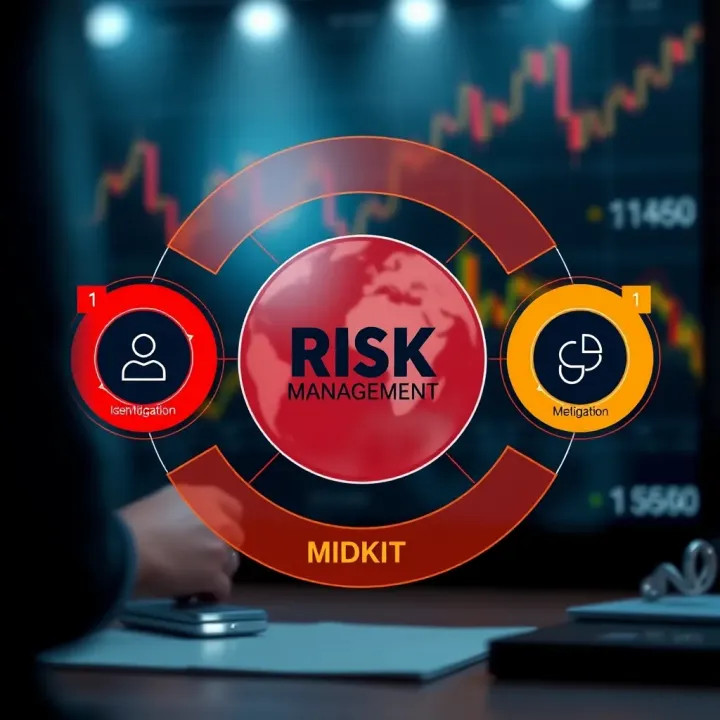
Understanding the Benefits of Risk Management
Explore how risk management boosts decision-making, financial stability, compliance, and innovation, helping Pakistani businesses protect reputation and grow sustainably 📊✅
Edited By
Emily Clark
Risk management is an unavoidable part of project management, especially for professionals dealing with volatile markets like traders, investors, and analysts. Every project, whether launching a new investment platform or developing a blockchain app, faces uncertainties that could derail objectives or inflate costs. This is why identifying and handling risks early on is not just advisable but necessary.
At its core, risk management involves spotting potential issues before they occur, evaluating their possible impact, and establishing measures to mitigate or avoid them. For example, a stockbroker launching a new trading tool must assess risks such as technology failure, compliance challenges with SECP regulations, or sudden market shifts due to geopolitical tensions.

Ignoring risks can lead to substantial financial losses, damaged reputations, and missed opportunities. Proper risk management saves both time and money, boosting project success rates.
Protects investment: Ensures investor confidence by minimising surprises that can cause loss.
Improves decision-making: Clear understanding of risks allows smarter resource allocation and contingency planning.
Enhances compliance: Aligns projects with regulatory frameworks from organisations like FBR or PTA to avoid legal pitfalls.
Consider a fintech startup in Karachi integrating Easypaisa for mobile payments. They must manage risks like system downtime during peak hours, security breaches, or sudden policy changes from the State Bank of Pakistan (SBP). Without risk assessment, these could result in service disruption or regulatory fines.
Similarly, a crypto trader reacting to sharp market fluctuations needs a risk response plan to prevent heavy losses—perhaps by setting stop-losses or diversifying assets.
Starting your project with a strong risk management plan separates success from failure. Familiarising yourself with this process equips you to handle surprises confidently and keep your venture on track.
Risk management plays a vital role in ensuring projects succeed despite uncertainties. By understanding risk and its potential impact, project teams can prepare better and avoid costly surprises. For example, a construction project in Karachi might face supply delays due to monsoon rains. Recognising this risk early allows the team to plan buffer periods or source materials in advance.
Risk in project management refers to any uncertain event or condition that, if it occurs, affects project objectives, positively or negatively. It’s not just about threats; opportunities fall under risk management too. For instance, a software upgrade project might risk delays (threat) but also offers the chance to improve user satisfaction (opportunity). Failing to identify risks can lead to budget overruns, delayed timelines, or compromised quality. Conversely, managing risks effectively ensures better resource allocation and smooth project delivery.
Managing risk helps to control the project's fate rather than leaving it to chance. Projects in the financial sector, such as launching a new investment product, often face regulatory shifts or market volatility. Proactively managing these risks can prevent losses and maintain investor confidence. Moreover, effective risk management improves communication among stakeholders and builds trust by showing preparedness.
"Ignoring project risks is like driving blindly on an unfamiliar road—you might reach the destination, but the odds are stacked against you."
Key benefits of managing risk include:
Early detection of potential problems before they escalate
Informed decision-making based on realistic scenarios
Optimised use of resources, cutting down waste and costs
Improved stakeholder confidence through transparency and control
In short, understanding risk management is not just a procedural step; it directly influences whether a project meets its goals within time and budget. For professionals involved in investments or trading, grasping these concepts can also raise awareness about project-related financial exposures and opportunities, enabling better portfolio management.
The risk management process plays a vital role in ensuring project success by systematically identifying, analysing, and addressing potential setbacks before they materialise. For traders and investors, understanding this process is important as it minimises surprises that could threaten timelines, budgets, or returns. This approach helps project teams remain ready and responsive in a rapidly changing environment.
Identifying risks early requires a thorough scan of the project environment. Common methods include brainstorming sessions with stakeholders, expert interviews, checklists based on past projects, and reviewing organisational risk databases. For example, a financial analyst working on a new investment platform might identify risks related to currency fluctuations or regulatory changes through expert consultations and market research. The key is to cast a wide net, covering technical, financial, operational, and external risk sources.

Qualitative analysis focuses on describing and prioritising risks based on their likelihood and impact using descriptive scales such as high, medium, or low. This method helps project managers quickly understand which risks demand more attention without detailed numerical data. It is particularly useful when there is limited historical data, allowing teams to pool expert judgement and past experience. For instance, a stockbroker assessing investment risks may assess market volatility qualitatively before digging deeper.
Quantitative analysis uses numerical methods to estimate the probability and potential cost or impact of risks. Techniques like Monte Carlo simulation or sensitivity analysis predict how risks affect project outcomes, often relying on statistical data. This approach suits projects with available metrics, such as construction timelines or market price fluctuations. An investor might apply quantitative analysis to forecast how interest rate changes affect portfolio value with specific probability estimates.
Avoidance means altering the project plan to eliminate a risk altogether. While sometimes costly, this approach suits high-impact risks where prevention is cheaper than mitigation. For example, a trader might avoid volatile stocks during political instability to escape possible losses.
Mitigation reduces risk impact or likelihood by taking proactive steps, such as improving quality checks or diversifying investments. For instance, a financial analyst might diversify asset allocation to lower exposure to a single sector's downturn. This approach allows the project to proceed while managing risk exposure.
Transfer shifts risk responsibility to a third party, often through contracts or insurance. Outsourcing non-core activities or buying insurance for against theft or natural disasters are common examples. In project finance, risk transfer can reduce direct losses if a supplier defaults.
Acceptance means acknowledging a risk without taking active steps, either because it is minor or mitigation costs outweigh benefits. Sometimes projects build contingency reserves to prepare for these accepted risks. For example, a crypto trader might accept minor price dips while focusing on long-term gains.
Risk monitoring involves continuous tracking of identified risks and spotting new ones during project execution. Regular risk reviews, progress reports, and performance indicators help ensure timely response to changes. Controlling risks means implementing predefined risk responses and adjusting plans as needed. This stage safeguards against risk escalation and keeps the project aligned with its objectives.
Effective risk management isn’t just about avoiding problems but steering through uncertainties with informed decisions and timely actions.
By following structured steps — from identification through to monitoring — project managers and financial professionals can safeguard investments and improve project outcomes consistently.
Understanding the typical types of risks that can affect projects is vital for effective risk management. Recognising these categories helps project managers and stakeholders assign proper attention and resources, preventing surprises that can derail timelines or budgets.
Financial risks primarily involve uncertainties about costs, funding, and cash flow that can threaten a project’s completion. For example, a construction project in Karachi might face unexpected price hikes for imported steel due to exchange rate fluctuations. Similarly, delays in fund disbursement from investors or sponsors can halt progress. These risks can cause projects to exceed the approved budget by lakhs or crores, affecting profitability and future capital allocation. Effective financial risk management includes regular budget reviews, contingency fund planning, and close monitoring of currency trends relevant to key project expenses.
Projects often rely on technical systems and processes that can fail or underperform. Consider a software development project for a banking platform like Easypaisa encountering issues with integration of biometric verification due to outdated hardware compatibility. Such technical risks delay delivery and may require rework, increasing costs. Operational risks also appear when team members lack necessary skills or when resource management is poor, such as untrained staff handling a complex machinery installation in a factory. Regular testing, training, and adopting best practices reduce these risks significantly.
External risks come from outside the project but still influence outcomes. Regulatory changes, such as new compliance requirements set by the Securities and Exchange Commission of Pakistan (SECP) or the Federal Board of Revenue (FBR), can force unplanned adjustments in project scope or timing. Environmental events like monsoon flooding in Sindh or sudden loadshedding in Lahore impose operational challenges. Political instability or changing trade policies can also restrict materials or increase costs. Keeping abreast of local and national regulations, environmental forecasts, and market developments helps anticipate such risks and prepare response plans.
Recognising these common risk types allows you to tailor risk management strategies effectively, avoiding costly surprises and improving the chances of project success.
Being aware of these distinct risk categories—financial, technical, and external—gives you a clearer path to identifying specific threats and adopting practical controls for your projects in Pakistan’s evolving business environment.
Using the right tools and techniques is vital for managing risks effectively in projects, especially for investors, traders, and financial analysts who work with projects that can quickly change or involve large capital. These tools help identify risks clearly, prioritise them based on impact, and monitor mitigation efforts, ensuring resources focus only where needed most. In Pakistan’s dynamic business environment, these instruments assist decision-makers to stay ahead of uncertainties that can affect project timelines, budgets, or outcomes.
A risk register is a fundamental document that lists identified risks, their causes, impacts, likelihood, and planned responses. It acts like a project diary specifically for risks. For example, a software development project may include entries about potential delays due to vendor issues or regulatory changes. Each risk entry gets updates during the project lifecycle to track resolution or changes in severity.
The risk matrix complements the register by mapping risks against two dimensions: likelihood and impact. This visual helps teams quickly spot high-priority risks needing immediate attention, such as unexpected inflation in material costs. Typically, a 5x5 matrix (from ‘Very Low’ to ‘Very High’) is used to colour-code risks—red for critical, yellow for moderate, and green for low.
SWOT analysis (Strengths, Weaknesses, Opportunities, Threats) is a simple yet effective tool for risk identification. It encourages teams to look inward (strengths and weaknesses) and outward (opportunities and threats) to uncover risks that might not be obvious at first glance. For instance, understanding a supplier’s political ties (an external threat) can help forecast supply chain disruptions.
On the other hand, PEST analysis focuses purely on external environments: Political, Economic, Social, and Technological factors. Traders analysing a new market for investment may run a PEST analysis to identify regulatory risks or social trends affecting demand. Used early, PEST helps highlight risks well beyond the project’s immediate control but with direct consequences.
Technology has transformed risk management through specialised software tools like Microsoft Project, RiskyProject, or simpler options integrated into platforms like MS Excel or Jira. For Pakistani financial analysts and stockbrokers, these digital tools offer centralised dashboards to monitor risk status in real-time, generate reports, and automate alerts when risk levels change.
By using software, teams reduce the chance of human error in manual tracking and gain instant access to risk histories, which supports informed decisions. Moreover, cloud-based tools enable remote teams—common in today’s hybrid work culture—to collaborate on risk identification and mitigation without delays.
Efficient use of these tools not only saves time but also improves the accuracy of risk-related decisions, making project execution smoother and more predictable.
Careful selection and consistent use of these tools provide a structured approach to risk in projects, helping professionals manage challenges pragmatically rather than relying on guesswork or fragmented information.
Managing risks in projects is never straightforward. Projects often face unexpected hurdles that can derail plans and inflate costs—especially in volatile markets like Pakistan's. Knowing these challenges and how to tackle them helps traders, investors, and financial analysts keep projects on track and reduce losses.
One major obstacle is incomplete risk identification. Many teams focus on obvious risks like financial shortfalls but overlook less visible threats such as regulatory changes or political instability. For example, a real estate project in Karachi might not plan for sudden changes in local building regulations, causing delays and budget overruns.
Poor communication is another barrier. Risk information often stays locked in silos or is communicated too late, limiting the team’s ability to respond quickly. Picture a start-up failing to share market fluctuations caught by its research team with its project managers, leading to misguided resource allocation.
Additionally, inadequate stakeholder involvement weakens risk management. Without input from all parties—financial backers, suppliers, and end-users—some risks remain unnoticed. This gap is common in cross-border ventures where cultural and operational differences complicate collaboration.
Rigid adherence to initial risk plans also causes trouble. Market conditions, such as the rupee’s fluctuating exchange rate or loadshedding schedules, can shift rapidly. Teams resistant to updating risk responses may struggle to adapt.
To overcome these barriers, start with a comprehensive risk identification approach. Use diverse methods like brainstorming sessions, expert consultations, and scenario analysis. Conducting SWOT (Strengths, Weaknesses, Opportunities, Threats) and PEST (Political, Economic, Social, Technological) analyses regularly can reveal hidden risks unique to Pakistan's market.
Enhancing communication channels is key. Establish regular risk review meetings involving all relevant stakeholders. Leveraging tools like project management software or instant messaging apps can ensure timely risk updates and faster decisions.
Engage stakeholders throughout the project’s life cycle to capture different perspectives and secure commitment to risk responses. This reduces surprises and aligns expectations.
Lastly, adopt a flexible risk response plan. Update risk assessments periodically in light of new data—be it changing government policies, currency shifts, or emerging competition. Such agility helps in reallocating resources or shifting strategy without losing momentum.
Strong risk management requires not just tools but a mindset willing to adapt, communicate, and learn continuously.
By addressing these challenges head-on, traders, investors, and project managers can shield their investments from unnecessary shocks and better position their projects for success.
Explore how risk management boosts decision-making, financial stability, compliance, and innovation, helping Pakistani businesses protect reputation and grow sustainably 📊✅
📊 Explore how actuarial science and risk management use stats, finance & tools to handle uncertainty in Pakistan's industries, offering key insights for pros & students.
🔍 Learn how binary logs in database management support data recovery, replication, and auditing in Pakistan. Discover practical tips for secure, efficient handling.

🔍 Explore binary search in C++ with clear concepts, practical code, and optimization tips to write efficient search functions in your projects. 💻
Based on 13 reviews