
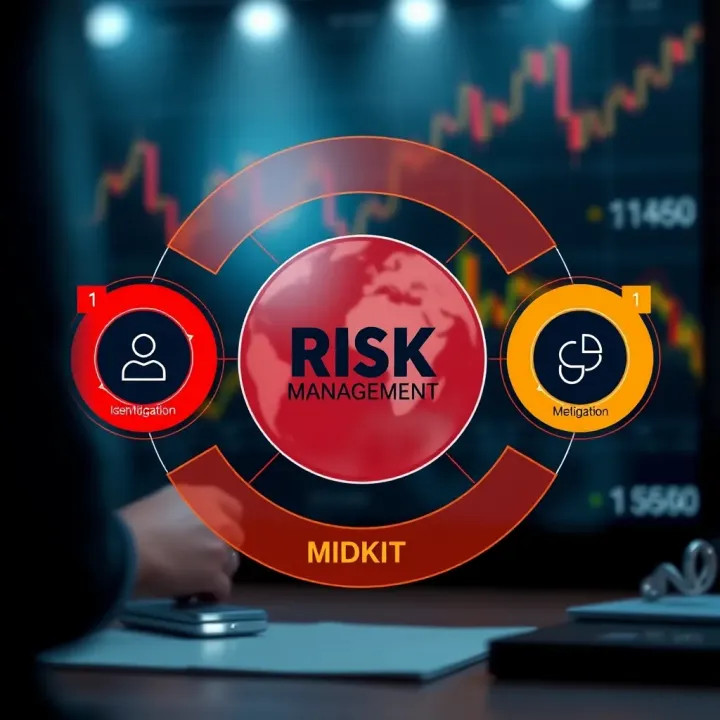
Understanding the Benefits of Risk Management
Explore how risk management boosts decision-making, financial stability, compliance, and innovation, helping Pakistani businesses protect reputation and grow sustainably 📊✅
Edited By
Sophie Reynolds
In Pakistan’s fast-moving markets, businesses face risks that can reshape their future. Strategic risk management helps organisations spot these risks early and plan for them, ensuring their long-term goals stay on track.
Strategic risks vary from market volatility and political changes to technological shifts and regulatory updates from bodies like the Securities and Exchange Commission of Pakistan (SECP) or the Federal Board of Revenue (FBR). For example, a sudden hike in interest rates by the State Bank of Pakistan (SBP) can affect borrowing costs, while changing import policies may disrupt supply chains.

"Ignoring strategic risks is like driving blindfolded on Karachi’s busy roads—danger is certain."
Successful strategic risk management means integrating risk assessment into the business plan rather than treating it as a separate task. This includes:
Identifying key vulnerabilities such as reliance on imports vulnerable to foreign exchange fluctuation.
Analysing potential impact and likelihood, especially amid Pakistan’s regulatory shifts and economic cycles.
Developing response plans ranging from diversification to risk transfer (insurance, contracts).
Implementing this process requires clear leadership commitment, data-driven analysis, and regular reviews aligned with evolving market conditions. For instance, a textile exporter may revisit risk assessments quarterly to adjust for new trading regulations or changing demand in international markets.
This proactive approach protects shareholder value and brand reputation. It also safeguards against shocks like sudden equipment failure during loadshedding or shifts in consumer behaviour during Eid shopping seasons.
Strategic risk management is essential for investors and traders too. Understanding how firms on the Pakistan Stock Exchange (PSX) manage their strategic risks can shape better investment decisions, signalling which companies are prepared to navigate uncertainties.
In short, recognising and dealing with strategic risks equips businesses and investors with the tools to stay resilient, adapt quickly, and achieve their objectives despite the uncertainty surrounding them.
Strategic risk management is essential for businesses wanting to secure their long-term objectives amid Pakistan's dynamic economic and regulatory environment. It involves recognising potential threats that could influence a company's strategic direction, then making informed decisions to minimise or manage those risks. Having a solid grasp of strategic risk helps businesses stay agile and avoid costly missteps.
Strategic risks stem from high-level decisions that affect a company’s overall direction. These risks can arise from factors like market shifts, changes in technology, regulatory updates, or evolving consumer behaviour. Unlike day-to-day operational hiccups, strategic risks impact the future viability of the business. For instance, a firm investing heavily in outdated technology is exposed to strategic risk if competitors adopt more efficient solutions, potentially losing market share.
While strategic risk concerns big-picture threats, operational risk deals with problems in routine business activities, such as supply chain disruptions, employee errors, or system failures. Operational risks affect short-term performance, whereas strategic risks influence long-term success. A textile mill facing frequent machinery breakdowns is facing operational risk, but if the industry moves towards automation and the mill resists adapting, that represents strategic risk.
Properly managing strategic risks safeguards a company’s future ambitions by identifying potential hurdles early. It allows management to allocate resources wisely, avoid wasted investment, and respond quickly to external changes. This approach reduces uncertainties around growth and profitability and keeps the business focused on sustainable outcomes.
Timely strategic risk management can be the difference between a business thriving or closing down in Pakistan’s competitive markets.
In Pakistan’s banking industry, sudden regulatory shifts require banks to revise lending models and compliance practices without disrupting client services. Similarly, the textile sector faces international trade policies and fluctuating cotton supply as strategic risks that influence export potential and profitability. Even tech startups encounter rapid changes in consumer preferences and cyber threats, demanding continuous strategic risk assessment to maintain market relevance.
Understanding these aspects helps investors, traders, and analysts appreciate the forces shaping business trajectories and supports better decision-making aligned with Pakistan’s unique market conditions.
Every business faces a unique set of strategic risks that can seriously impact its long-term goals. Pakistani companies especially need to keep a close eye on how these risks evolve due to local market conditions, regulatory changes, and global pressures. Understanding the nature of these risks helps businesses make informed decisions and stay competitive.
Consumer tastes are always shifting, and businesses that fail to keep up risk losing ground quickly. In Pakistan, for instance, the rising preference for online shopping and digital services, especially among youth in urban centres like Karachi and Lahore, demands swift adaptation. Retailers who continue to rely solely on traditional outlets without embracing e-commerce often see reduced market share.
This change means companies not only need to track what customers want but also anticipate these shifts before competitors do. Understanding local nuances, such as demand for cash-on-delivery or regional language content, can improve targeting and customer retention.
New players leveraging innovative technology or business models often disrupt established markets. For example, ride-hailing apps like Careem and Bykea introduced competition that reshaped transport dynamics in Pakistani cities. These firms keep pressuring legacy businesses to innovate or risk obsolescence.
Companies must watch out for startups or international entrants that offer better pricing, convenience, or quality. Embracing innovation internally, like upgrading IT infrastructure or digital marketing, serves as a defence and can open new growth avenues.

Pakistan’s evolving regulatory landscape poses constant challenges. Businesses must stay compliant with tax policies from the Federal Board of Revenue (FBR), labour laws, environmental standards, and industry-specific regulations. Non-compliance risks fines and reputational damage.
Take the textile sector: regular changes in export documentation or labour regulations mean firms must maintain robust legal and compliance teams. This helps avoid costly penalties and ensures smooth operations.
Sudden amendments in policies can disrupt business plans. For example, the introduction of new import duties or shifts in electricity tariffs by NEPRA affect manufacturing costs. Firms need to adjust quickly or face reduced margins.
Proactive engagement with regulatory bodies and scenario planning for policy changes allows businesses to manage these risks better. Companies that monitor government announcements closely tend to respond efficiently.
Pakistan's frequent currency volatility and inflation spikes affect profit margins and pricing strategies. A sudden depreciation of the rupee raises the cost of imported raw materials, impacting manufacturers.
For traders and investors, these fluctuations mean tighter financial controls and possibly hedging currency risks where possible to avoid unexpected losses.
Securing affordable financing remains a barrier for many Pakistani businesses. Rising interest rates set by the State Bank of Pakistan (SBP) add pressure, while banks often tighten credit criteria due to economic uncertainty.
Enterprises relying heavily on loans for working capital or expansion must manage debt carefully and explore alternative funding such as private equity or venture capital when possible.
With increased digitisation, cyber risks have become a real threat. Ransomware attacks and data breaches can halt operations and erode customer trust. The recent cyber attack on a leading Pakistani bank highlighted vulnerabilities across the sector.
Businesses must invest in cybersecurity measures, staff training, and incident response plans to safeguard their digital assets.
While technology offers growth opportunities, adopting new systems comes with risks like implementation failure or employee resistance. For example, many companies face challenges shifting from manual to ERP systems.
Careful vendor selection, pilot testing, and user training reduce these risks. Getting technology adoption right can improve efficiency and decision-making significantly, turning risks into competitive advantages.
Businesses in Pakistan that understand and manage these types of strategic risks effectively increase their chances of sustainable growth and market leadership. Keeping risk management aligned with real-world challenges ensures that companies stay resilient amidst changing environments.
Keep tracking consumer behaviour regularly
Monitor regulatory updates and engage with authorities
Manage financial risks with careful planning
Invest in technological safeguards and thoughtful adoption
This hands-on approach to strategic risks helps Pakistani traders, investors, and analysts make smarter decisions that protect business goals over time.
Aligning risk management with business strategy ensures that risks do not derail core organisational goals. When businesses recognise which threats affect their strategic plans, they can allocate resources better and react smartly to challenges. For traders or financial analysts, this alignment means risk efforts directly support profit maximisation and portfolio stability rather than generic hazard avoidance.
Risk identification starts with inspecting the business environment systematically. Techniques such as SWOT analysis (Strengths, Weaknesses, Opportunities, Threats) help pinpoint risks that could obstruct strategic goals. For instance, a textile exporter in Faisalabad may identify fluctuating cotton prices and new import tariffs as critical risks. Early detection here means the company can explore hedging cotton purchase costs or diversify markets to reduce exposure.
Evaluating risks relative to strategic objectives involves placing each potential risk against the company's planned direction. This prioritisation helps decide which risks need immediate attention and which are tolerable. For example, if an investment firm aims for aggressive growth, foreign exchange risk might be rated high due to exposure in multiple currencies. Focusing on these top-tier risks allows the firm to craft specific countermeasures without diverting effort from less impactful concerns.
Assessing organisational capacity is about understanding how much risk a business can handle without jeopardising its stability. This assessment includes financial strength, governance quality, and operational flexibility. A Pakistan-based startup with limited cash flow will have a narrow risk appetite—meaning cautious approaches—while an established conglomerate with diversified ventures might tolerate more risk.
Balancing risk-taking and caution is vital for growth while guarding against ruin. Taking measured risks fuels new opportunities, but reckless exposure invites failure. For example, a stockbroker operating in volatile PSX sectors might choose to limit risky trades to a certain percentage of their portfolio. This balance enables consistent returns even amid market ups and downs, avoiding overreach that could trigger heavy losses.
A well-aligned risk management strategy protects against uncertainties while helping businesses seize opportunities in Pakistan’s complex markets.
Properly linking risk and strategy leads to sharper decision-making and longer-term resilience. Traders, investors, and financial squads that grasp these concepts position themselves to handle market shifts smartly rather than reactively.
Implementing strategic risk management in practice bridges the gap between planning and action. It ensures that businesses don’t just identify risks but manage them effectively to safeguard long-term objectives. This section focuses on practical steps including risk response strategies, ongoing monitoring, and fostering a culture that supports risk awareness.
Risk avoidance, reduction, and transfer form the core options for responding to strategic risks. Risk avoidance means changing plans to sidestep risks entirely, like a textile manufacturer in Faisalabad shifting supply sources to avoid political instability in a trading partner country. Risk reduction involves measures that lower the likelihood or impact of risks, such as adopting better cyber security protocols to prevent data breaches in financial firms. Risk transfer shifts the risk to a third party, often via insurance or contracts; for example, exporters may use insurance to cover losses from currency fluctuations.
Creating contingency plans prepares businesses for when risks materialise despite precautions. A Karachi-based logistics company, for instance, might develop backup transport routes or maintain emergency fuel reserves to counter blocks during political strikes. These plans define clear actions to minimise disruption and resume normal operations. Contingency planning also involves scenario analysis, allowing firms to simulate crises and test their readiness, so responses become swift and organised when points of failure occur.
Setting up risk indicators and reporting is vital for ongoing threat management. Risk indicators are measurable signals, such as currency volatility indexes or regulatory change alerts, tailored to a business’s strategic risks. A real estate developer in Islamabad might track building material price trends as an indicator of cost risks. Regular reporting ensures decision-makers stay updated and can act promptly. This process also helps spot emerging risks early, rather than reacting after the damage is done.
Continuous improvement and adaptation mean risk management is a living process. Companies must learn from past outcomes and refine strategies continually. For example, after experiencing delays in a supply chain due to monsoon flooding, a Punjab-based agricultural exporter might update logistics protocols and invest in weather forecasting tools. This approach keeps the business resilient amid Pakistan’s shifting market and environmental conditions.
Training and communication play key roles in embedding risk consciousness across all levels. Conducting regular workshops about risk identification and response helps staff understand their role in risk management. For example, banks organising cybersecurity training for frontline employees reduce vulnerabilities from human error. Open communication encourages reporting of risky situations without fear, enabling faster intervention.
Encouraging proactive risk management means motivating employees to flag potential threats and suggest improvements before problems escalate. This proactive attitude helps grab opportunities and avoid pitfalls simultaneously. Companies like e-commerce platforms in Pakistan benefit when their teams monitor customer feedback or tech glitches before these affect reputation or sales. Recognition and reward systems for risk-aware behaviour further strengthen this culture.
Effective implementation of strategic risk management requires more than paperwork; it demands ongoing action, clear communication, and a culture that treats risk management as everyone’s responsibility.
This hands-on approach builds resilience, helping Pakistani businesses navigate complex environments with confidence.
Strategic risk management in Pakistan is not just a theory but a practical necessity, especially for businesses facing volatile markets and frequent regulatory changes. This approach helps organisations identify threats early and handle them without jeopardising their long-term goals. From financial firms navigating exchange rate swings to exporters dealing with shifting trade policies, the benefits of managing risks strategically are tangible and wide-reaching.
Effective strategic risk management gives businesses the tools to spot potential threats well before they cause harm. For instance, a textile exporter in Faisalabad who monitors foreign exchange trends can adjust contract terms or pricing to avoid losses when the rupee fluctuates sharply. This foresight prevents costly surprises and allows decision-makers to act with confidence rather than react in panic.
Businesses in Pakistan must often respond rapidly to changes, like sudden regulatory updates from the Securities and Exchange Commission of Pakistan (SECP) or shifts in consumer trends fuelled by digital platforms like Daraz. Strategic risk management fosters agility by embedding flexibility into business plans. This means a company can pivot marketing strategies or supply chain arrangements swiftly, ensuring it stays competitive even when conditions change overnight.
Active risk management signals to investors and partners that a business takes its long-term viability seriously. When a Karachi-based fintech firm integrates risk assessments into its strategic framework, it demonstrates responsibility and foresight. This builds trust, helping attract more funding and stronger partnerships—vital for sustaining growth amid Pakistan’s challenging economic climate.
In Pakistan’s legal environment, staying compliant is non-negotiable. Effective strategic risk management ensures companies keep pace with evolving laws from bodies like the Federal Board of Revenue (FBR) or Pakistan Telecommunication Authority (PTA). By proactively addressing regulatory risks, businesses avoid penalties and maintain good standing, which is important for operational continuity and reputational strength.
A company’s reputation is often its biggest asset. Strategic risk management helps safeguard it by preventing crises or managing them efficiently when they do occur. For example, a food and beverage company that swiftly recalls contaminated products reduces harm to customers and limits negative coverage. This fortifies trust among consumers and stakeholders alike.
Strategic risk management also supports businesses in contributing to Pakistan’s broader development vision, such as Vision 2025 or the China-Pakistan Economic Corridor (CPEC). By managing environmental, social, and governance (ESG) risks thoughtfully, companies can align themselves with national priorities, unlocking opportunities for government incentives and sustainable partnerships.
Implementing strategic risk management isn’t just good practice; for Pakistani businesses, it is a critical factor in maintaining relevance, trust, and steady growth amid uncertain times.
Explore how risk management boosts decision-making, financial stability, compliance, and innovation, helping Pakistani businesses protect reputation and grow sustainably 📊✅

📊 Explore how actuarial science and risk management use stats, finance & tools to handle uncertainty in Pakistan's industries, offering key insights for pros & students.

🔍 Learn how binary logs in database management support data recovery, replication, and auditing in Pakistan. Discover practical tips for secure, efficient handling.

🔍 Explore binary search in C++ with clear concepts, practical code, and optimization tips to write efficient search functions in your projects. 💻
Based on 11 reviews