
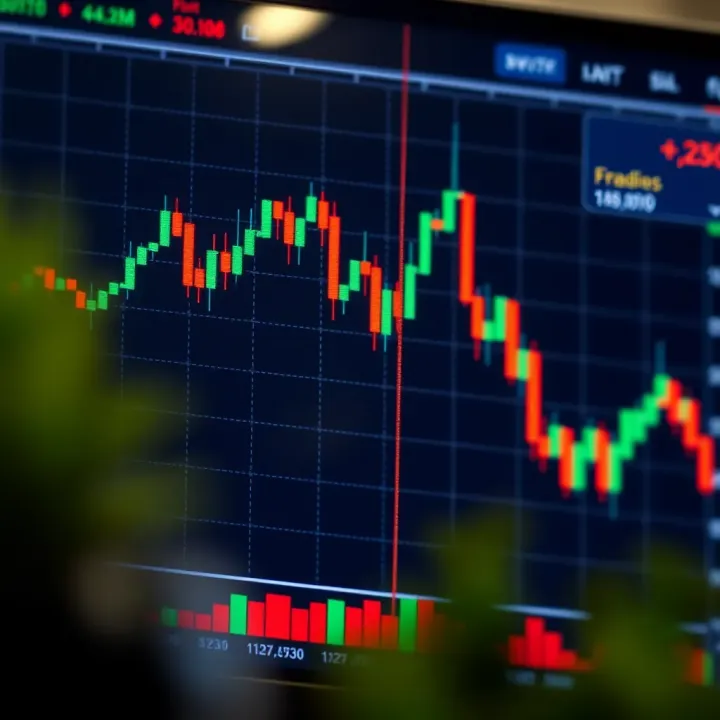
Understanding Bearish Chart Patterns in Trading
📉 Learn to spot bearish chart patterns in technical analysis that signal falling stock prices. Understand key formations, practical tips, and risk control.
Edited By
Oliver Bennett
Understanding cryptocurrency chart patterns plays a vital role in making smart trading decisions. Traders in Pakistan and worldwide rely on these patterns to predict market movements and identify opportunities for profit. Unlike random price changes, crypto charts follow specific shapes and trends that reveal the underlying behaviour of buyers and sellers.
These patterns, formed by price fluctuations over time, help traders gauge whether a coin's price will rise, fall, or remain stable. They serve as visual signals indicating market sentiment, ranging from bullish momentum to bearish downturns. Mastering these patterns improves timing for entries and exits, potentially reducing losses and maximising gains.

Why focus on chart patterns? They provide a straightforward, data-driven approach amid the volatile crypto market. For example, when Bitcoin forms a "double top" pattern, it warns investors about a possible price decline. On the other hand, a "cup and handle" pattern may signal a continuation of an upward trend.
Recognising chart patterns is not about guessing but understanding market psychology reflected in price action. This insight is especially useful for Pakistani traders working with platforms like Binance, local crypto exchanges, or apps such as Easypaisa and JazzCash for payments.
Key points to consider:
Patterns emerge from the interaction of supply and demand forces.
They can be classified broadly as continuation or reversal patterns.
Volume often confirms whether a pattern signals strong or weak momentum.
Combining patterns with indicators like RSI (Relative Strength Index) or MACD (Moving Average Convergence Divergence) sharpens trade decisions.
For Pakistani investors, learning these patterns enables confident trading in a market known for abrupt ups and downs. It helps to filter noise from real signals in both major cryptocurrencies like Bitcoin and Ethereum, and emerging altcoins.
This article will guide you through both basic and advanced chart patterns, explaining their meaning and practical use. You will learn how to read charts effectively, spot trends early, and combine chart analysis with other tools for smarter trading.
Understanding crypto chart patterns can significantly improve your trading decisions in Pakistan’s fast-moving cryptocurrency market. These patterns reveal how prices have moved historically and hint at possible future moves, helping you spot trends, reversals, or pauses with better confidence.
For instance, when Bitcoin shows a familiar chart pattern, it can suggest whether its price will climb further or face a pullback, enabling you to plan your entry or exit points carefully. This makes chart patterns a practical tool, especially given the rapid price swings common in crypto.
Crypto chart patterns are shapes or formations that appear on price charts due to the collective behaviour of traders in the market. These patterns form as prices move up and down, often repeating under similar conditions. Identifying them is part of technical analysis — a method where traders study past price action and volume to predict future price movements.
For example, a “double bottom” pattern forms when a cryptocurrency’s price hits a support level twice, indicating a possible reversal from downtrend to uptrend. This can guide traders like those in Karachi or Lahore to expect a bullish move and plan trades accordingly.
Chart patterns are, in reality, visual representations of trader psychology. They show how traders react to certain price levels, news, or market events. For example, a “head and shoulders” pattern often signals final stages of an uptrend because it reflects weakening buyer enthusiasm and increasing selling pressure.
This interplay of fear and greed shapes the chart. When you understand these patterns, you're essentially reading collective emotions in the market. Pakistani traders can use this insight to avoid chasing pumps or getting stuck in dumps, making decisions that align with the overall sentiment rather than individual biases.
Cryptocurrency markets are notoriously volatile. Prices can jump or fall sharply in minutes, influenced by global news, social media, or regulatory news from Pakistan or abroad. In such an environment, chart patterns help make sense of sudden moves by showing where price is likely to settle next.
Because crypto trading often happens 24/7 across exchanges like Binance, Coinbase, and local platforms, price discovery—the process by which buyers and sellers determine a fair price—is ongoing and dynamic. Patterns help break down this noisy behaviour into understandable signals.
Smart traders use chart patterns to get ahead of the market. By spotting a rising wedge or a pennant forming on the chart, you can anticipate whether the ongoing trend will continue or soon reverse. This helps to set realistic profit targets and stop-loss orders.

For instance, a Pakistani trader noticing a “bull flag” following a strong upward price move might expect the rally to continue, thus holding a position with confidence. Conversely, spotting a “double top” pattern can warn about an impending downtrend, prompting you to take profits or protect your capital.
Mastering crypto chart patterns equips you to read the market's mood and act accordingly, making your trading sharper and more grounded. With every pattern understood, you reduce guesswork and increase your chances of making smarter trades.
Mastering common chart patterns is a fundamental step for any crypto trader looking to improve market timing and decision-making. These patterns help you spot potential reversals or continuations in price trends, giving you a strategic edge. Recognising them quickly on platforms like TradingView or Binance can significantly boost your trading results.
This pattern predicts a likely trend reversal from bullish to bearish or vice versa. It consists of three peaks – the middle peak (head) is higher than the two shoulders. In a crypto market, spotting a head and shoulders near a resistance level often signals a sell-off ahead. For example, Bitcoin's charts have showed this pattern before sharp declines. Traders usually confirm the pattern with volume dropping on the head and rising during the neckline break to time their exits or shorts.
Double tops indicate a potential bearish reversal after an uptrend. The price hits a resistance level twice but fails to break higher. In crypto, where price swings are fast, a double top on Ethereum's daily chart may warn traders to tighten stops or book profits. Conversely, double bottoms show strong support holding twice, suggesting a bullish turn. This pattern is helpful when trading altcoins that often bounce sharply after finding support.
These are extensions of double tops/bottoms, reinforcing the idea of strong resistance or support. A triple top means sellers keep pushing back at a certain level three times, increasing the chance of a downtrend. Similarly, a triple bottom suggests buying pressure is solid, raising odds of an uptrend. Due to crypto’s volatility, triple patterns tend to be rarer and more reliable than doubles.
These short-term patterns appear after a strong price move, signalling a brief pause before the original trend continues. Flags resemble small rectangles slanting against the prior trend, while pennants look like small symmetrical triangles. For example, after a breakout in Litecoin, you might see a flag pattern lasting a few days before price resumes upward. Traders use these to enter on a breakout with limited risk.
Triangles are popular shapes showing consolidation before a breakout. An ascending triangle has flat resistance with rising support, often bullish. Descending triangle shows descending resistance and flat support, often bearish. Symmetrical triangles have converging trendlines, predicting a breakout but direction is uncertain. Crypto traders follow volume and price action closely around triangle apexes to catch timely moves.
Rectangles form when price moves sideways between parallel support and resistance levels. This consolidation period suggests indecision but usually resolves with a trend continuation in the breakout direction. For instance, Binance Coin might trade between Rs 9,000 and Rs 9,500 for days, making a rectangle. A breakout above resistance signals buying opportunities, while a breakdown warns of declines.
Recognising these patterns alone won’t guarantee success, but combined with other signals, they offer valuable insights into crypto price behaviour.
Every trader in Pakistan should start with these chart formations because they provide clear visual clues for entry and exit in volatile markets. Using them alongside volume and indicators improves the odds of profitable trades.
Chart patterns provide a blueprint for traders to interpret price moves and make better trading decisions. But spotting a pattern alone isn't enough. Applying these patterns effectively requires confirmation and precise action points like entry, exit, and risk controls. In crypto markets, where price swings can be sudden and volatile, combining chart patterns with other tools helps reduce mistakes and improve outcomes.
Trading volume adds weight to price patterns and often confirms if a move is genuine. For instance, when a breakout follows a head-and-shoulders pattern, a spike in volume indicates strong buying interest, suggesting the pattern's signal is valid. Without volume backing, breakouts may fail or false signals might mislead traders.
Alongside volume, technical indicators like the Relative Strength Index (RSI), Moving Average Convergence Divergence (MACD), and moving averages help validate patterns. RSI reveals if an asset is overbought or oversold, signalling potential reversals within patterns. MACD highlights changes in momentum, supporting trend continuation patterns. Moving averages smooth price data, showing dynamic support or resistance levels that align with patterns. Pakistani traders can combine these tools on platforms like TradingView or Binance to cross-check signals before placing trades.
Identifying clear breakout and breakdown levels is vital for executing trades informed by chart patterns. A breakout level indicates where price surpasses a resistance point, triggering potential upward moves. Conversely, a breakdown level shows price falling below support, hinting at downward trends. For example, in a triangle pattern, entry points are usually set just above the breakout line on an upward move or below the breakdown line. This approach helps lock in gains or cut losses early.
Risk management through stop-loss placement protects traders from unexpected market swings. Stop-loss orders are typically placed slightly beyond the opposite side of the pattern to allow room for normal market fluctuations, yet limit downside risk. For instance, if entering on a breakout of a double bottom pattern, a stop-loss just below the lowest point of the pattern shields capital if the breakout fails. This cautious strategy is key in Pakistan's crypto market where volatility can spike due to news or regulatory shifts.
Applying chart patterns with volume confirmation and clear entry-exit plans sharpens trading decisions. It’s not just about spotting shapes on a chart but understanding context and managing risks effectively.
By combining chart patterns with volume, indicators, and solid risk control, Pakistani traders can improve their odds in the unpredictable crypto market. This multi-layered approach turns pattern recognition into actionable trading signals rather than guesswork.
Chart patterns are popular tools for crypto trading, but they have clear limitations that traders must understand to avoid costly mistakes. Patterns rely heavily on past price action, which may not always predict future movements, especially in crypto markets known for erratic behaviour. Recognising these challenges helps traders stay cautious and avoid blind reliance on chart patterns alone.
Market noise—random fluctuations caused by low liquidity, rapid news, or speculative trades—often disrupts clear pattern formation. For instance, a pattern like a "head and shoulders" might appear on a Bitcoin chart but then suddenly fail as a whale moves large amounts, causing sharp price swings. This noise can produce false breakouts or fake reversals that mislead traders into premature buying or selling.
Because of this, observing volume during pattern formation becomes vital. Low volume during a breakout might hint at a false move, while strong volume adds credibility. Still, volume alone cannot guarantee pattern success. For example, sudden political news or changes in regulation can slam the market regardless of pattern signals.
Relying solely on chart patterns without considering market context increases the risk of false signals and costly trades.
Combining chart patterns with broader analysis improves reliability. This means checking fundamentals like news about exchanges, government policies, or big financial flows alongside technical indicators such as the Relative Strength Index (RSI) or Moving Average Convergence Divergence (MACD). Such integration helps filter out misleading signals. A sudden drop in Ethereum, for example, might defy a bullish chart pattern if linked to hacked wallets or regulatory crackdowns.
Cryptocurrency markets suffer from higher volatility than traditional assets. Prices can swing 10% or more within hours, amplifying risks of pattern breakdowns. Additionally, crypto markets face manipulation risks—whale wallets or coordinated pumps/dumps can distort patterns. These factors mean that classic chart patterns may behave differently here compared to stocks or forex.
A trader spotting a triangle pattern on the chart must account for this uncertainty and possibly adjust stop-losses more tightly or confirm signals multiple times before acting. Awareness of manipulation tactics can prevent falling for artificial breakouts caused by fake volume or orders.
Choosing the right timeframe also matters. Short timeframes like 5-minute charts can be swamped with noise and fake signals, while daily or 4-hour charts often provide clearer patterns better suited to crypto volatility. Pakistani traders, especially those balancing workload and trading, may benefit from focusing on longer timeframes to avoid impulsive trades triggered by transient price moves.
Ultimately, understanding these limitations and adapting strategies accordingly enables smarter, more cautious crypto trading in Pakistan's dynamic markets.
Understanding crypto chart patterns is one thing; applying them effectively in Pakistan's unique trading environment is quite another. Practical tips ensure that traders don't just recognise patterns but also integrate them meaningfully for better decision-making. This section focuses on real-world steps Pakistani traders can take, from choosing charting tools to blending chart patterns with broader market insights.
Several platforms provide crypto charting tools accessible to Pakistani traders. TradingView remains a favourite due to its comprehensive charting features, real-time data, and customisable interface. Local traders often combine TradingView with broker-specific platforms like Binance or Coinbase, which also offer charting within their apps. For those preferring mobile access, apps like Binance and Kraken support detailed charting and are popular in Pakistan.
When selecting a charting platform, look for features like real-time price updates, extensive technical indicators (RSI, MACD, moving averages), and the ability to save and customise chart templates. Seamless integration with your crypto wallet or broker is helpful for quick trades based on chart pattern signals. Additionally, a user-friendly interface that supports Urdu or simple English can help traders new to charting.
Relying solely on chart patterns can be risky, especially in volatile markets like cryptocurrency. Combining fundamental analysis—such as crypto project news, regulatory developments in Pakistan, or global macro trends—with technical signals strengthens the decision process. For instance, spotting a potential breakout on the chart while positive news about a coin’s adoption surface helps confirm the trade.
Pakistani crypto traders should also keep local market conditions in mind. Regulatory uncertainties, foreign exchange fluctuations, and liquidity challenges often affect trading behavior differently than global markets. Understanding how the State Bank of Pakistan’s policies or FBR tax rules impact crypto investments adds depth to purely technical analysis. Adapting your strategy to local realities ensures you’re not caught off guard by sudden price swings driven by these factors.
Combining reliable chart tools with a broad market perspective, tailored to Pakistan’s environment, equips traders to make smarter, more confident crypto trades.
By applying these practical tips, Pakistani traders can move beyond basic pattern recognition to informed, well-rounded strategies that consider both technical cues and real-world influences.
📉 Learn to spot bearish chart patterns in technical analysis that signal falling stock prices. Understand key formations, practical tips, and risk control.

📈 Master key chart patterns in trading! Learn to spot continuation and reversal signals, and gain practical tips for smarter market moves in Pakistan.

📈 Master key candlestick patterns for trading success! Learn how single, double & multiple setups reveal market moves and boost your buying & selling skills.
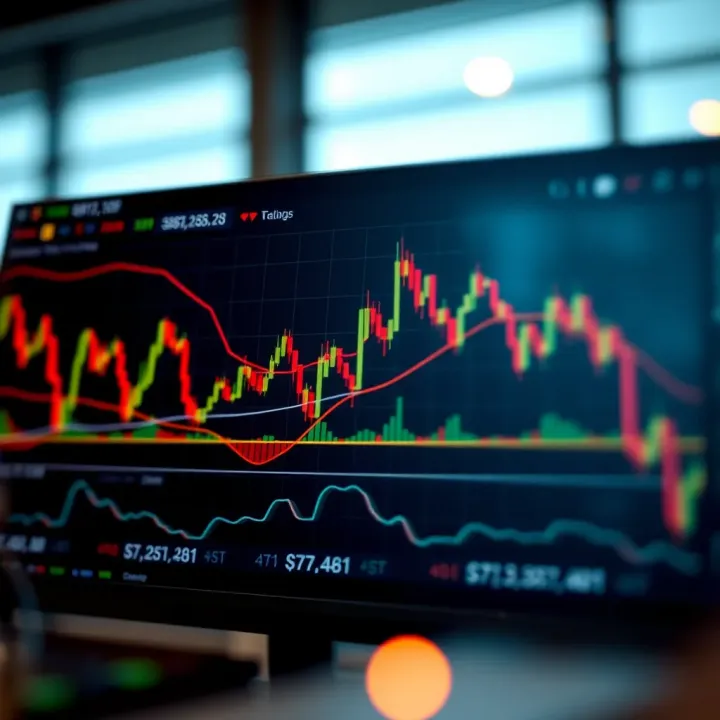
Learn to spot 7 key chart patterns in trading 📈 to predict market moves. Get practical tips & a handy PDF guide for smart trading analysis! 📊
Based on 12 reviews