

Understanding Binary Fission in Simple Organisms
Explore how binary fission drives growth in prokaryotes, its key steps, variations, and impact on genetics and industry ⚛️🔬👩🔬
Edited By
William Hughes
At its core, the risk management process involves four main stages: identifying risks, evaluating their severity, planning for an appropriate response, and continuously monitoring the situation. For example, a stockbroker handling client portfolios must first spot risks like sudden currency depreciation or political instability that could impact stock prices. Next, assessing the extent of these risks guides decision-making, allowing tailored strategies such as diversifying holdings or setting stop-loss orders.
This process is dynamic rather than one-time. Businesses and financial professionals in Pakistan face fast-changing environments, from fluctuating interest rates as announced by the State Bank of Pakistan (SBP) to challenges arising from energy shortages. Therefore, monitoring risk controls ensures timely updates and adjustments. A crypto enthusiast, for instance, must keep track of new regulations by the Securities and Exchange Commission of Pakistan (SECP) and the Pakistan Telecommunication Authority (PTA) to avoid compliance issues.

Effective risk management safeguards investments and supports better compliance, which is necessary under Pakistan's evolving financial regulations.
Overall, applying these stages consistently helps investors, traders, and brokers in Pakistan make informed decisions, protect capital, and increase the chances of steady returns. The next sections will break down each phase with practical tips and examples tailored for the local market.
Understanding risk management starts with a clear grasp of what risk actually means and why managing it matters for any organisation. Whether you are a trader analysing stock market volatility, a financial analyst assessing client portfolios, or a crypto enthusiast navigating digital assets, recognising and handling risk directly impacts your success.
Risk is the chance that an event or condition will affect your goals negatively or positively. In financial terms, it’s generally linked to uncertainty around returns or potential losses. For example, a stockbroker in Karachi might face risks from sudden currency devaluation or political instability that affects stock prices. Understanding this helps you prepare rather than react chaotically.
Risk isn’t just about avoiding losses; it’s about recognising potential opportunities too. A trader spotting market dips can take calculated risks for gains. So, risk is a double-edged sword—knowing its nature helps balance caution with strategic moves.
Failing to manage risk can lead to substantial financial damage, reputational harm, or operational disruptions. Take a financial firm in Lahore that ignores the risk of cyberattacks on their online platforms; a breach could cause client loss and regulatory penalties.
Managing risk allows organisations to:
Protect assets: By identifying possible threats, firms can avoid costly surprises.
Ensure compliance: Pakistani companies must follow regulations from bodies like the Securities and Exchange Commission of Pakistan (SECP) and State Bank of Pakistan (SBP), which require risk controls.
Enhance decision-making: Informed choices about investments or project launches depend on solid risk assessments.
Maintain stakeholder confidence: Investors and clients prefer businesses that proactively manage risks.
Effective risk management transforms uncertainty into manageable tasks, helping organisations absorb shocks and stay competitive.
Without this, businesses may face excessive exposure to market swings, fraud, or changing laws without any buffer. For instance, a cryptocurrency trader on Binance Pakistan would need to handle both market risks and regulatory changes from the Pakistan Telecommunication Authority (PTA) efficiently to avoid losses.
In short, getting to know risk management means mastering the basics of risk identification and response. This foundation is essential before moving on to spotting risks early, assessing them accurately, and planning the right strategies to handle them — which the following sections will cover in detail.
Identifying risks early plays a vital role in risk management for businesses and projects, especially in Pakistan's dynamic market. Catching threats before they escalate helps save resources and keeps strategic plans on track. Early identification lets organisations prepare better, reducing surprises that can disrupt operations or cause financial losses.
Brainstorming encourages team members from various departments to come together for open discussions, sharing ideas on potential risks. This method uncovers hidden issues by combining diverse perspectives, which is particularly useful for complex projects where different stakeholders hold critical insights. For instance, a textile manufacturer in Faisalabad might discover supply chain risks by involving production, procurement, and logistics teams during brainstorming.
Conducting interviews with industry experts or experienced professionals helps tap into specialised knowledge about risks that standard checklists may miss. Experts can provide practical examples, such as the impact of recent policy changes or infrastructure challenges in Pakistan’s energy sector. These insights aid decision-makers in understanding less obvious but significant exposures.
Checklists offer a straightforward, systematic way to ensure common risks are not overlooked. Businesses can customise checklists specific to their sector—for example, a financial institution may have a checklist covering credit risks, fraud risks, and compliance requirements governed by the State Bank of Pakistan (SBP) regulations. This technique saves time and ensures consistent risk identification across audits.

Examining past incidents or losses allows companies to spot recurring risks and trends. For example, reviewing previous supply chain disruptions due to floods during the monsoon season can guide agro-based companies to improve contingency plans. Reliable historical data provide a fact-based approach to anticipate and avoid similar pitfalls.
Operational risks include issues arising from day-to-day business activities, such as machinery breakdowns, human errors, or supply delays. In Pakistan, the frequent loadshedding impacts production timelines across industries like manufacturing and textiles. Organisations must identify such operational risks early to manage workflow and maintain customer commitments.
Financial risks primarily involve cash flow instability, credit defaults, and currency fluctuations. Given the Pakistani rupee’s volatility against the dollar, import-dependent companies face risks related to exchange rate shifts. Early detection of such financial vulnerabilities helps firms hedge effectively or adjust pricing strategies accordingly.
New laws, tax policies from the Federal Board of Revenue (FBR), or changing compliance standards can pose legal risks. For example, sudden updates to labour laws or environmental regulations require swift adjustments. Identifying these risks early enables timely training and policy revisions to avoid penalties or operational halts.
Cybersecurity threats and data breaches are escalating concerns, especially with increased digital adoption in Pakistan’s financial and telecom sectors. Security risks also cover physical threats like theft or vandalism. Companies need to monitor vulnerabilities continuously to protect sensitive information and maintain trust among customers and partners.
Early identification is not just a step but the backbone of an effective risk management process. It enables proactive responses that can save organisations from costly setbacks.
Recognising these common risk areas with appropriate techniques equips traders, investors, and analysts with a realistic view of challenges ahead. Such preparedness is key to sustainable success in Pakistan’s evolving business environment.
Assessing and prioritising risks is the stage where you turn a list of potential hazards into a clear plan of action. It's not enough to simply identify risks; you need to understand which ones could hit your business hardest and require immediate attention. This process helps traders, investors, and financial analysts decide where to focus resources, whether that's avoiding a certain stock or preparing for currency fluctuations.
Start by estimating how likely each risk is to happen and how severe its impact would be if it did. In the Pakistani context, consider, for example, the risk of exchange rate volatility for importers or the chances of political instability affecting market confidence. A risk that's very likely to occur but with minor impact might not demand urgent action, whereas a rare but devastating risk needs careful planning.
Here’s how you might break it down:
Likelihood: Assess based on historical data, market trends, or expert opinion. For instance, trade disruptions during Ramadan might have a medium likelihood every year.
Impact: Consider financial loss, reputational damage, or operational setbacks. A sudden hike in petroleum prices could severely affect transportation costs, impacting supply chains directly.
Being practical, you could categorise these ratings as High, Medium, or Low, which makes the next step — prioritisation — more straightforward.
Risk matrices are handy tools that plot the likelihood against the impact of each risk on a grid. This visual approach helps quickly identify which risks need immediate focus and which can be monitored over time.
For example, a 5x5 matrix provides a scale from "Very Low" to "Very High" for both dimensions. A risk falling in the upper right corner (high likelihood, high impact) jumps out as a priority. This could be political unrest in a major city affecting key financial institutions, something investors and traders watch closely.
In contrast, risks placed in the lower left (low likelihood, low impact) might not need resources now but should remain on the radar. Using a matrix allows Pakistan's financial professionals to justify decisions clearly — whether it's allocating funds for hedging foreign currency risk or preparing contingency plans for tech disruptions.
Assessing and prioritising risks transforms uncertainty into a structured overview, providing clarity on where attention and resources must go to protect investments and business continuity.
Employing these practices within risk management helps Pakistani market players move beyond guesswork and focus on risks that genuinely matter, directly influencing portfolio performance and business resilience.
Planning how to handle risks is a vital phase in any risk management process. It’s where organisations decide on the best way to tackle identified risks, balancing potential losses against available resources. Without a clear plan, efforts to manage risk can become scattershot, leading to wasted time and money. For traders and investors in Pakistan, effective risk planning ensures that sudden market fluctuations or policy changes don’t blindside them.
Effective risk planning involves understanding the nature of each risk and selecting the most appropriate strategy. For example, a financial analyst might prioritise mitigating the risk of currency depreciation by diversifying holdings, while an investor in the Karachi Stock Exchange (KSE) may prefer to transfer certain risks through hedging instruments. The goal is to choose responses that protect assets, improve resilience, and align with organisational or personal risk tolerance.
Avoidance means steering clear of activities that create risk altogether. This is often the simplest way to protect your investments or business from loss. For instance, a stockbroker might avoid trading in highly volatile penny stocks that have unclear financials, thus sidestepping potential losses. However, avoidance isn’t always practical or profitable. Avoiding all risk could mean missing out on lucrative opportunities, especially in the dynamic Pakistani market where calculated risks often pay off.
Mitigation reduces the chance or impact of a risk by taking proactive steps. Traders, for example, might set stop-loss orders to limit their downside if a share price drops unexpectedly. Similarly, a financial analyst reviewing a portfolio may recommend reducing exposure to sectors vulnerable to regulatory change in Pakistan, like energy or telecom, in anticipation of potential policy shifts. The essence of mitigation is to prepare for adverse outcomes without giving up on chances to grow.
Transferring risk involves shifting its burden to a third party, often through insurance or contractual agreements. This strategy is common in businesses that face operational risks. For instance, an importer in Karachi might take out marine cargo insurance to cover losses if goods are damaged during shipment. Similarly, investors can transfer market risk by using futures contracts or options. Transfer doesn’t remove risk but provides financial backup to absorb losses.
Sometimes, the cost or effort to avoid, mitigate, or transfer risk is higher than the potential loss itself. In such cases, accepting the risk becomes reasonable. A crypto enthusiast trading small amounts on a new platform in Pakistan might hold off implementing complex protective measures if the potential loss is minor and within their comfort zone. Acceptance means monitoring the risk closely and preparing to absorb any fallout.
Once the appropriate response strategies are clear, developing a detailed risk treatment plan becomes the priority. This plan outlines specific actions, responsibilities, resources, and timelines for managing each identified risk. For traders and financial analysts, this might mean documenting how stop-loss levels will be set, what insurance covers will be purchased, or which risks will be monitored regularly.
A practical risk treatment plan provides clarity and accountability. It ensures that everyone involved knows what to do if risks materialise. For example:
Action steps: Set stop-loss orders at 10% below purchase price.
Responsible person: Portfolio manager.
Resources: Access to trading platform with real-time alerts.
Review timetable: Weekly portfolio performance checks.
By formalising the risk treatment plan, organisations and individuals avoid confusion during critical moments and improve their chances of controlling the impact of risks effectively.
Proper planning and clear strategies make risk manageable rather than overwhelming, especially in Pakistan’s rapidly changing financial environment.
Implementing and monitoring risk controls completes the risk management cycle by putting plans into practice and making sure they work effectively. For traders, investors, and financial analysts, this stage ensures that responses to identified risks do not remain on paper but actively reduce threats. Without proper follow-up, even a well-designed risk treatment plan can fall short, exposing portfolios and businesses to unexpected losses.
Executing risk responses means applying the chosen strategies such as avoiding, mitigating, transferring, or accepting risks. For example, a stockbroker facing currency fluctuation risk may use hedging through futures contracts, while a cryptocurrency investor might employ stop-loss orders to limit potential drops. It’s essential to assign responsibility clearly—who implements which measure and when.
Training the team involved is just as crucial. Staff handling transactions or monitoring market changes must understand how to apply controls like limits or verification processes. In Pakistan’s often volatile financial markets, delays or confusion during implementation can cause missed opportunities or losses. Tracking initial application swiftly helps detect any gaps early.
Regular Audits help verify whether risk controls are working as intended. These may include internal checks or engaging external auditors to assess compliance with risk policies. In a trading firm, audits can spot inconsistencies such as opening unauthorized positions or ignoring stop-loss limits. Such reviews keep organisations alert and prepare them to adjust strategies against shifting market dynamics.
Feedback Loops involve continuous communication between those managing risks and executives overseeing strategies. For example, if crypto market volatility spikes unexpectedly, traders can quickly report back, prompting a revised risk approach. Regular feedback ensures controls remain relevant and can evolve with the market instead of becoming stale and ineffective.
Updating Risk Registers is vital after any event or review. Risk registers list ongoing risks, their severity, assigned controls, and responsible persons. Say a financial analyst discovers a new regulation affecting investments in Pakistan’s stock market; this risk needs to be added and assessed promptly. Regular updates maintain an accurate picture, guiding timely decisions and preventing surprises.
Effective risk control implementation isn’t a one-time task but a continuous process requiring attention, adaptation, and clear communication._ It's what distinguishes successful investors and traders in complex markets from the ones who suffer avoidable setbacks._
By staying alert with practical actions like audits, feedback, and register updates, financial professionals safeguard their assets and improve decision quality in Pakistan’s evolving trading landscape.
Explore how binary fission drives growth in prokaryotes, its key steps, variations, and impact on genetics and industry ⚛️🔬👩🔬
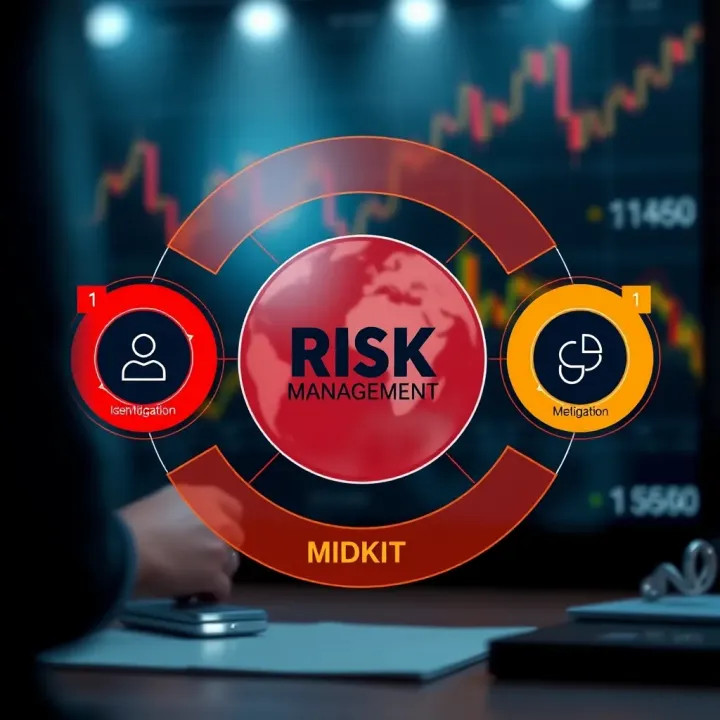
Explore how risk management boosts decision-making, financial stability, compliance, and innovation, helping Pakistani businesses protect reputation and grow sustainably 📊✅
🔍 Learn how binary logs in database management support data recovery, replication, and auditing in Pakistan. Discover practical tips for secure, efficient handling.
📊 Explore how actuarial science and risk management use stats, finance & tools to handle uncertainty in Pakistan's industries, offering key insights for pros & students.
Based on 14 reviews