
Guide to Chart Patterns with PDF Resources
Explore key chart patterns 📈 in Pakistan's markets! Learn their types, analysis tips, and access free PDF guides to sharpen your trading skills today.
Edited By
Charlotte Mitchell
Understanding classic chart patterns is essential for traders aiming to improve their timing and accuracy in Pakistan's markets. These patterns, visible on price charts, reveal the psychology of buyers and sellers, signalling potential trend continuations or reversals.
Classic patterns like head and shoulders, double tops and bottoms, and triangles are widely followed by both stock and crypto traders. Recognising these shapes helps predict price movements without relying solely on fundamental news, which can be volatile or delayed.
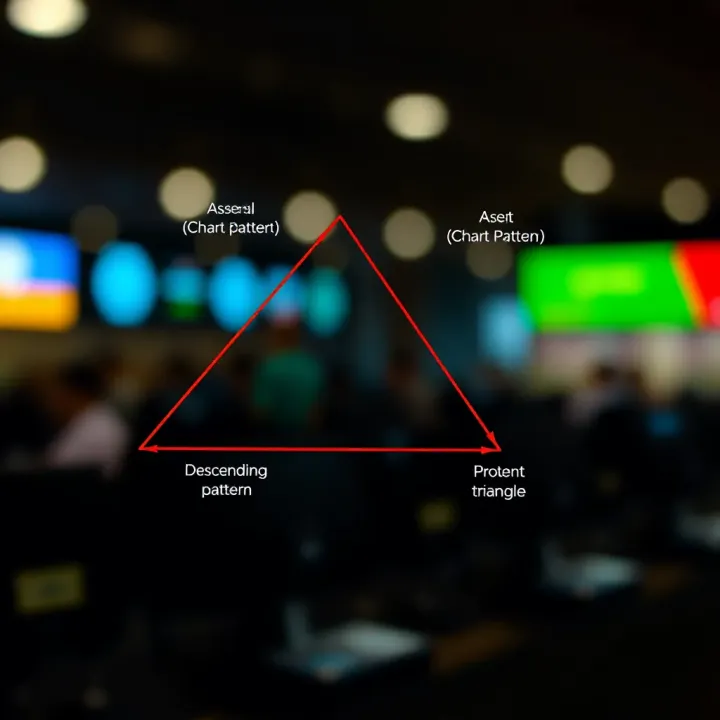
For example, a head and shoulders pattern typically signals a trend reversal. When spotted correctly, it can help you exit a position before a significant price drop or enter a short trade to benefit from the decline. Triangles, on the other hand, suggest consolidation periods where prices tighten before breaking out—knowing the breakout direction can mean early profits.
Traders should combine chart patterns with volume analysis, as volume often confirms the pattern’s validity. For instance, a rising volume during a breakout from a triangle pattern supports the move, reducing the risk of false signals.
In Pakistan’s trading environment, where market hours and news flow differ from global markets, relying on chart patterns provides a practical edge. They offer visual cues that can be tracked in real time through platforms like PSX’s trading system or local brokerage apps.
Chart patterns act like a trader’s roadmap, illustrating where price might head next based on historical behaviour.
To assist traders in mastering these patterns, PDF guides compiling explanations, examples, and strategies are invaluable. Such resources allow for offline study and quick reference at the trading desk, especially useful when internet access may be unreliable or during scheduled loadshedding.
This guide aims to equip you with a concise understanding of key classic chart patterns and points towards practical PDF materials developed for Pakistani traders. Applying these patterns carefully can improve your entry and exit points, managing risk more effectively within volatile market conditions.
Next, we will review the most common chart patterns and how to interpret them with real examples from Pakistan’s stock and cryptocurrency markets.
Chart patterns play a key role in trading by visually representing the market's past price action to help anticipate future moves. For Pakistani traders, understanding these patterns is not just about spotting shapes on a chart but recognising signals that can guide entry and exit decisions in fluctuating markets like the Pakistan Stock Exchange (PSX) or forex. This section breaks down the core concepts behind chart patterns, their predictive power, and the risks involved.
Chart patterns are formations created by the price movements of a stock, commodity, or currency on a chart over time. These formations often follow repeated shapes such as triangles, head and shoulders, or flags that traders watch closely because they can indicate whether prices might continue, reverse, or stall. Essentially, these patterns summarise the battle between buyers and sellers, revealing underlying market sentiment.
For example, a “double top” pattern often signals that an asset price tried twice to break a resistance level but failed, suggesting a possible downward reversal. This simple shape can warn traders to consider selling or tightening stop-loss levels.
By studying past price patterns, traders can identify potential breakouts or reversals. When a classic pattern emerges, it often reflects shifts in supply and demand which influence price direction. For instance, an ascending triangle pattern typically shows increasing buying pressure, hinting that a breakout to the upside is likely.
In practice, Pakistani traders can combine these visual cues with other tools like volume analysis or technical indicators to reinforce their decisions. Suppose a stock listed on PSX forms a symmetrical triangle while volume decreases; a sudden volume surge on breakout confirms a strong trend, making it safer to take a position.
Moreover, knowing chart patterns helps traders manage risk better by setting clearer entry, stop-loss, and target levels. This discipline is vital especially when market conditions are volatile due to local factors like political developments or global commodity price movements.
While chart patterns offer valuable insights, they are not foolproof. Markets can behave unexpectedly due to news, economic data, or market manipulation, causing patterns to fail. In Pakistani markets, where liquidity varies and some stocks may have irregular price jumps, pattern reliability sometimes drops.
Additionally, subjective interpretation is a risk—as two traders might see the same chart differently. Relying solely on chart patterns, without considering fundamentals or broader economic context, can lead to losses.
Tip: Always pair chart patterns with other analysis methods and maintain strict risk management to avoid pitfalls.
In summary, understanding chart patterns equips traders with a practical visual toolkit for reading the market picture. Yet, it requires careful application and awareness of limitations, especially in local contexts like PSX or forex trading in Pakistan.

Chart patterns provide traders with signals about potential price movements by revealing market psychology visually. Recognising popular classic chart patterns helps traders identify trends, spot reversals, and make informed entry or exit decisions. This section covers key patterns like the head and shoulders, double tops and bottoms, triangles, and flags. Each conveys unique information about supply-demand dynamics, often with reliable trading implications.
The head and shoulders pattern forms when a price rises to a peak (left shoulder), pulls back, climbs higher to a central peak (head), declines again, and then raises to a final peak similar in height to the first (right shoulder). The line connecting the lows of the two pullbacks is called the neckline. This shape resembles a human head flanked by two shoulders, hence the name. It typically signals a reversal from an uptrend to a downtrend.
Price breaking below the neckline confirms the head and shoulders pattern, indicating a likely downward move. Traders often set a target by measuring the distance from the head to the neckline and projecting it downwards. For instance, if the PSX market shows this pattern in a stock like Engro Fertilizers, a break below the neckline can signal a sell opportunity with a price target based on the pattern's height.
Double tops and double bottoms mark areas where price attempts to change direction but fails to break past a resistance or support level twice. A double top forms two peaks at similar highs, suggesting sellers are gaining strength. Conversely, a double bottom forms two troughs at similar lows, implying buyers are stepping in.
Traders usually wait for price to break the support line after a double top or break resistance after a double bottom to confirm the reversal. For example, in the Karachi Electric Development stock, if price hits Rs 50 twice but fails to rise further, breaking below the support near Rs 48 confirms a double top, signalling a sell. Entry can be timed after this break, with stops above the highs and profit targets based on the pattern's width.
Triangles represent periods of consolidation before a price breakout. Ascending triangles have a flat top resistance and rising trendline support, often signalling bullish continuation. Descending triangles show falling resistance and flat support, typically bearish. Symmetrical triangles have converging trendlines with neither flat, indicating indecision that can resolve in either direction.
Traders watch triangles to anticipate a breakout. For instance, if a triangle is forming in PSX's Habib Bank stock with prices squeezing tighter, watching for break above resistance or below support guides trade decisions. Volume expansion during breakout adds confirmation. Entry and stop levels can be set just outside the triangle boundaries.
Flags and pennants occur after sharp price moves, representing brief pauses before the trend continues. Flags appear as small rectangular shapes slanting against the prevailing trend, whereas pennants look like small symmetrical triangles. Both suggest strong momentum continuation.
Traders enter when price breaks out of the flag or pennant formation in the trend's direction. For example, if the stock of Pakistan Oilfields shows a sudden rally followed by a small flag pattern, breaking upward signals continuation. Stop losses are usually placed below the pattern, while targets equal the prior move’s length.
Recognising these classic patterns can greatly improve decision-making, especially in Pakistan's dynamic markets where volumes and news impact price swiftly. Practising with real examples sharpens intuition for effective trading.
Chart patterns form the backbone of technical analysis worldwide, but understanding how to read these patterns within the Pakistani market context is equally important. Local market dynamics like lower liquidity, regulatory developments, and periodic volatility often influence the way chart patterns behave on the Pakistan Stock Exchange (PSX) or forex platforms. Traders who adjust their analysis for these factors tend to make better-informed decisions.
Pakistani markets have unique characteristics that require adapting classic chart pattern analysis. For example, lower trading volumes on PSX stocks sometimes cause less reliable breakouts. A triangle pattern might appear formed but fail to follow through due to thin liquidity. Hence, traders need to confirm signals with volume data or cross-check with broader market trends. Also, government policies, fiscal announcements, or geopolitical events regularly affect market sentiment sharply, leading to sudden price swings that can disrupt usual pattern formations.
Simply put, expecting textbook-perfect chart patterns in local markets can lead to disappointment. Instead, flexibility and use of additional indicators like RSI or MACD alongside chart patterns improve accuracy.
One challenge Pakistani traders face is erratic price movements caused by external shocks, such as energy crises or political developments. These can generate false signals in patterns like head and shoulders or double tops. Moreover, forex trading around the Pakistani rupee can display high volatility due to monetary policy changes by the State Bank of Pakistan (SBP) or foreign exchange interventions.
Another issue is limited historical data availability for certain PSX shares, making pattern recognition less consistent. Additionally, not every pattern suits every asset; for instance, illiquid stocks may show distorted flags or pennants that do not translate into expected price actions.
Take a recent example from PSX: the cement sector stock’s ascending triangle formation in early 2024 provided a clear breakout signal but only after confirmation with increased trading volume. Without volume confirmation, entry could have led to a false breakout.
Similarly, in forex markets, the USD/PKR exchange rate often displays double bottom formations after SBP cuts rates, indicating potential reversal. Traders who spotted this pattern early were able to benefit by timing their entry effectively.
Successful interpretation of chart patterns in Pakistani markets depends on blending traditional analysis with an understanding of local trading behaviours, macro events, and volume dynamics.
By keeping these considerations in mind, Pakistani traders can enhance their use of classic chart patterns and reduce the risk of misreads, improving overall trading success.
Traders often find PDF guides on classic chart patterns highly valuable because such resources provide detailed explanations in one place, which you can refer to anytime without needing an internet connection. For Pakistani traders dealing with the Pakistan Stock Exchange (PSX) or local Forex markets, having these PDFs means you can study patterns offline during breaks or on the go, even when load shedding cuts off power.
Reliable PDFs come from trusted sources like reputed financial education websites, brokerages with solid educational arms, and recognised market analysts. For example, brokerage firms such as AKD Securities or JS Global have published educational PDFs focusing on chart patterns tailored for Pakistani markets. Internationally respected sites like Investopedia or BabyPips also offer downloadable charts in PDF form, but be mindful these sometimes reflect global market conditions rather than local realities.
Government or semi-government portals sometimes publish financial resources compliant with the Pakistan market, making them worth checking. Avoid random PDFs from unknown websites or groups that may offer outdated or inaccurate details which can lead you astray.
Just reading through a chart pattern PDF isn’t enough. While studying these documents, pause to apply what you learn on live PSX charts or your trading platform. For instance, after understanding the head and shoulders pattern, try to locate it on recent Pakistan Stock Exchange data or your preferred forex charts.
Use highlighters or note-taking apps alongside PDFs to mark key points or jot personal observations about patterns and price behaviour. Try to match theory with practical examples, such as spotting a double bottom in the script of a popular Pakistani company like Engro or Habib Bank.
Always revisit these PDFs periodically as your trading knowledge grows; they serve well as quick refreshers before making real trades. Plus, cross-referencing PDFs with videos or webinars from Pakistani experts enhances comprehension.
Tip: Combine multiple sources, including PDFs and local market analyses, to get a fuller picture rather than relying on one document only.
Several PDFs stand out for their clarity and Pakistan-specific focus:
AKD Securities Chart Patterns Guide: Concise explanations with PSX stock examples.
JS Global Market Insights: Includes basic to intermediate chart pattern tutorial in PDF format.
PSX Educational Resources: Occasionally uploads official materials explaining technical analysis relevant to the local market.
Using these PDFs can boost your confidence when identifying chart patterns and taking timely decisions aligned with Pakistan’s market volatility and trading hours.
Taking the effort to find trustworthy PDFs and using them actively in your chart reading routine gives you an edge in understanding price moves better and managing risks accordingly.
Explore key chart patterns 📈 in Pakistan's markets! Learn their types, analysis tips, and access free PDF guides to sharpen your trading skills today.

📊 Discover how forex trading signals guide Pakistani traders with timely alerts, reliable providers, types of signals, risks, and tips for smart trading decisions.

📊 Learn to spot key forex chart patterns that reveal currency trends, reversals, volume impact, and timeframe significance for better trading in Pakistan's forex market.

📉 Learn to spot bearish chart patterns in technical analysis that signal falling stock prices. Understand key formations, practical tips, and risk control.
Based on 11 reviews