
Gold Trading in the Forex Market Explained
Explore how gold trading works in the forex market, its price drivers, key strategies, and risk control — vital info for Pakistani investors including market trends 📈💰
Edited By
Benjamin Foster
Gold has always played a significant role in Pakistan’s economy and culture, but its influence extends deeply into financial markets, especially forex trading. Many traders in Pakistan keep a keen eye on gold rates because of the metal's close relationship with currency values, particularly the US dollar and Pakistani rupee.
Understanding this connection helps investors make smarter decisions in the forex market. When gold prices rise, it often signals shifts in currency trends and economic sentiment. For example, if the US dollar weakens against other currencies, gold usually becomes more expensive because it is priced in dollars globally. Similarly, in Pakistan, an increase in gold rates can influence the demand and supply factors for the rupee in forex trading.
Gold acts as a safe haven asset. During times of economic uncertainty or geopolitical tensions, investors tend to move their funds toward gold, which can reduce demand for certain currencies, affecting forex pairs involving those currencies.
Inverse relation with US dollar: Gold price and the US dollar tend to move in opposite directions. If the dollar falls, gold prices rise and vice versa.
Impact on PKR: Pakistan’s rupee often reacts to changes in global gold prices due to import costs and investor confidence.
Market sentiment indicator: Sharp movements in gold rates can predict forex market volatility.
In late 2023, when global economic uncertainties led to a spike in gold prices, Pakistani traders noticed increased volatility in the USD/PKR currency pair. The rupee weakened slightly as investors preferred gold amid inflation fears, resulting in forex traders adjusting their positions accordingly.
Tip: Tracking gold rates alongside forex market trends can improve your timing for entering or exiting trades on PKR pairs.
By watching how gold prices shift alongside currency values, especially the dollar and rupee, investors can better forecast forex market movements. This insight is valuable for developing effective trading strategies that align with the economic realities of Pakistan.
Understanding the basics of how gold pricing works and its broader economic impact prepares you to handle the connected forex market with more confidence.
Understanding gold rates is essential for anyone involved in forex trading or investment. Gold acts as a benchmark for economic stability and often influences currency movements worldwide. Knowing how gold prices behave helps traders predict shifts in forex markets, especially in volatile conditions affecting emerging currencies like the Pakistani Rupee (PKR).
Global supply and demand drive gold prices significantly. When mining output falls or demand rises—for instance, during festive seasons or investment booms—prices typically increase. For example, if China or India, major consumers of gold, experience higher demand around wedding seasons, global prices surge. Conversely, if new mining discoveries boost supply, prices may ease. This interplay directly impacts forex markets as gold-related money flow shifts between countries.
Currency strength impact also affects gold rates. Since gold is globally priced in US dollars, a stronger dollar usually means higher gold prices for holders of other currencies. For instance, when the US dollar gains strength due to favourable Federal Reserve policies, gold can become more expensive in Pakistani Rupees, impacting local traders and importers. This link is crucial for forex market participants monitoring currency fluctuations alongside gold movements.
Investor sentiment and geopolitical risks play a keen role in gold pricing. During times of political tension or economic uncertainty—like sanctions, conflicts, or trade wars—investors flock to gold as a safe store of value, pushing prices up. For example, tensions in the Middle East often lead to a spike in gold prices, signaling risk aversion which can cause currency volatility, especially in emerging markets. Understanding this helps traders anticipate forex market reactions.
Local market influences such as jewellery demand, domestic investment trends, and festivals like Eid impact gold pricing in Pakistan. The informal market also plays a part, where demand-supply mismatches in cities like Karachi or Lahore can cause price deviations from global benchmarks. Traders benefit from watching local bazaars, as timely insights here can signal short-term price changes.
The Pakistani Rupee’s role in gold pricing is pivotal. Since gold imports are paid in US dollars, fluctuations in the PKR-USD exchange rate directly affect domestic gold rates. For instance, when PKR depreciates against the dollar, the landed cost of gold rises, increasing domestic prices. This creates a feedback loop between forex volatility and gold pricing, making currency movements a key consideration for Pakistani investors.
Regulatory and import considerations also shape gold prices locally. Import duties, taxes, and policies set by Pakistan Customs and the State Bank of Pakistan influence costs. Changes in duties or import quotas create price adjustments, affecting not just dealers but also forex traders anticipating currency demand shifts. For example, a hike in import duty can reduce gold inflow, tightening supply and pushing up prices.
Keeping track of these gold price drivers equips traders and investors to better navigate forex markets, especially in Pakistan’s complex economic environment.
Understanding the basics of forex trading is essential for anyone interested in how gold rates interact with currency markets. Forex trading revolves around buying and selling currencies, and since gold prices often influence key currencies like the US dollar and Pakistani Rupee (PKR), knowing these basics helps in making informed trading choices.
Forex trading always involves currency pairs, such as USD/PKR or EUR/USD. The first currency is called the base currency, and the second is the quote currency. The exchange rate tells you how much of the quote currency is needed to buy one unit of the base currency. For example, if USD/PKR is 280, it means you need 280 Pakistani Rupees to buy one US Dollar. This rate fluctuates with market demand, economic data, and other factors.
In practice, traders monitor these pairs to speculate on currency movements or hedge against currency risk. For instance, if gold prices rise, the US dollar may weaken, affecting USD/PKR and providing trading opportunities.
Forex market players in Pakistan include commercial banks, brokerage firms, exporters, importers, and individual traders. The State Bank of Pakistan (SBP) also plays a major role through its monetary policy and foreign exchange regulations.
Exporters rely on forex markets to convert earnings into PKR, while importers use it to pay for goods, including gold imports. Traders and investors participate to profit from currency fluctuations. Understanding the roles of these participants helps in assessing market sentiment and potential currency moves.
The forex market operates 24 hours a day, five days a week. It opens with the Asian session, followed by European and US sessions. Each session offers differing liquidity levels – the London and New York sessions are the most liquid, providing tighter spreads and faster execution.
Pakistani traders must be mindful of local timings to catch these high liquidity periods. For example, the London session starts around 10:00 am PKT, which is optimal to trade pairs like GBP/USD or USD/PKR with better price stability and volume.
Technical analysis uses historical price charts and indicators like moving averages, Relative Strength Index (RSI), and support-resistance levels to forecast future price moves. Pakistani traders often rely on this method due to limited access to comprehensive fundamental data or when markets show clear trends.
For example, spotting a break above a resistance level at 275 in the USD/PKR pair might signal a bullish trend, prompting traders to buy before the price rises further.
This approach looks at economic indicators, political events, and central bank policies to determine currency value. Changes in SBP interest rates or foreign exchange reserves, for instance, can influence PKR strength.
In terms of gold, rising inflation in the US might push gold prices up, weakening the dollar and impacting forex pairs involving USD. Traders use this info to anticipate market shifts.
Risk management is key to surviving volatile forex markets. Effective traders limit their risk per trade using stop-loss orders, diversify positions, and avoid risking more than 1-2% of their capital on a single trade.
In Pakistan, where currency volatility can be high, managing risk helps traders protect their investments from sudden moves caused by political developments or economic policy changes. Proper risk measures keep losses manageable and support long-term trading success.
Successful forex trading blends technical skills, fundamental insight, and disciplined risk control. These basics equip traders to navigate the complex influence of gold rates on currency markets, especially in Pakistan's unique economic environment.
Understanding the connection between gold rates and forex trading offers practical benefits for traders and investors, especially those operating in volatile markets like Pakistan. Gold is often viewed as a safe store of value when currency markets become unpredictable. Forex traders keep a close eye on gold rates because fluctuations can signal shifts in currency strength or risk sentiment.
Gold acts as a refuge during times when forex markets experience uncertainty or geopolitical unrest. For instance, when political instability affects the Pakistani Rupee (PKR), traders often turn towards gold to protect their capital. Unlike fiat currencies subject to inflation and policy changes, gold retains intrinsic value, making it a preferred option during economic stress.
This safe-haven feature means that during sudden market shocks—like a significant devaluation of PKR or global financial crises—gold prices tend to climb as investors seek stability. Pakistani traders can use this pattern to hedge forex risk by diversifying into gold, balancing potential losses in forex with gains in precious metals.
Gold and the US dollar (USD) generally move in opposite directions. When the USD strengthens, gold prices often drop, and vice versa. This happens because gold is priced in dollars globally; a stronger USD makes gold more expensive for holders of other currencies, reducing demand.
For forex traders in Pakistan, this correlation helps in predicting market moves. If the dollar strengthens against the PKR, gold might fall as the USD value rises. Conversely, a weakening dollar usually pushes gold prices up, indicating a possible depreciation of PKR against USD. Tracking this interplay aids traders in timing their entry or exit across forex and gold markets more effectively.
Emerging market currencies such as the Pakistani Rupee often react noticeably to gold price changes. Pakistan, being a significant gold importer, sees its trade balance affected by rising or falling gold costs. If gold prices surge, import bills increase, potentially weakening the PKR due to higher foreign exchange demand.
Moreover, gold price increases often reflect broader inflationary pressures or economic uncertainty, causing investors to shy away from emerging market currencies. This dynamic can exacerbate the PKR’s volatility alongside global gold movements, making the metal’s price a barometer for the currency’s near-term outlook.
Gold price trends frequently foreshadow shifts in the forex market. For example, a sustained rise in gold prices might signal growing fears of inflation or economic slowdown, suggesting that safe-haven demand is rising. Forex traders can interpret this as a cue to prepare for weaker fiat currencies or increased volatility.
Conversely, falling gold prices often coincide with improved risk appetite and stronger currencies. Pakistani forex traders who monitor gold can use these trends to anticipate market shifts and adjust their strategy accordingly, whether that means entering long PKR positions during gold declines or hedging their forex exposure as gold rallies.
Keeping an eye on gold rates alongside currency movements offers a strategic edge, particularly in markets like Pakistan where global and local economic factors frequently impact both assets.
By weaving gold rate analysis into forex trading strategies, traders improve their chances of navigating uncertainty and capturing opportunities in the ever-moving Pakistani financial markets.
Various factors affect gold rates and forex markets, often in overlapping ways. Understanding these influences helps traders predict price movements effectively. Both global events and local economic conditions shape market behaviour, making it essential to watch multiple indicators closely.
Inflation and interest rates carry major weight in driving gold prices and currency values. When inflation rises, gold often becomes more attractive because it preserves purchasing power better than paper currency. At the same time, central banks typically raise interest rates to tame inflation. Higher rates tend to strengthen the US dollar, reducing gold’s appeal since it bears no yield.
For example, Pakistan's inflationary pressures can affect local gold demand, but global interest rates set by the Federal Reserve often determine gold’s international value, which in turn impacts forex pairs like USD/PKR.
Monetary policy decisions by major economies steer both forex and gold markets. Central banks’ choices to tighten or ease money supply influence liquidity and investor confidence. Easing policies, such as quantitative easing, usually weaken the dollar and push gold prices up, encouraging forex volatility.
Pakistan’s forex traders watch such global policy shifts carefully, as changes in the US Fed’s stance often ripple through emerging market currencies, including the Pakistani Rupee. These policies can dictate whether gold acts as a hedge or a risk asset in forex portfolios.
Trade and geopolitical tensions also play a vital role. Conflicts, sanctions, or tariff impositions raise uncertainty, prompting investors to seek safety in gold. Concurrently, emerging market currencies often suffer from capital flight during these times.
For instance, tension in Middle East markets or Sino-US trade disputes typically push gold up while pressuring forex pairs like USD/PKR. Pakistan’s economy, reliant on imports and foreign investment, feels these shocks keenly in both gold and currency markets.
SBP policies affecting PKR directly influence forex and indirectly impact gold prices. The State Bank of Pakistan (SBP) adjusts interest rates, reserve requirements, and forex interventions to stabilise the rupee. A higher policy rate can bolster PKR strength but may dampen economic activity, reducing gold investment locally.
In contrast, if SBP cuts rates or refrains from intervention, PKR might weaken, pushing importers and investors towards gold as a safety measure.
Foreign exchange reserves serve as a cushion to maintain currency stability. Pakistan’s reserves position affects market confidence and exchange rate volatility. When reserves fall, the rupee usually depreciates, which can boost local gold demand as a store of value.
Keeping forex reserves healthy allows Pakistan to manage short-term shocks, reducing the need to rely on gold prices as a risk indicator.
Import-export dynamics involving gold influence its local price and availability. Pakistan imports a significant amount of gold mainly for jewellery and investment demand. Any changes in customs duties, import restrictions, or global gold prices directly affect local rates.
For example, an increase in import duties raises gold prices domestically, potentially diverting some investor interest back into forex assets. Meanwhile, any disruption in gold imports due to forex shortages can cause price spikes, impacting overall market sentiment.
Monitoring these intertwined factors helps traders in Pakistan grasp both gold rate trends and forex market movements, supporting better decisions in a volatile environment.
Trading gold in forex markets requires a clear understanding of its price behaviour and market dynamics. Using sound strategies can make a big difference in results, especially in volatile markets like Pakistan's forex scene. These tips help traders analyse gold rates effectively, time their entry and exit points, and manage risks while complying with regulations.
Monitoring gold price trends is vital for forex traders. A rising gold rate often reflects increased investor demand during times of currency uncertainty. For instance, when the Pakistani Rupee weakens due to economic pressure or political instability, traders may notice gold prices rising as buyers seek safe assets. Spotting these patterns early can guide traders on when to buy or sell related forex pairs, such as USD/PKR.
Tools like moving averages and Relative Strength Index (RSI) help confirm whether gold is in an upward or downward trend. Keeping an eye on these indicators alongside global events can prevent mistimed trades.
Gold prices react quickly to news on inflation, interest rates, or geopolitical tensions. In Pakistan, announcements from the State Bank of Pakistan (SBP) about monetary policy or changes in foreign exchange reserves can cause sudden shifts. Traders who track economic calendars and news updates can time their trades better.
For example, if the SBP announces a rate hike to combat inflation, gold prices might drop as the currency strengthens, offering a possible sell opportunity. Accurate timing based on news helps maximise gains and reduce losses.
Gold trading carries significant volatility, affecting both risk and reward potential. Market sentiment can shift rapidly due to global economic events or local factors like political instability in Pakistan. While this creates chances for profit, it can also mean sudden losses if traders are unprepared.
To manage volatility, traders should set clear stop-loss orders and avoid overleveraging. Understanding that gold prices can swing widely during times of uncertainty helps protect capital.
Forex trading involving gold must comply with Pakistan's financial regulations. The Securities and Exchange Commission of Pakistan (SECP) oversees licensing of brokers and trading platforms. Unauthorised platforms can expose traders to fraud or operational risks.
Ensuring compliance means choosing brokers regulated by SECP and adhering to KYC (Know Your Customer) and Anti-Money Laundering (AML) rules. This safeguards investments and legal standing.
Selecting a trustworthy platform is essential for smooth gold trading. Platforms with a strong track record, transparent pricing, and responsive customer support offer greater confidence. Examples include local brokers licensed by SECP or international platforms with Pakistani presence.
Reliable platforms also provide educational resources, real-time market data, and secure payment options such as bank transfers or JazzCash. This improves trading efficiency and security.
Successful gold trading in forex markets rests on combining data-driven analysis with disciplined risk management and regulatory awareness. Pakistani traders benefit most by choosing regulated platforms and staying alert to market news and trends.
Explore how gold trading works in the forex market, its price drivers, key strategies, and risk control — vital info for Pakistani investors including market trends 📈💰
📈 Discover forex trading hours in Pakistan, learn key market sessions and align your trades with PKT to boost your strategy and maximise profits.
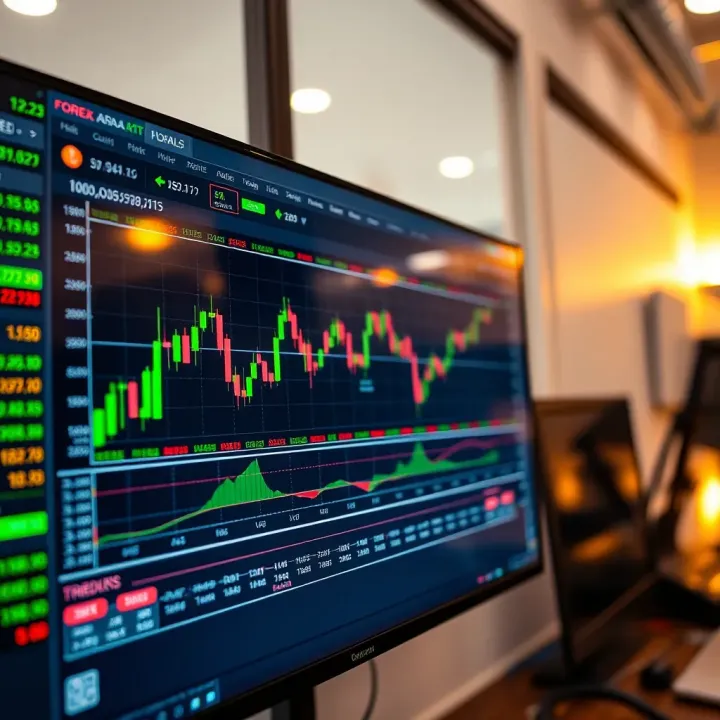
Find the ideal forex trading platforms in Pakistan with our detailed guide on usability, fees, regulation, and features. Start trading smart with 📈💰 today!
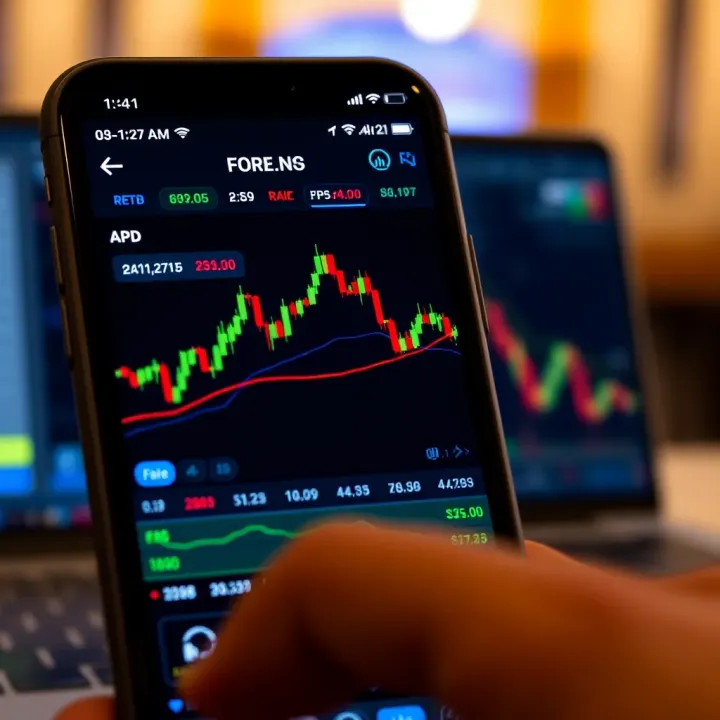
Discover the top forex trading apps for Pakistani traders 🇵🇰! Compare ease of use, security features 🔒, tools, and broker options to find your perfect fit 💹.
Based on 10 reviews