
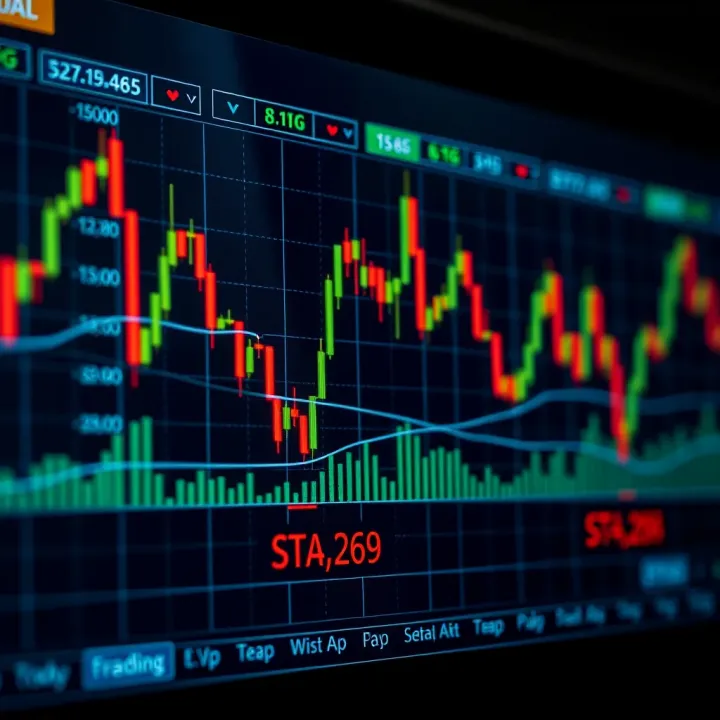
Forex Chart Patterns for Smarter Trading
📊 Learn to spot key forex chart patterns that reveal currency trends, reversals, volume impact, and timeframe significance for better trading in Pakistan's forex market.
Edited By
Amelia Foster
Trading chart patterns offer a practical way to read market behaviour without sifting through endless numbers. These visual formations on price charts help traders identify potential trends and reversals. In Pakistan’s markets, recognising patterns can give you an edge, especially when trading shares on the Pakistan Stock Exchange (PSX) or dealing with cryptocurrencies popular on local platforms.
Chart patterns develop as groups of buyers and sellers react to price movements. Some patterns signal that prices will keep moving in the same direction, while others hint at a possible turn. Understanding these signals lets traders act more decisively, reducing guesswork.

Common patterns include head and shoulders, double tops and bottoms, triangles, and flags. For example, the head and shoulders pattern often marks a reversal from bullish to bearish sentiment. If you spot this while trading PSX stocks like Engro Corporation or Lucky Cement, it can warn you to consider selling before prices drop.
Alternatively, a triangle pattern usually reflects price consolidation before a breakout. This can be a green signal to enter a trade, especially during periods when the market looks uncertain, such as before quarterly results announcements.
Recognising chart patterns isn’t about predicting the future perfectly but improving the odds. Combining pattern analysis with volume data and local market news can boost your trading decisions.
It’s worth noting that Pakistani traders face unique challenges like market volatility influenced by political developments or unexpected economic announcements by the State Bank of Pakistan (SBP). Hence, practical application of chart patterns means adapting them to local market rhythms.
In the following sections, you’ll find detailed breakdowns of key chart patterns, along with tips on spotting fakeouts and avoiding common mistakes. We'll also suggest Pakistani-relevant resources to deepen your knowledge and improve your trading confidence.
This guide aims to equip you with usable skills — whether you’re a beginner trying your hand at Daraz shares or a crypto enthusiast monitoring Bitcoin trends on local exchanges. Understanding chart patterns lets you manage risk, time entries better, and increase your chances of success in Pakistan’s dynamic markets.
Trading chart patterns provide a visual representation of market behaviour, showing how prices have moved over time. For traders and investors, understanding these patterns can be a practical way to anticipate future price movements and make informed decisions. In Pakistani markets, where volatility can be high, identifying chart patterns helps manage risks and spot potential entry or exit points more effectively.
Trading chart patterns are shapes and formations created by the price movement of stocks, commodities, currencies, or crypto assets on a chart. These patterns emerge because market sentiment tends to repeat itself, reflecting the collective behaviour of buyers and sellers. For example, a well-known pattern like the "double top" suggests a strong resistance level that the price failed to break twice, hinting at a possible price reversal downward.
Chart patterns serve as practical tools that help traders forecast market directions. They provide clues about whether a trend will continue or reverse, which is particularly useful when combined with other technical indicators. In Pakistan’s financial markets, this insight improves trading timing and strategy, reducing guesswork. Moreover, pattern recognition is vital for short-term traders and long-term investors alike, offering a framework to react to shifting market behaviour swiftly.
Continuation patterns indicate that the current trend—whether upward or downward—is likely to continue after the pattern completes. These formations often appear as brief pauses or consolidations in price before the market resumes its original direction. For instance, the "flag" pattern generally forms during a strong uptrend when the price moves sideways in a tight range before breaking upwards again. Traders use continuation patterns to confirm the strength of a trend and plan their trades accordingly.
Reversal patterns signal a potential change in the current trend’s direction. When these patterns form, they suggest the dominant trend might be losing momentum, and a turnaround is near. The "head and shoulders" pattern is a classic example. If spotted on a rising price chart, it could indicate a forthcoming decline. Recognising these patterns helps traders and investors avoid riding a trend too late and prepare for possible market pullbacks or rallies.
Bilateral patterns do not conclusively forecast whether the price will move up or down; instead, they imply that a significant move is imminent in either direction. The symmetrical triangle is a common bilateral pattern. Prices compress within converging trend lines, indicating indecision before a break. Trading bilateral patterns requires watching for the breakout direction to identify the next move. These patterns are valuable in Pakistan’s often unpredictable market conditions, enabling traders to adapt quickly once the breakout occurs.
Understanding these core pattern types gives you a solid base to read charts like a pro and approach markets with more confidence and clarity.

Recognising popular trading chart patterns helps traders anticipate market moves and make informed decisions. These patterns appear repeatedly across various markets, including Pakistani equities, forex, and cryptocurrencies. Understanding their formation and signal improves trade timing and risk management.
The Head and Shoulders pattern signals a trend reversal, common after a bullish run. It has three peaks: two smaller shoulders on either side of a higher head. Once the price breaks below the neckline (support line connecting the shoulders), it usually starts declining. In contrast, the Inverse Head and Shoulders predicts a bullish reversal after a downtrend. Pakistani traders spot this pattern in stocks experiencing sell-offs, using it to anticipate rebounds.
Double Tops mark resistance where the price hits a high twice, failing to rise further. This pattern indicates a likely fall when the price drops below the valley between the two peaks. Conversely, Double Bottom forms when price hits a low twice, signalling support before a rise. For example, a stock at Rs 150 hitting resistance twice around Rs 160 indicates a potential downturn, useful for local investors aiming to protect gains.
Triangles reflect consolidation phases before price breaks out or down. Symmetrical triangles have converging trendlines showing indecision. Ascending triangles, with flat resistance and rising support, suggest bullish bias. Descending triangles, having flat support and descending resistance, imply bearish potential. Pakistani traders watch volume during triangle breakouts to confirm moves, enhancing strategy in volatile markets like forex or petrol stocks.
Flags and pennants show short pauses in strong trends, typically after sharp price moves. Flags look like small rectangles slanting opposite the trend direction, while pennants are small symmetrical triangles. After these consolidations, prices often continue in the original trend's direction. For instance, a flag pattern forming after a surge in a PSX stock’s price can indicate a quick continuation, useful for traders wanting to ride momentum without rash entry.
Trading chart patterns are tools, not guarantees; combining them with volume, indicators, and market context reduces false signals and strengthens decision-making.
Mastering these patterns offers practical benefits, including spotting entry/exit points and managing stops. In the Pakistani market, where volatility and market sentiment fluctuate, these patterns provide an extra edge when used alongside fundamentals and news analysis.
Selecting the right book for learning trading chart patterns makes a noticeable difference in how quickly and effectively you grasp the concepts. Trading is not just about spotting patterns randomly; it requires a solid understanding that comes from trustworthy material. A well-chosen book equips you with clear explanations, real market examples, and practical strategies, helping you build confidence and avoid costly mistakes.
When picking a book, check for clarity and simplicity in explanations, especially since chart patterns can get complex. Look for books that include updated market examples relevant to Pakistani or regional markets, as global patterns sometimes behave differently here due to local trading volumes or market behaviour. Practical exercises or quizzes help you test your knowledge and reinforce learning. Also, books that integrate chart patterns with other technical analysis tools like volume, moving averages, or RSI tend to offer a more comprehensive view.
Books that provide real trading scenarios, including charts from live markets, help you see how patterns play out over time. For instance, Pakistani traders can benefit from books illustrating patterns on the Pakistan Stock Exchange (PSX) or popular instruments like PTA-approved stocks or commodity futures. Such books reduce guesswork and let you practice spotting patterns that actually matter in our market conditions.
These books cover foundational concepts – from understanding price action to interpreting volume and indicators – before diving into chart patterns. For someone new or even intermediate, this approach builds a strong base. They often explain key terms in simple words and guide you through reading candlesticks, Japanese charts, and trendlines. Pakistani traders especially benefit if these books discuss local regulations or broker platforms used here.
This type focuses largely on identifying and interpreting various chart patterns, helping you develop an eye for what to expect next. It might include detailed sections on continuation, reversal, and bilateral patterns, dissecting how each looks and what triggers them. Moreover, such books teach you to filter out false signals, a crucial skill since our markets can show erratic moves during earnings seasons or geopolitical events.
Reading alone won't make you an expert. Combine theory with practice: open trading platforms tracking PSX or Cryptocurrencies and try spotting the patterns as you learn them. Take notes, redraw charts on paper or software, and review your trades to see which patterns worked and which didn’t. Also, discuss with fellow traders or online communities to get different perspectives. Finally, keep revisiting chapters and examples until the concepts become second nature.
Choosing the right book is your first solid step toward mastering chart patterns, but active practice and consistent learning make the real difference in your trading journey.
Chart patterns provide a visual understanding of market sentiment and price movements. In Pakistan’s financial markets, applying these patterns helps traders anticipate possible price changes and make strategic decisions. Pakistani markets, including the Pakistan Stock Exchange (PSX), can show unique behaviours due to local economic, political, and regulatory factors. Hence, recognising how patterns behave locally is key to effective trading.
Pakistani markets often react sharply to news like budget announcements, political developments, or State Bank of Pakistan (SBP) monetary policies. This can cause patterns to form and resolve differently compared to global markets. For example, a triangle pattern in a PSX stock might get broken abruptly on political uncertainty, unlike a more gradual breakout seen elsewhere. Traders must consider such local triggers when confirming patterns.
Volume also behaves differently here. Lower liquidity in certain stocks leads to less reliable patterns, so it’s vital to check trading volumes alongside patterns for confirmation. Moreover, events like Eid holidays or monsoon rains impact trading volumes and volatility, influencing pattern validity. Adapting standard chart pattern analysis to these conditions increases accuracy.
In Pakistan, chart patterns are applied not only to equities but also to instruments like government bonds, currency futures, and cryptocurrencies traded through local platforms. For instance, trading patterns seen in PKR against USD forex charts often coincide with political or macroeconomic news. Using chart patterns for WAPDA bonds or T-bills needs understanding their unique price sensitivity, often influenced by SBP policies.
Crypto markets here are highly volatile, so patterns like flags and pennants appear frequently but require cautious use. Traders combining these patterns with local data like SBP remittance reports or import-export statistics can gain better insights.
One major challenge in the Pakistani market is false breakouts, where price briefly moves out of a pattern but then reverses. This often results from low liquidity or sudden news. To avoid losses, traders must look for volume confirmation and wait for a candle close beyond support or resistance levels instead of immediate entries.
Another issue is data reliability. Sometimes, delayed or incomplete market data affects pattern formation analysis. Using trusted platforms like PSX’s official data or recognised brokerage software reduces this risk.
Besides, emotional trading around major national events can distort patterns. Maintaining a disciplined approach and combining chart patterns with other tools like moving averages or RSI helps confirm signals.
Applying trading chart patterns in Pakistan’s unique market environment requires not just textbook knowledge but also local insight. Combining pattern recognition with awareness of market behaviour, liquidity, and external factors improves trading success significantly.
By carefully adjusting techniques and validating signals with volume and broader context, Pakistani traders can better harness chart patterns for smarter decisions in stocks, bonds, forex, and crypto markets.
Mastering trading chart patterns requires more than just recognising shapes on graphs. Practical advice helps traders reduce risks, improve timing, and increase confidence—especially in volatile markets like Pakistan's. This section covers three key areas: avoiding false signals, combining patterns with other tools, and building a solid trading plan.
False signals can lead to losses if traders mistake noise for real patterns. To avoid this, always confirm patterns with volume data or price action. For example, a breakout of an ascending triangle without rising volume often fails. In the Pakistan Stock Exchange (PSX), sudden market moves may trigger these traps, so watch for consistent trends before acting. Also, avoid entering trades prematurely; wait for pattern completion and confirmation to reduce chances of being caught in a false move.
Chart patterns tell one part of the story; combining them with indicators like moving averages, Relative Strength Index (RSI), or Fibonacci retracements improves accuracy. For instance, if a double bottom pattern appears near a key support level confirmed by Fibonacci 61.8%, it strengthens the buy signal. Similarly, an overbought RSI combined with a head and shoulders pattern may signal an upcoming reversal. Using multiple tools helps filter noise, a common challenge in Pakistani markets with sudden news events or loadshedding impacts.
Chart patterns should form part of a clear strategy. A trading plan outlines entry and exit points, risk limits, and position size based on pattern recognition. For example, if a trader spots a flag pattern indicating a continuation trend, they can set a target price by measuring the flagpole’s height and adjust stop-loss just below the pattern to limit loss. Discipline in following this plan prevents emotional decisions during volatile sessions common in Pakistani trading floors.
Practical mastery means blending technical signals with clear-cut risk management. It’s not just spotting patterns but knowing how and when to act.
By integrating these tips, traders turn abstract chart formations into actionable signals while guarding against common pitfalls seen in Pakistan’s dynamic financial markets.
📊 Learn to spot key forex chart patterns that reveal currency trends, reversals, volume impact, and timeframe significance for better trading in Pakistan's forex market.

📈 Find the best trading app in Pakistan! Compare top features, security tips, and expert advice to trade confidently, whether beginner or pro. 🇵🇰💡

📈 Master key chart patterns in trading! Learn to spot continuation and reversal signals, and gain practical tips for smarter market moves in Pakistan.

📊 Learn to spot crypto chart patterns for smarter trading in Pakistan. Understand trends, price moves, and combine insights with tools to enhance trading decisions.
Based on 5 reviews